
Gong — a step-by-step lesson for grown-up and child
This lesson teaches the gong’s luxurious idea: one gentle strike, and the sound keeps blooming for a whole minute — music you mostly LISTEN to, with your hands in your lap.
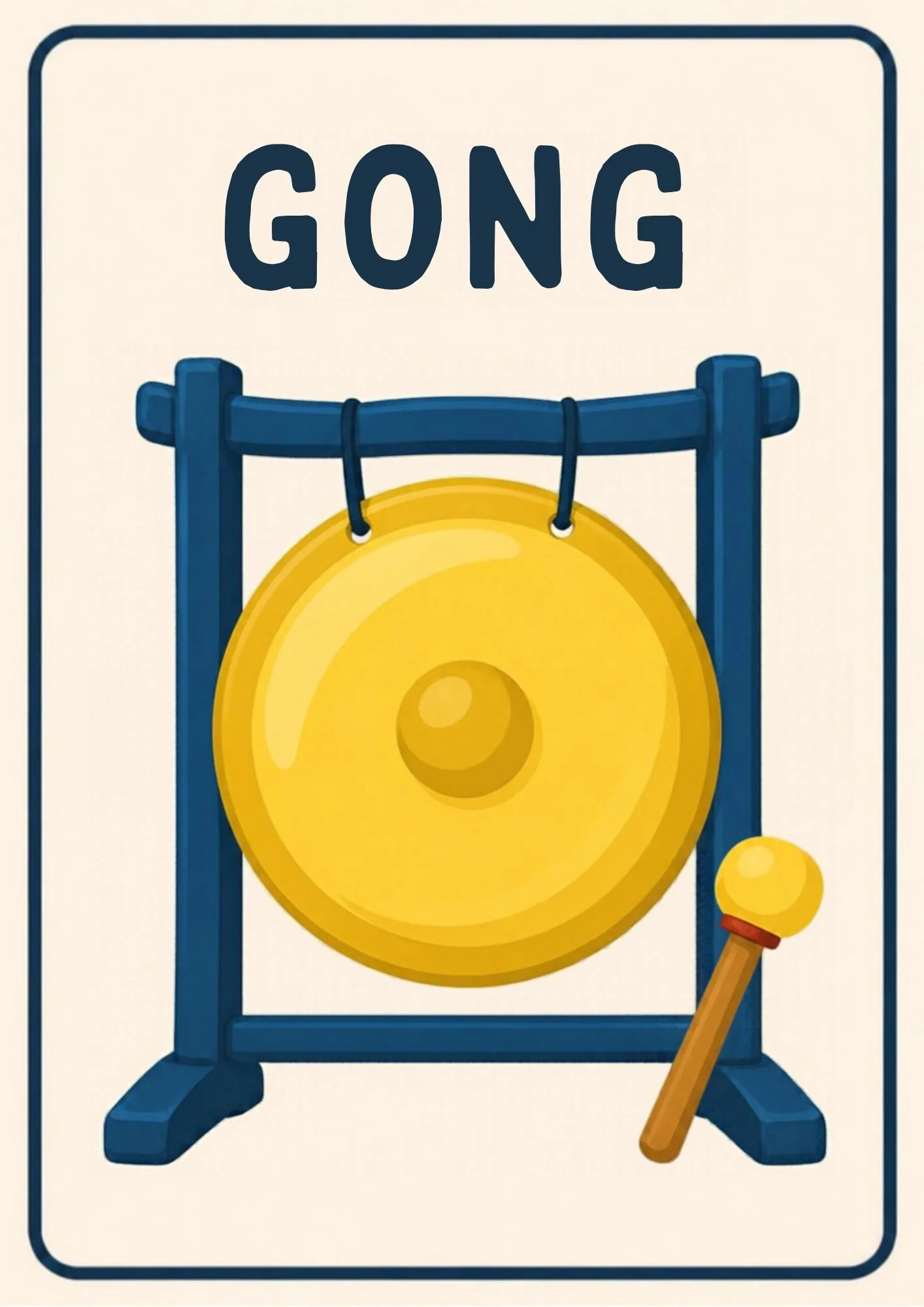
What is this?
A gong is a big round metal disc hanging from a frame: strike it softly with a large soft mallet and it swells — ooooooom — ringing, shifting and fading for up to a minute. It opens concerts, closes ceremonies, settles whole rooms.
What does it mean?
Every other instrument asks the player to keep playing. The gong asks the player to STOP: one touch, then hands still, ears open. It is the shelf’s meditation cushion — the instrument that teaches listening by demanding nothing else.
What does the child need to know?
Your child needs three gong ideas: the mallet is big and SOFT — a hard stick chokes the bloom; the sound GROWS after the strike (swell) and fades like a slow sunset; and the game is stillness — one strike, then how long can we simply listen?
Why this matters
In a room of tap-tap-boom, the gong is the one instrument that rewards quiet hands and patient ears — and children who learn the gong’s stillness carry that stillness into every other loud day.
What it teaches
Decay listening (a full minute of one sound changing), soft-force striking, stillness stamina, and swell-shape awareness — sound that grows, peaks and fades.
Words to learn
gongstrikemalletswellringfadestillness
Say this to your child
“"The gong is the gentlest giant! One soft touch with the big soft mallet — oooooom — and the sound blooms: it grows… and grows… and slowly, slowly fades away, like a sunset. And our job? Strike ONCE, put our hands in our laps, and LISTEN with our whole bodies. The gong plays; we wonder."”
Step by step
- Show the card: "This is a gong — one touch, one minute of shimmer."
- The soft rule: the gong is struck with a big soft mallet — like patting a giant’s shoulder, never punching it. Soft touch, giant voice.
- The swell: strike… and wait — the sound GROWS before it fades. A slow sunrise, then a slow sunset: that is a gong’s whole day.
- The stillness: strike once, hands in lap — how long can we listen? Breathe with the gong.
- Play the listening game below and close: "one strike, big ears."
Look closer at the picture
On this card the word "Gong" stands in big navy capitals inside the rounded frame, with a friendly illustration of the big round gong below — exactly as it hangs.
Ask your child
"What kind of mallet does the gong like — hard stick or soft? Does the sound stop right away? What do OUR hands do after the strike?"
What your child can say or do
Your child might say: "Soft pat — giant voice!" "The sound grew, then faded!" or the still one: "I listened for the whole sunset."
Out in the real world
Gongs open boxing matches, close yoga classes and hum under every mysterious film scene — and their bloom lives at home: a struck metal bowl, a fence post, even a wet finger on a wineglass rim. Slow sound is everywhere.
Try it together
Gong Listening: a metal bowl or pot-lid with a sock mallet. One strike — everyone still — listen until EVERYONE agrees the sound is truly gone (it lasts longer than anyone guesses). Three strikes, three silences. Then the reverse game: the "gongist" strikes at a secret moment during quiet breathing — ears open, eyes closed — who heard the bloom start? Stillness becomes the sport.
Understanding check
Ask: "What kind of touch does the gong want? What does the sound do after the strike? What do our hands do?" Soft, swells and fades, rest in our laps — three answers and the room goes still.
Parent tips
The sock mallet and the stillness rule are the lesson — soft strike, still hands. And let the "is it gone yet?" debate run: arguing about the last whisper of a ring is genuine listening, wearing pyjamas.
This lesson pairs with the Gong flashcard in the library — print it, show it, keep it on the fridge. Back to Music Room (Class 23).