
Oboe — a step-by-step lesson for grown-up and child
This lesson teaches the oboe’s double secret: TWO reeds strapped together, buzzing against each other — the duck-voiced woodwind that the entire orchestra listens to when it tunes.
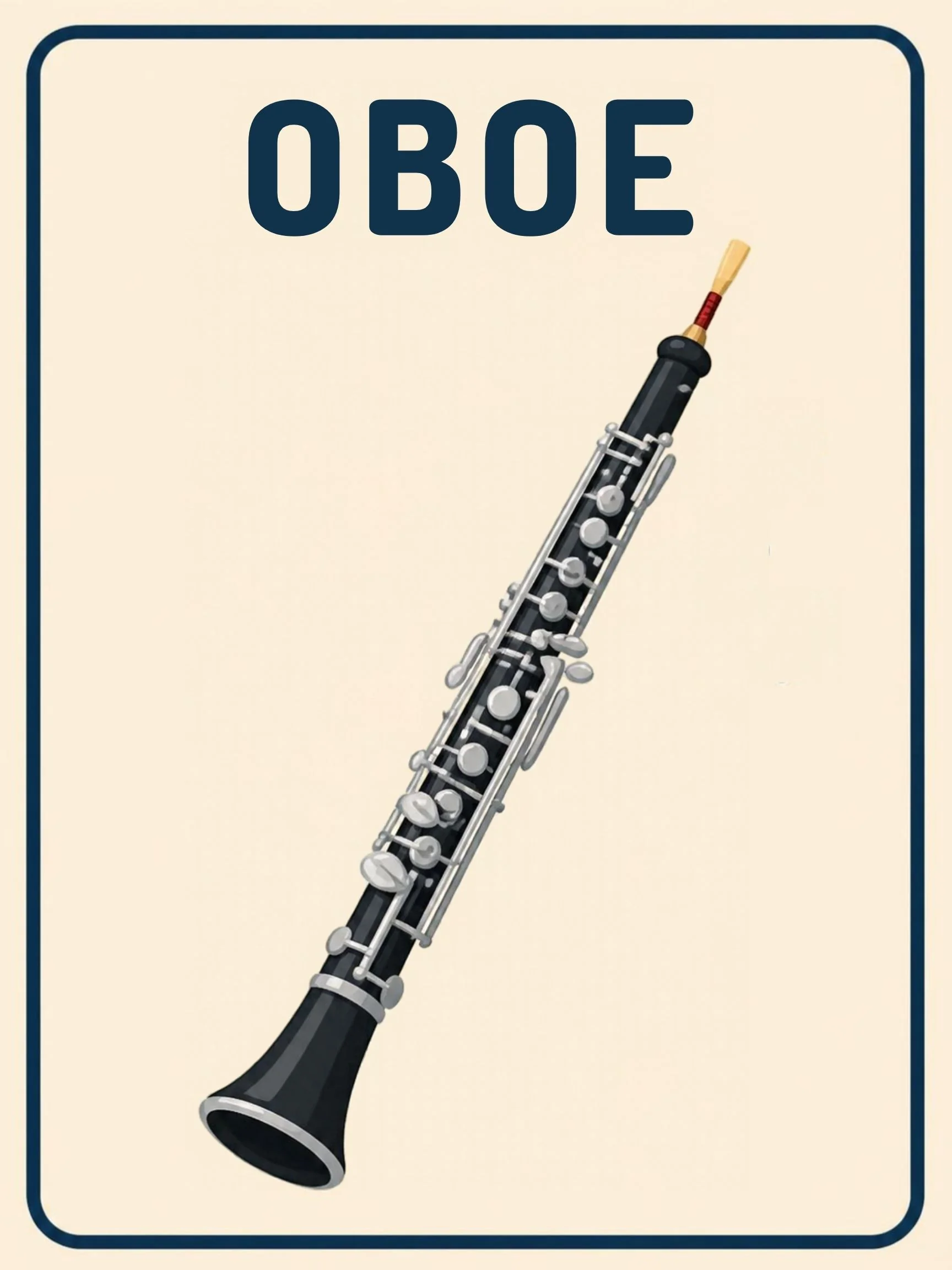
What is this?
An oboe is a slender black tube with a DOUBLE reed: two thin blades of cane bound face to face. Blow and the blades flutter against each other — a bright, nasal, penetrating voice. Orchestras tune to the oboe’s long-held A.
What does it mean?
The oboe’s voice is unmistakable — duck-call bright — and its job is trust: when the oboe plays its A, a hundred musicians tune to ONE note. The brightest squawk in the room becomes the standard everyone agrees on.
What does the child need to know?
Your child needs three oboe ideas: TWO reeds, face to face — the flutter happens between them, reed on reed; the voice is bright and nasal — a duck with excellent manners; and the orchestra’s tuning note is the oboe’s long, steady A — the most-listened-to note in classical music.
Why this matters
The double reed doubles the straw-clarinet idea (two blades, not one), and the tuning ritual teaches something bigger: a whole team agreeing on one sound, started by one small, bright voice.
What it teaches
Double-vibration thinking, bright-versus-warm tone listening, the tuning ritual — steady pitch as a team standard — and fine breath pressure for a delicate reed.
Words to learn
oboedouble reedtwo bladesbrighttuneAorchestra
Say this to your child
“"The oboe has TWO reeds — two thin wooden blades strapped face to face! Blow between them and they flutter against each other: reed-on-reed — a bright, duckish voice. And here is its great job: before a concert, the oboe plays one long, steady A — and the WHOLE orchestra tunes to it. The brightest squawk becomes the note everyone trusts."”
Step by step
- Show the card: "This is an oboe — the woodwind with TWO reeds kissing."
- The double: the clarinet has one reed; the oboe has TWO thin blades bound face to face — they flutter AGAINST each other. Two tongues, one quack.
- Straw demo: flatten a straw tip, cut TWO small blades, blow — the double-reed honk! Compare with a single-blade straw: double is brighter.
- The A ritual: the oboe plays one long, steady A — and the whole orchestra listens and matches it. Steady is the whole job.
- Play the tuning game below and close: "two reeds, one A."
Look closer at the picture
On this card the word "Oboe" stands in big navy capitals inside the rounded frame, with a friendly illustration of the oboe and its reed below — exactly as the slender tube looks.
Ask your child
"How many reeds does the oboe have? Which bird does it sound a little like? What note does the orchestra tune to?"
What your child can say or do
Your child might say: "TWO reeds, kissing!" "A duck with manners!" or the tuner’s pride: "My long A is the boss note!"
Out in the real world
Oboes sit centre-stage at every orchestra’s tuning — listen for the lone A before the concert: that is the oboe, and a hundred instruments agreeing with it. The double reed lives at home too: two flattened straw blades will honk it.
Try it together
Tune the Orchestra: one player is the OBOE — hums one long, steady AHHH. Everyone else is the orchestra: one by one, they join the SAME pitch until the room hums as one note. Wobbly joiners get the oboe’s frown; steady ones the nod. Then the concert begins — one note, a hundred players, zero squawks. That is the oboe’s real job, rehearsed.
Understanding check
Ask: "How many reeds? What do they do to each other? What is the oboe’s big job before a concert?" Two, flutter against each other, give the tuning A — three answers and the orchestra can begin.
Parent tips
Two blades beat one for the demo — the between-reeds flutter is the whole physics. And praise STEADY over loud: the oboe’s A is honoured for its evenness, not its volume.
This lesson pairs with the Oboe flashcard in the library — print it, show it, keep it on the fridge. Back to Music Room (Class 23).