
Saxophone — a step-by-step lesson for grown-up and child
This lesson teaches the saxophone’s wonderful identity crisis: it LOOKS like brass — golden, curvy, shiny — but it SINGS with a wooden reed like a clarinet. Shape is one family, voice is another.
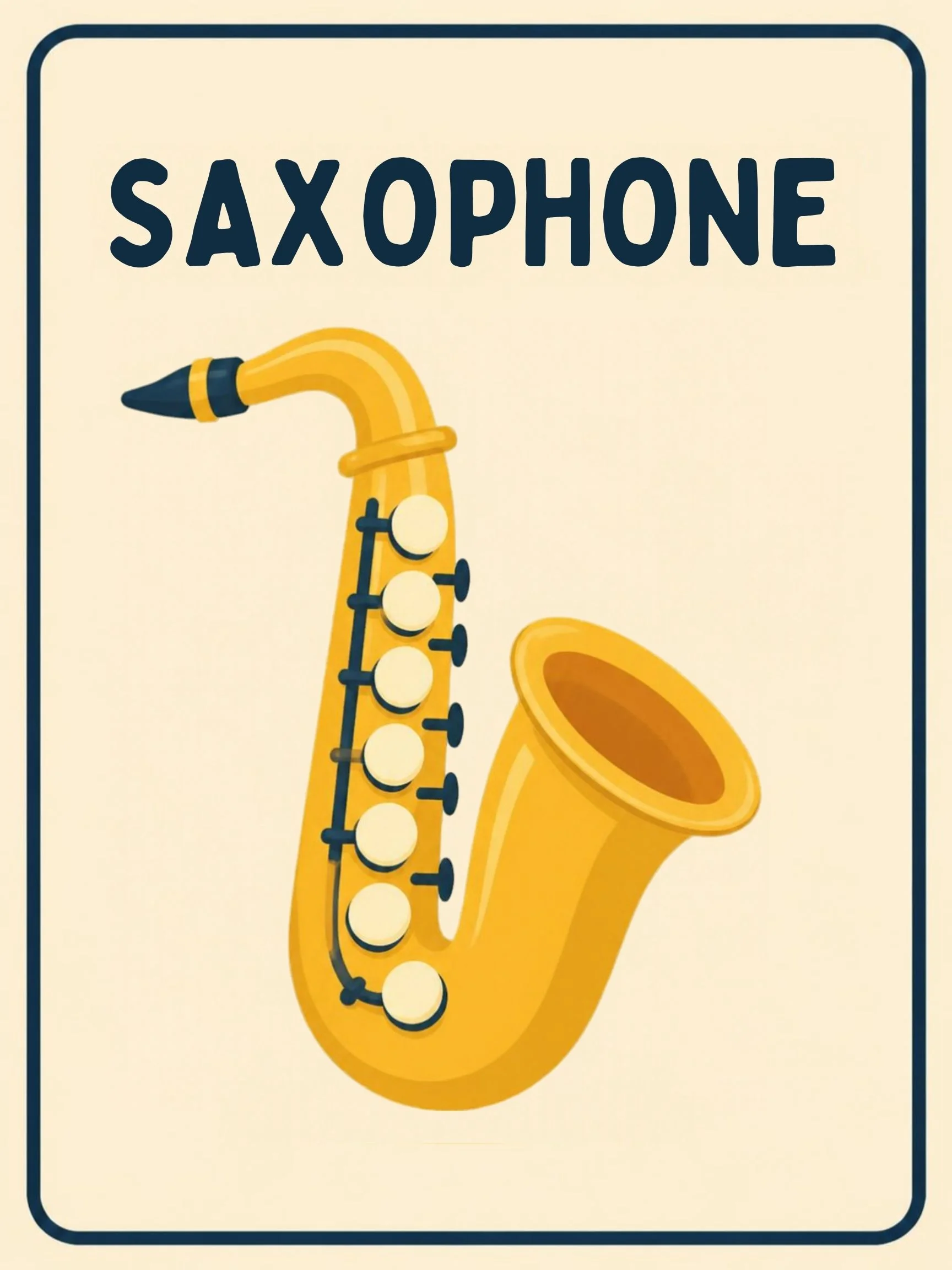
What is this?
A saxophone is a golden metal tube, wide and curving, ending in an upturned bell: a single reed on the mouthpiece makes the buzz, the long metal body shapes it, and the sound comes out warm, husky and laughing.
What does it mean?
The sax is the perfect trick question: families of instruments are decided by HOW they make sound, not what they look like. Metal body, wooden voice — the sax teaches classification by listening, not looking.
What does the child need to know?
Your child needs three sax ideas: golden and curvy like brass — but the voice comes from a single WOODEN reed, like the clarinet’s; the tube bends twice and flips its bell upward — built so the player can reach every key; and the voice is the laughing one — jazz’s favourite sound.
Why this matters
Look-versus-listen classification is a genuine thinking skill, and the sax is its most charming case. Plus the honk-to-smooth game is the best breath-and-reed warm-up two straws can provide.
What it teaches
Family classification by sound source, curved-tube length thinking, reed-breath control (honk versus smooth), and jazz listening — spotting the sax’s laugh in real music.
Words to learn
saxophonebrass shapereedwoodwindjazzhuskybell
Say this to your child
“"The saxophone is a trick! Golden, shiny, curvy — it dresses like the brass family. But its voice comes from a wooden reed, same as the clarinet — so it is really a WOODWIND in brass clothes! And its sound? Sometimes a cartoon duck, sometimes a slow, laughing song — jazz’s favourite voice, wearing gold."”
Step by step
- Show the card: "This is a saxophone — the golden tube with a secret."
- The trick question: it looks like the brass family — shiny, golden, curvy. But listen: its voice comes from a single WOODEN reed, same as the clarinet. It is a woodwind wearing brass clothes!
- The curves: the tube bends twice — down, around, and the bell flips UP toward the listener. The bends let short arms reach a long tube.
- The voice: honk like a cartoon duck, then smooth like a slow song — both are the sax. The reed and the breath choose.
- Play the look-listen game below and close: "brass outside, woodwind inside."
Look closer at the picture
On this card the word "Saxophone" stands in big navy capitals inside the rounded frame, with a friendly illustration of the golden sax below — its curves and upturned bell exactly as the instrument looks.
Ask your child
"Which family does the saxophone SOUND like? What makes its voice — lips or a wooden reed? Which music loves the saxophone most?"
What your child can say or do
Your child might say: "A woodwind in brass clothes!" "The reed sings, not the lips!" or the jazz fan: "It sounds like laughing!"
Out in the real world
Saxes wail through jazz, soul and every big-city night — and their classification trick lives in every music book: sound source decides the family. Golden outside, wooden inside — meet any saxophonist and they will say exactly that.
Try it together
Look or Listen: three cards up — trumpet (brass), clarinet (woodwind), saxophone (both-looking). The rule: sort by SOUND. The leader hums or honks — bright lip-buzz (trumpet), woody flutter (clarinet), reedy-warm with a laugh (sax) — and players point to the family. Then the honk-to-smooth game: one straw-reed honk, then one long smooth hum — the sax’s two moods, both owned.
Understanding check
Ask: "What family is the sax by voice? What makes the sound? What are its two moods?" Woodwind, a wooden reed, honk and smooth — three answers and the jazz is in.
Parent tips
Say the rule out loud twice: families go by VOICE, not outfit. And the straw-reed from the clarinet lesson transfers — same reed, golden attitude.
This lesson pairs with the Saxophone flashcard in the library — print it, show it, keep it on the fridge. Back to Music Room (Class 23).