
Sitar — a step-by-step lesson for grown-up and child
This lesson teaches the sitar — India’s long-necked wonder — and its shimmering secret: strings that buzz on purpose, and hidden strings that sing along by themselves.
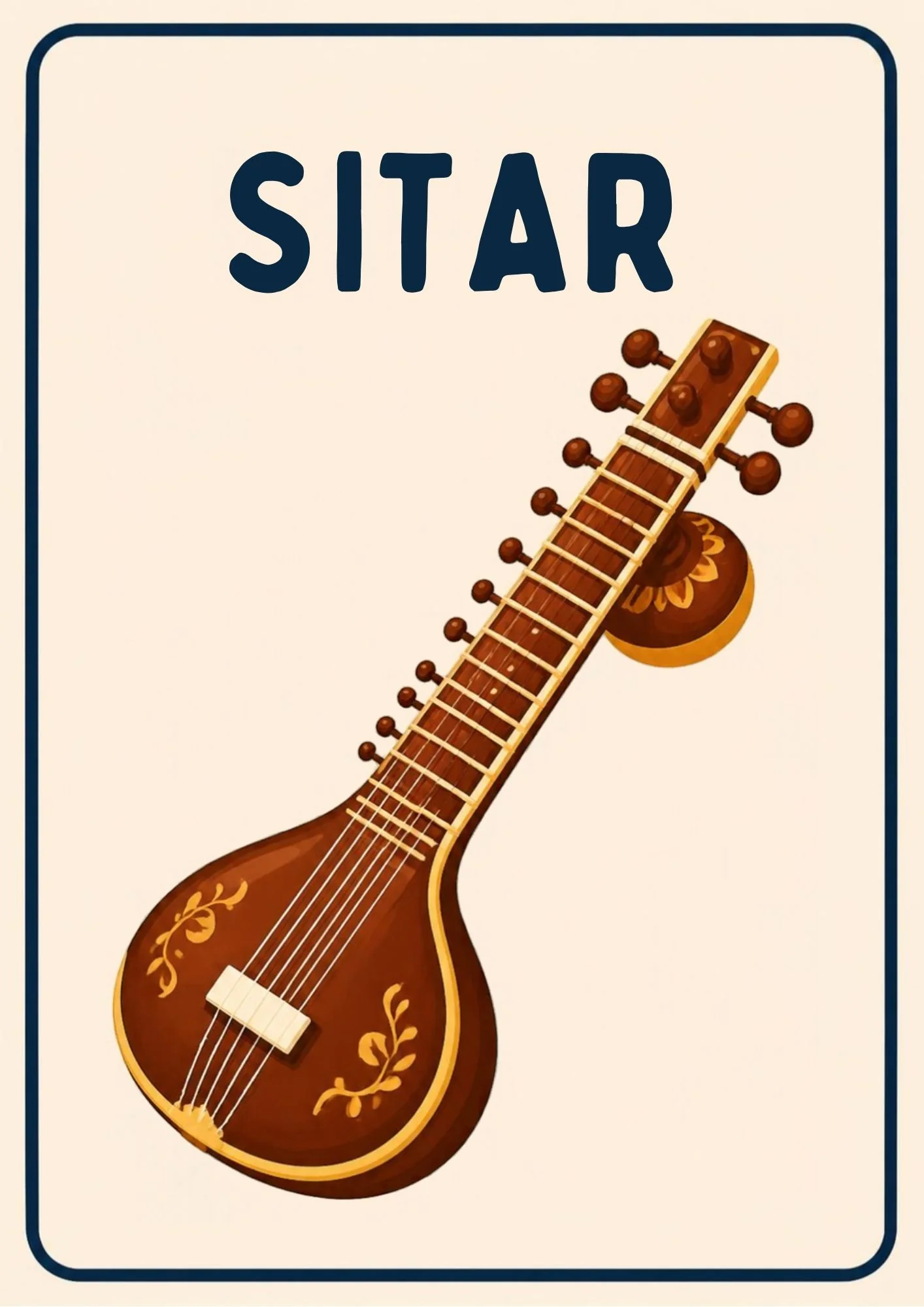
What is this?
A sitar is a long-necked string instrument with a big gourd body: five main strings played over high curved bridges, plus a dozen sympathetic strings underneath that ring along by themselves. The curved bridges give every note its famous buzzing shimmer.
What does it mean?
The sitar’s buzz is engineering, not accident: the wide, curved bridge lets the string hum against it — a sparkle built into the design. And the sympathetic strings are music’s friendliest echo: strings that vibrate because OTHER strings nearby are singing.
What does the child need to know?
Your child needs three sitar ideas: the neck is LONG — a whole ladder of notes stretching far; the bridge is curved, so every note shimmers with a buzz — on purpose; and sympathetic strings hide under the main ones and ring along like a ghost choir.
Why this matters
The sitar introduces resonance made visible — strings answering strings — and opens the world’s music beyond the orchestra: Indian classical music has its own grammar, and the sitar is its trumpet and its violin.
What it teaches
Resonance awareness (strings answering strings), drone-and-melody layering like the bagpipes’ lesson, cross-cultural listening, and gentle plucking over a long reach.
Words to learn
sitarneckgourdbuzzsympathetic stringsdroneshimmer
Say this to your child
“"The sitar is India’s wonder — a gourd, a VERY long neck, and strings that shimmer! The little bridges are curved, so every note buzzes sparkly. And here is the secret: under the main strings hide ghost strings — sympathetic strings — that ring along all by themselves when the big strings sing. One string plays; the ghost choir answers!"”
Step by step
- Show the card: "This is a sitar — India’s long-necked singing gourd."
- The long neck: trace it — so much longer than a guitar’s! Long neck means a huge ladder of notes to climb.
- The buzz: the little bridges are CURVED, and the string hums against the curve — that is the sitar’s famous shimmer, built in on purpose.
- The ghost choir: UNDER the main strings hide more strings — the sympathetic ones — that ring along whenever the main strings sing. Strings answering strings!
- Play the resonance game below and close: "one string sings, the others answer."
Look closer at the picture
On this card the word "Sitar" stands in big navy capitals inside the rounded frame, with a friendly illustration of the sitar below — the long neck and gourd exactly as the instrument looks.
Ask your child
"Is the sitar’s neck long or short? Why does every note buzz? What do the hidden strings do?"
What your child can say or do
Your child might say: "The neck is a giant ladder!" "The buzz is on purpose!" or the ghost spotter: "The ghost strings sing along!"
Out in the real world
Sitars shimmer through Indian classical music and every Beatles-era film flashback — and resonance lives at home: sing loudly near a piano with the pedal down and hear its strings answer. Ghost choirs are everywhere.
Try it together
Ghost Strings: stretch two rubber bands over a box, side by side, NOT touching. Pluck one hard, hold it still — listen: the other band hums along, faintly. Sympathetic strings, live! Then the drone layer: one player hums a steady low drone; the other plucks a shimmering melody over it — the sitar’s two-layer music, at kitchen scale. Pluck, buzz, answer — India’s shimmer, understood.
Understanding check
Ask: "What shape are the sitar’s bridges? What do sympathetic strings do? What layers make the sitar’s music?" Curved, ring along, drone plus melody — three answers and the shimmer is heard.
Parent tips
The faint hum of the untouched band needs quiet rooms and close ears — lean in together. And the drone-plus-melody layer repeats the bagpipes’ lesson: one sound under, one sound dancing on top.
This lesson pairs with the Sitar flashcard in the library — print it, show it, keep it on the fridge. Back to Music Room (Class 23).