
Trombone — a step-by-step lesson for grown-up and child
This lesson teaches the trombone’s marvel: while every other brass instrument pushes buttons, the trombone player’s arm IS the buttons — stretching the tube longer and lower with one slide.
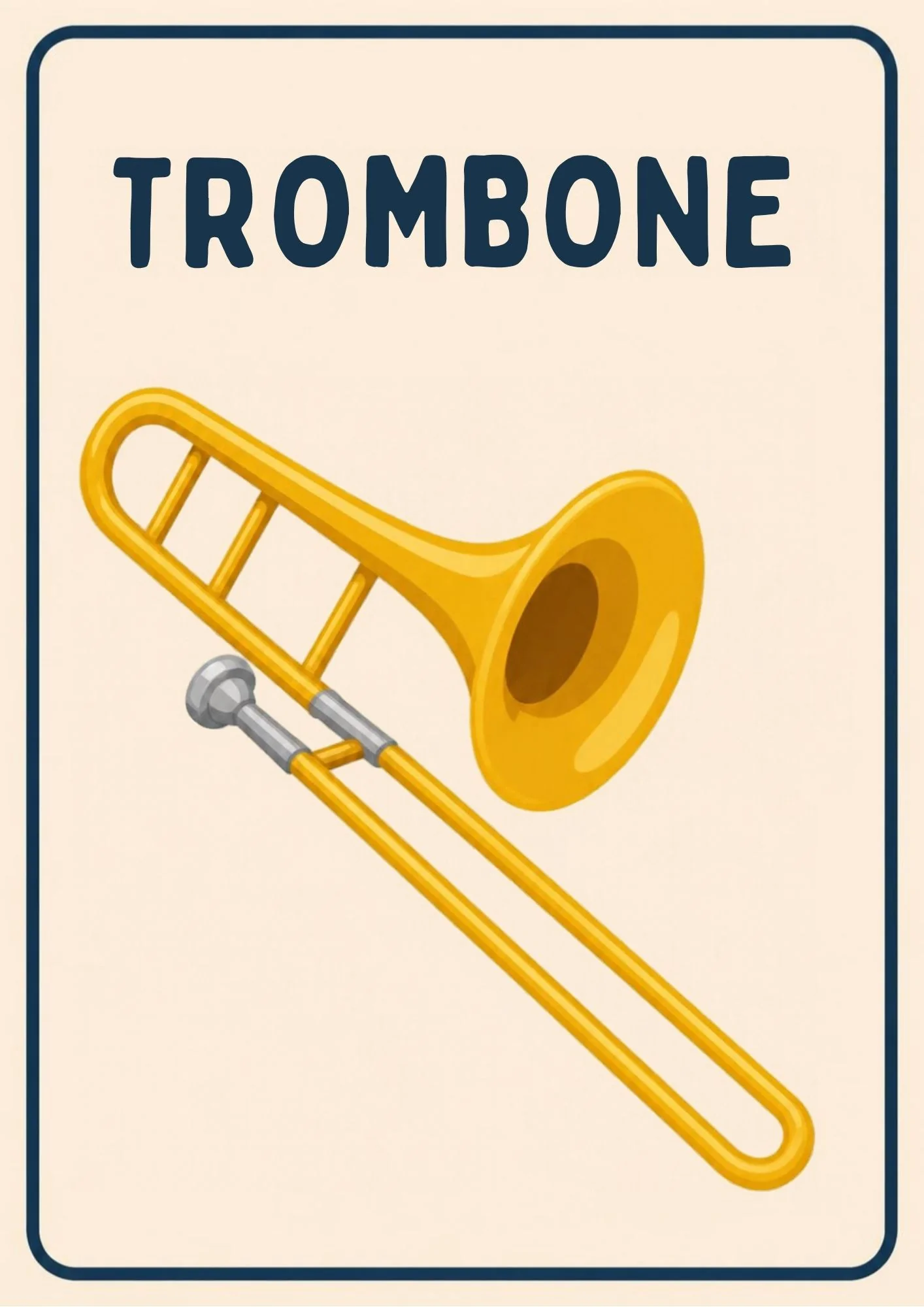
What is this?
A trombone is a brass trumpet-length tube with a SLIDE instead of valves: push the slide out, the tube grows, the notes sink; pull it in, the tube shrinks, the notes climb. It can even glide between notes — the famous wawa slide.
What does it mean?
The trombone makes pitch a visible, movable thing: the note lives at a slide POSITION, and the arm learns the map. It is the only instrument that can slide siren-smooth between notes — and the slide-whistle proves it free.
What does the child need to know?
Your child needs three trombone ideas: slide out = tube longer = notes LOWER; slide in = notes higher — the arm is the keyboard; and the glissando — sliding WHILE buzzing — makes the wawa swoop no other brass instrument can.
Why this matters
Length-pitch gets a whole arm here — the clearest, most physical version of the law the flute and horn taught — and the slide’s siren is the funniest, most memorable sound on the shelf.
What it teaches
Length-pitch mapping by arm extension, position memory, buzz control across the slide, and the glissando — continuous pitch, a rare and delightful skill.
Words to learn
tromboneslidestretchlowerglissandowawapositions
Say this to your child
“"The trombone has no buttons — it has a SLIDE, and your arm plays it! Push the slide out: the tube gets longer and the notes sink lower. Pull it in: shorter, higher! And the trombone’s famous trick is the wawa — buzzing WHILE sliding, gliding between notes like a siren. Your arm is the whole keyboard!"”
Step by step
- Show the card: "This is a trombone — the brass with no buttons, just a slide!"
- The law: slide OUT — tube longer — notes sink lower. Slide IN — tube shorter — notes climb. The arm plays the notes.
- Slide-whistle demo: blow a slide whistle, pushing the plunger out — the note sinks exactly like the trombone’s slide. Same physics, pocket edition.
- The wawa: buzz a note and slide slowly — waaaa-waaa — gliding between notes like a siren. No other brass can!
- Play the stretch game below and close: "out is low, in is high."
Look closer at the picture
On this card the word "Trombone" stands in big navy capitals inside the rounded frame, with a friendly illustration of the trombone below — its long slide exactly as the instrument looks.
Ask your child
"What happens when the slide pushes OUT? What plays the notes — fingers or the arm? What is the sliding trick called?"
What your child can say or do
Your child might say: "Out is low, in is high!" "My arm is the keyboard!" or the siren joy: "Waaa-waaa — I glided!"
Out in the real world
Trombones swank through jazz bands, orchestras and every cartoon wah-wah-wah — and their law lives in every slide whistle and telescoping drinking straw: stretch the tube, sink the note.
Try it together
Arm Keyboard: slide whistle (or a drawn slide poster with positions marked). The leader calls "position one!" — close. "Position four!" — arm out far. Each position gets a hummed pitch: the arm learns the map. Then the wawa finish: buzz-hum while sliding slowly out — one giant glissando, room applause. Out is low, in is high — the trombone’s law, in the arm forever.
Understanding check
Ask: "Slide out makes notes what? What plays the notes? What is the glide called?" Lower, the arm, the glissando — three answers and the siren sings.
Parent tips
Mark slide positions on the poster — trombonists really do learn numbered positions. And the slide whistle is the honest home trombone: no buzz required, all the physics.
This lesson pairs with the Trombone flashcard in the library — print it, show it, keep it on the fridge. Back to Music Room (Class 23).