Make a sound map.
Slow down. There is a world to hear.
A sound map records what you hear instead of what you see. A garden, schoolyard or open window can all be listening places. Stay in one spot and notice quiet sounds as well as loud ones.
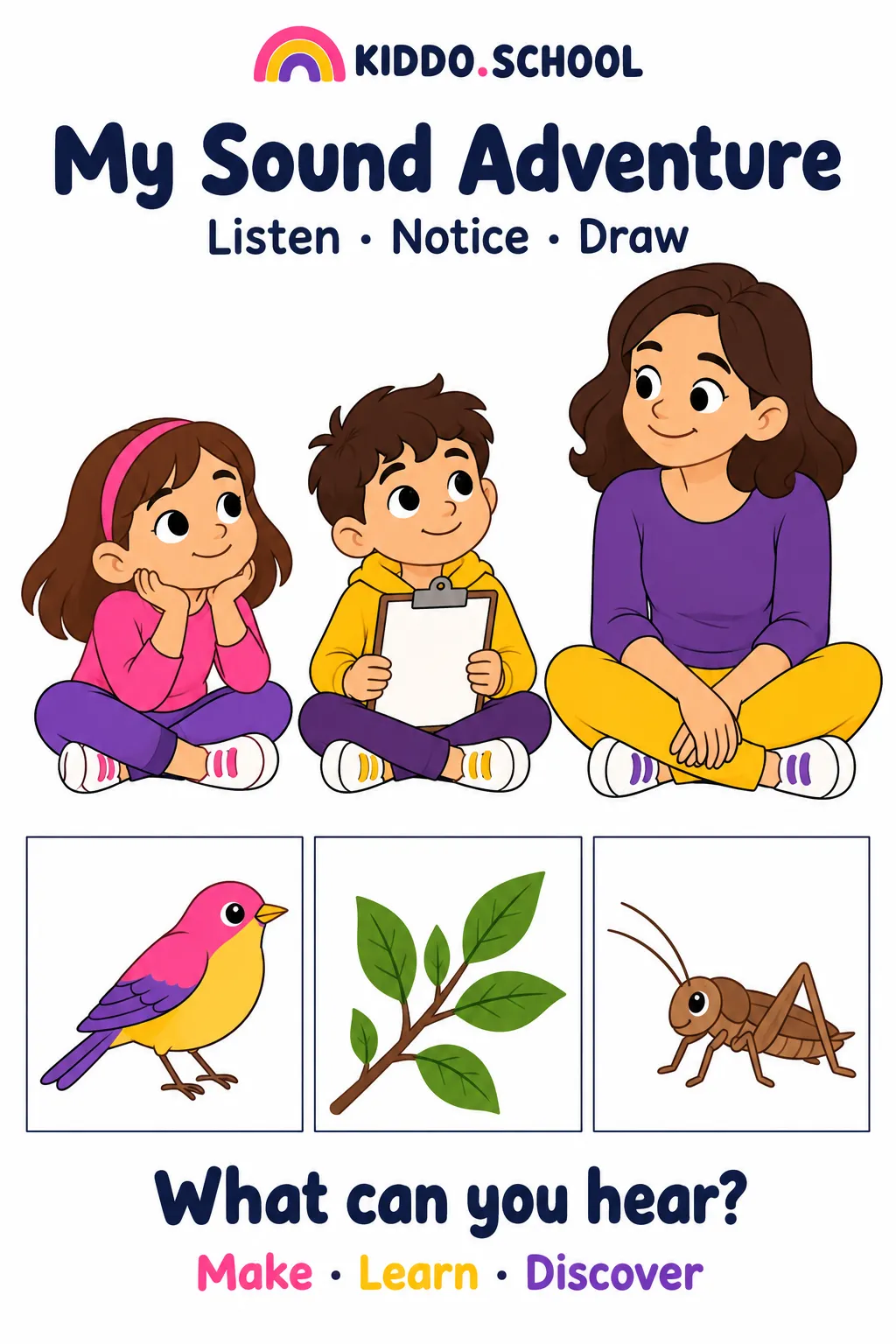
Choose a listening activity.
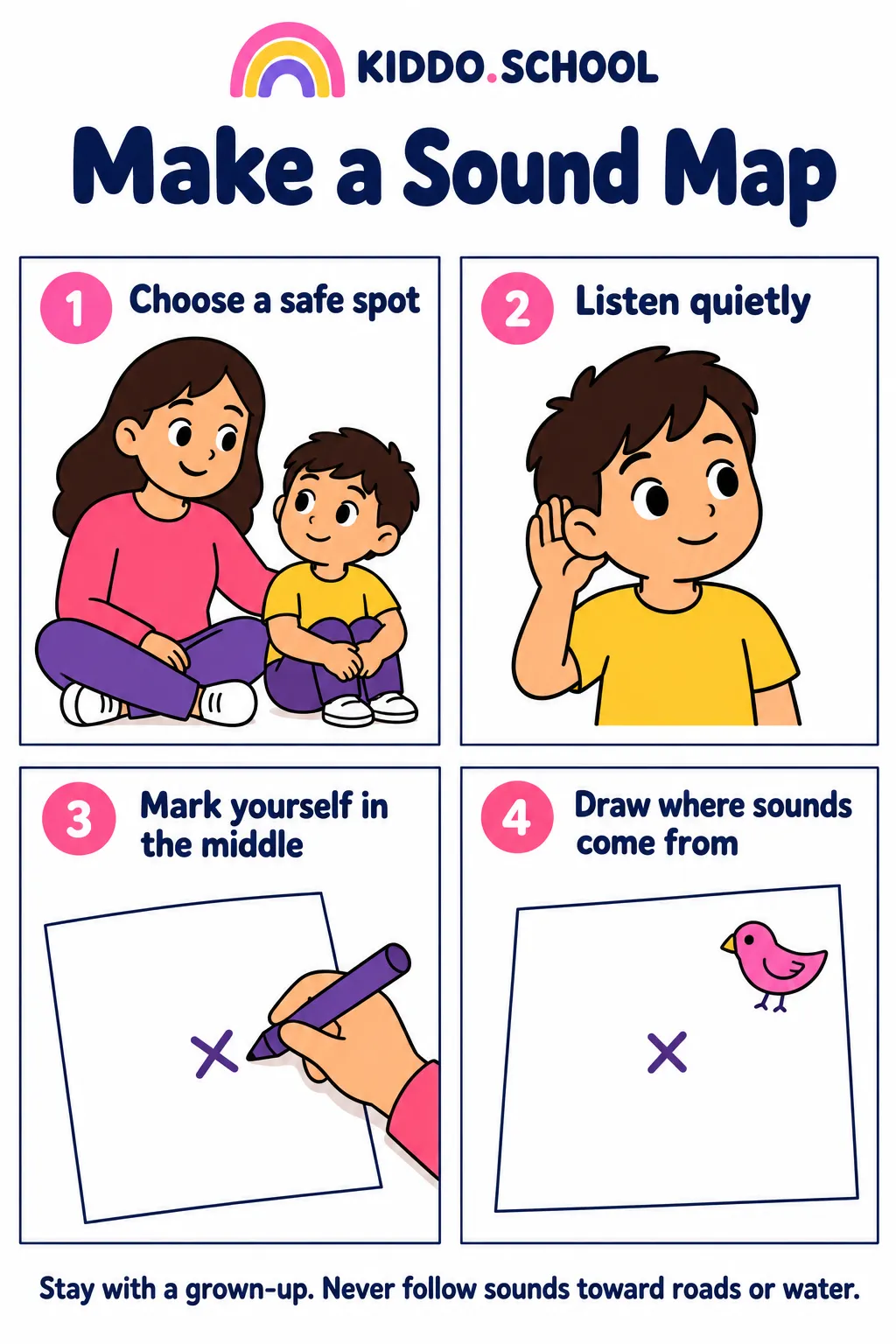 Make a Sound Map
Listen from one safe spot and record where the sounds seem to come from.
Draw · Type · Save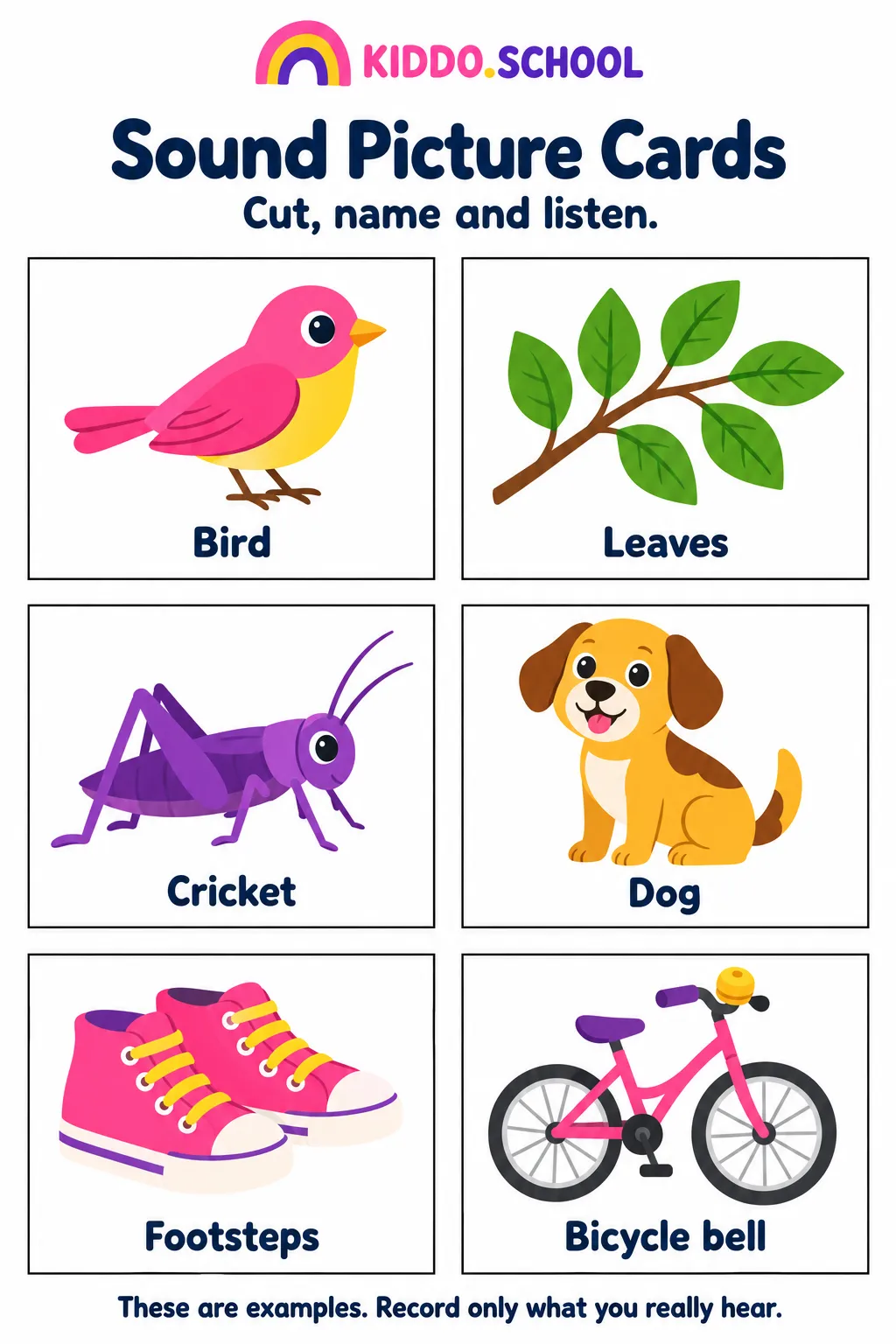 Sound Picture Cards
Explore six sound sources, then notice which ones you actually hear.
Draw · Type · Save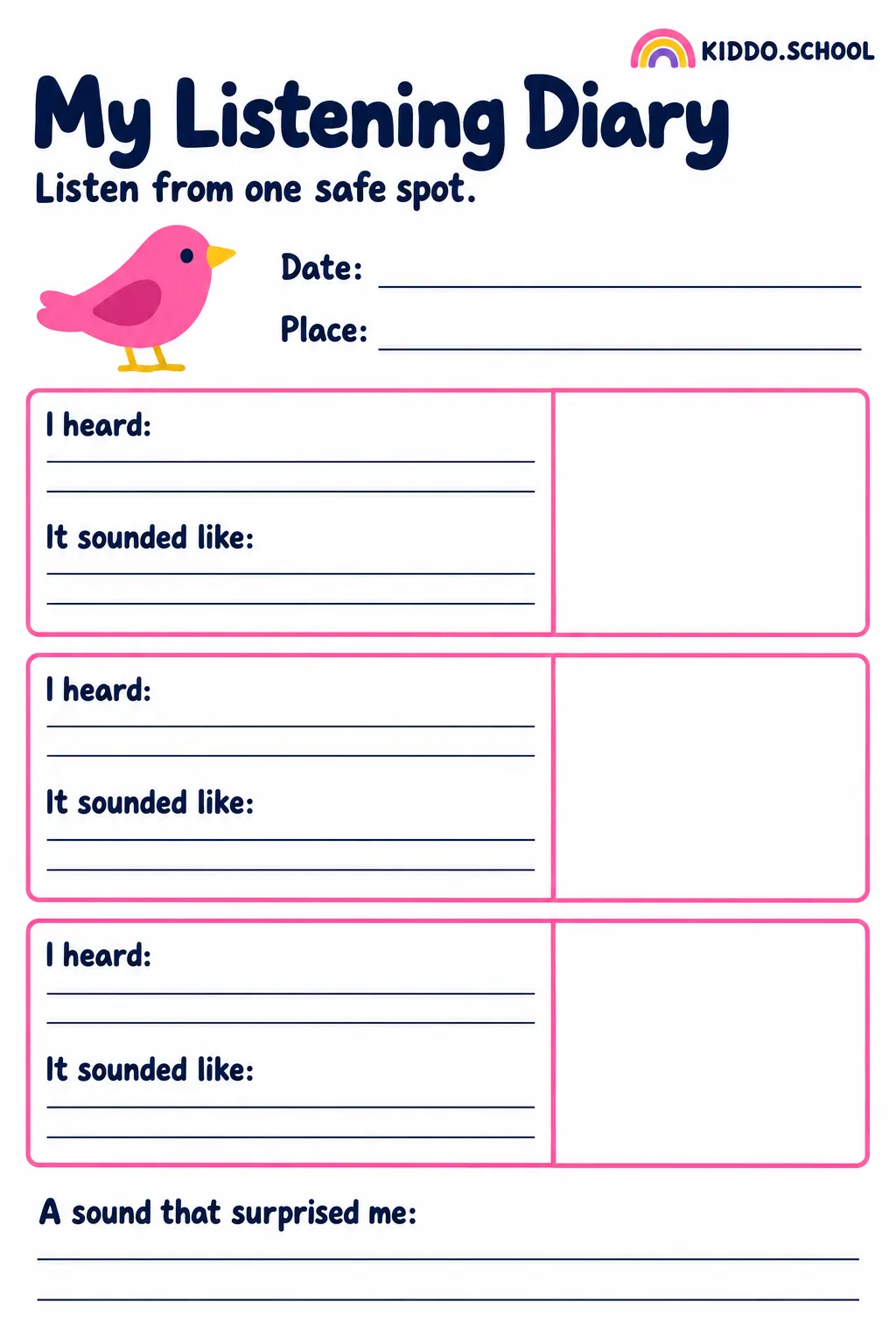 My Listening Diary
Keep a short record of sounds from your listening spot.
Draw · Type · Save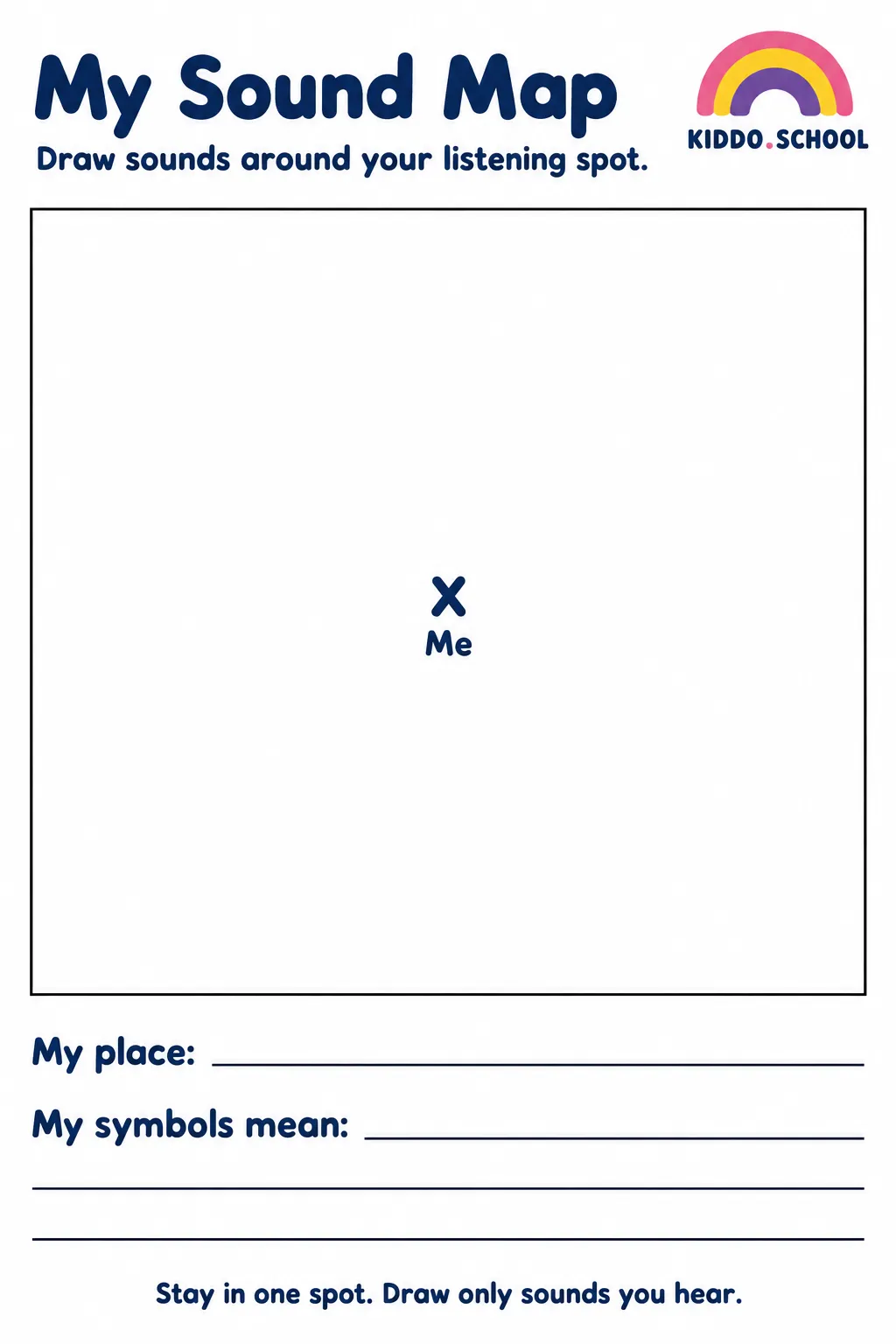 My Sound Map
Build your own picture of the sounds around you.
Draw · Type · Save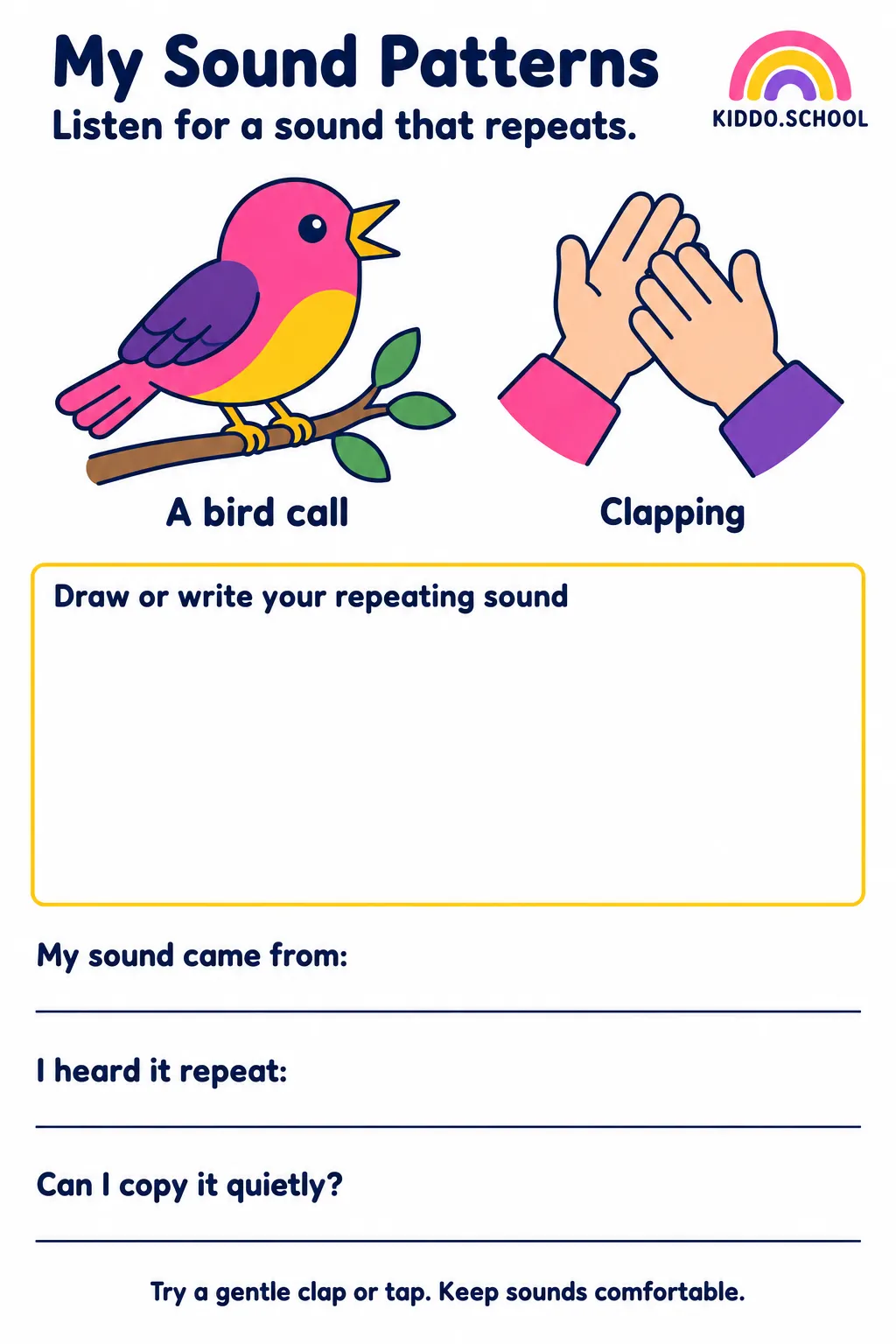 My Sound Patterns
Notice a repeating sound and describe its rhythm.
Draw · Type · SaveLet's make it happen.
Choose your listening spot
Sit or stand comfortably in a safe place. Draw a small X in the centre of your paper to show where you are.
Listen for a short while
Pause for about one minute. You may hear birds, wind, voices or traffic. There is no need for complete silence.
Mark the directions
For each sound, draw a simple symbol on the side of the X where you heard it. A wavy line might mean wind; a dot might mean a tapping sound.
Listen again
Spend another minute listening. Add new sounds and circle any that repeat. Place distant sounds farther from the X if you can judge their distance.
Compare your discoveries
Share your map. Explain your symbols and describe one sound that was easy to miss. Return another time and see what changes.
What's happening here?
Listening from a fixed position helps connect sounds with direction and distance. A symbol lets you record a sound without needing to spell its name. Different listeners may notice different things.
Keep the wondering going.
- Which sound was closest? Which seemed far away?
- What changed between your two listening moments?
- Which sounds might be different in the evening?
Make it work for you.
Keep it simple
Listen for just 20–30 seconds. Point toward a sound and let an adult draw the mark.
Take it further
Create a key for natural and human-made sounds. Compare maps made at the same place at two different times.
Not quite going to plan?
Too much background noise? Try a quieter place with an adult or listen by a window. If hearing is limited, adapt this to a movement map and mark leaves, shadows or other visible changes.
My sound map
Draw the sounds around your listening spot and explain your symbols.
Image · prints on A4 or Letter using “fit to page”. Plain paper works just as well.
Download the sheet Open image to print ↗You may print and use this original activity sheet at home or in your classroom. Please link to the activity page when sharing it online.