

Large dots — a step-by-step lesson for grown-up and child
Not every card is a workout. The dots card is the set’s deep breath — and this lesson shows you how to use it as one.
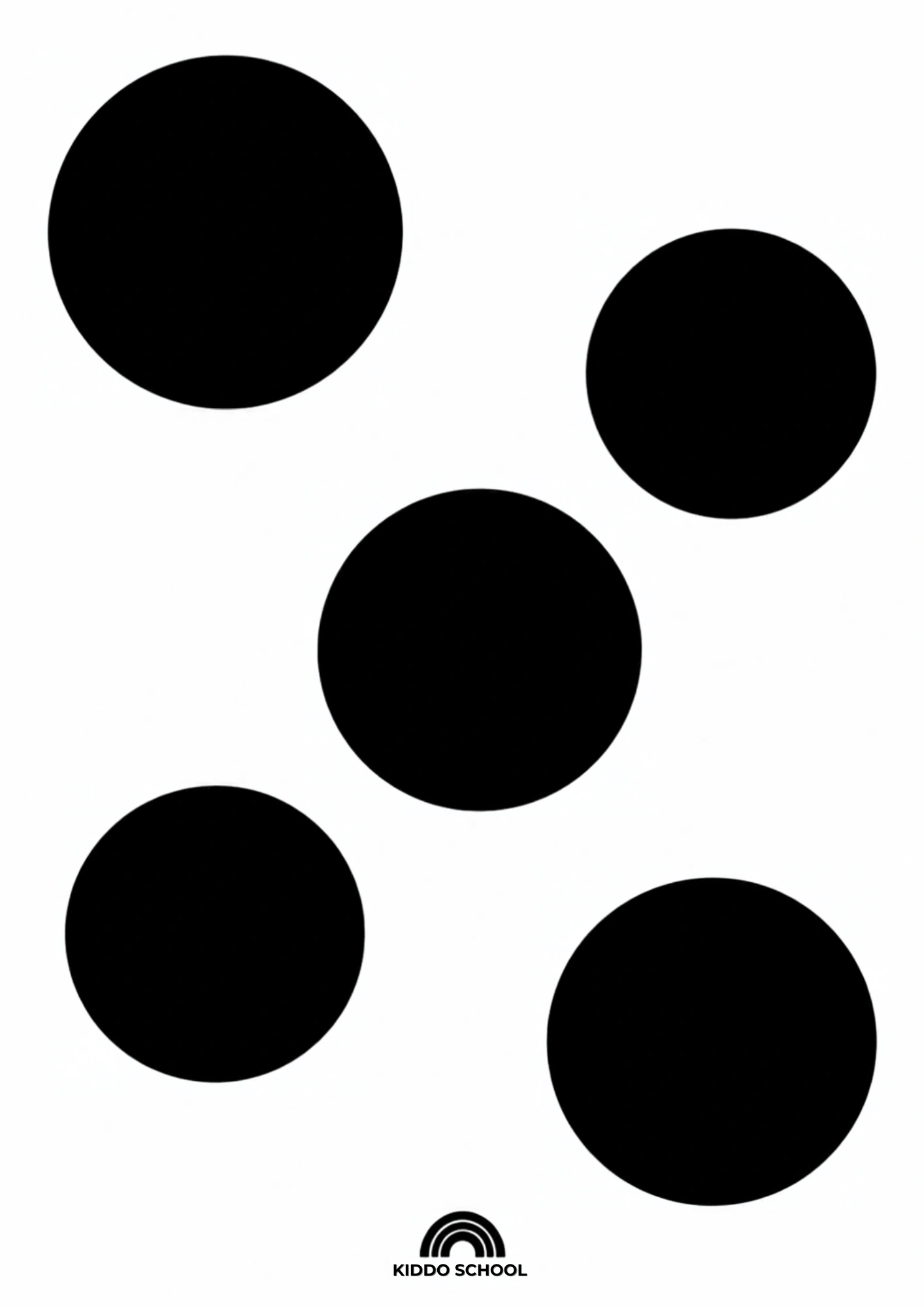
What is this?
Large dots are just that: big, bold, round shapes with no corners and no direction. Nothing on this card moves or turns, which is precisely its gift — a place for young eyes to land and stay a while.
What does it mean?
After cards that ask the eyes to travel, a still image lets them settle. Visual rest is part of visual training: attention recovers on easy images, so the harder ones stay fun tomorrow. Dots are the nap of the set.
What does the child need to know?
Touch each dot with a fingertip as you count aloud — one, two, three. Your baby will not understand numbers for a long time yet; what lands is the rhythm and the steady, silly music of a voice that enjoys counting. The words are the melody, not the maths.
Why this matters
A baby who only ever meets high-energy input learns to need it; a baby who also meets calm images learns that quiet things are worth looking at too. Dots teach taste as much as vision — the plain can hold you.
What it teaches
Visual settling, attention recovery, early rhythm through counting aloud, and touch-eye pairing as your fingertip and your baby’s gaze meet on the same dot.
Words to learn
dotsroundonetwothreegentle
Say this to your child
“"Dots. Round as the moon, still as anything. One little dot... two little dots... three. All sitting still, waiting to be looked at. What a quiet, friendly card this is."”
Step by step
- Show the card at resting distance — no performance needed — and say its name low and slow: "Dots. Big, round dots."
- Let the card simply be looked at for a while; this one does not need a job on day one.
- On the second visit, tap each dot once as you count aloud, unhurried: one... two... three.
- Tap them again tomorrow and the day after — same dots, same order, same calm voice. The repetition is the point.
- Let this card close sessions that started busy: one quiet minute of dots is a better ending than one more exciting card.
Look closer at the picture
The artwork gives you bold round shapes in a simple arrangement and nothing else — say that much, no stories. Then notice the thing that changes daily: does your baby’s breathing slow on this card? Settled bodies are the data here.
Ask your child
Watch for the settle: do small movements still, does breathing deepen, do the eyes rest on one dot or drift softly between them? Wonder aloud: "I wonder if this is the card you will want at bedtime."
What your child can say or do
Long soft staring, a body that goes heavy and still against you, slow blinking, or a first wobbly reach towards the nearest dot — at three months a reach is a rumour of the grab to come, and worth a cheer.
Out in the real world
Dots in the wild: buttons on a cardigan, the round end of a rattle, polka-dot sheets, the moon if the timing is kind. "Round like a dot" is a phrase that will follow your baby for years — plant it now.
Try it together
Dot kiss: touch your lips gently to your fingertip, then tap it on each dot with a soft kiss-noise, one per dot. Silly, calm, repeatable — and it attaches warmth to looking, which is the whole trick of this age.
Understanding check
Self-check: did the card get a full quiet minute, and did your own voice stay low the whole time? If the answer to the second is no, try again at the next feed — calm is caught from the holder, not taught.
Parent tips
Resist making dots exciting; their plainness is the feature. If your baby is frazzled, bring this card out first, not last. And if a sibling wants to run the counting, let them — a second voice doubles the rhythm practice for free.
Staying safe
A still, quiet card can drift a drowsy baby into sleep mid-session — lovely, but move the card away and settle them properly rather than leaving it alongside. Cards stay adult-held at this age, end of story.
This lesson pairs with the Large dots flashcard in the library — print it, show it, keep it on the fridge. Back to Faces & Visual Tracking (Newborn 2).