

Red and black — a step-by-step lesson for grown-up and child
This card refuses to choose: bold black and strong red share the page. This lesson uses the mixture to name parts, sort aloud and let your baby’s eyes do the filing.
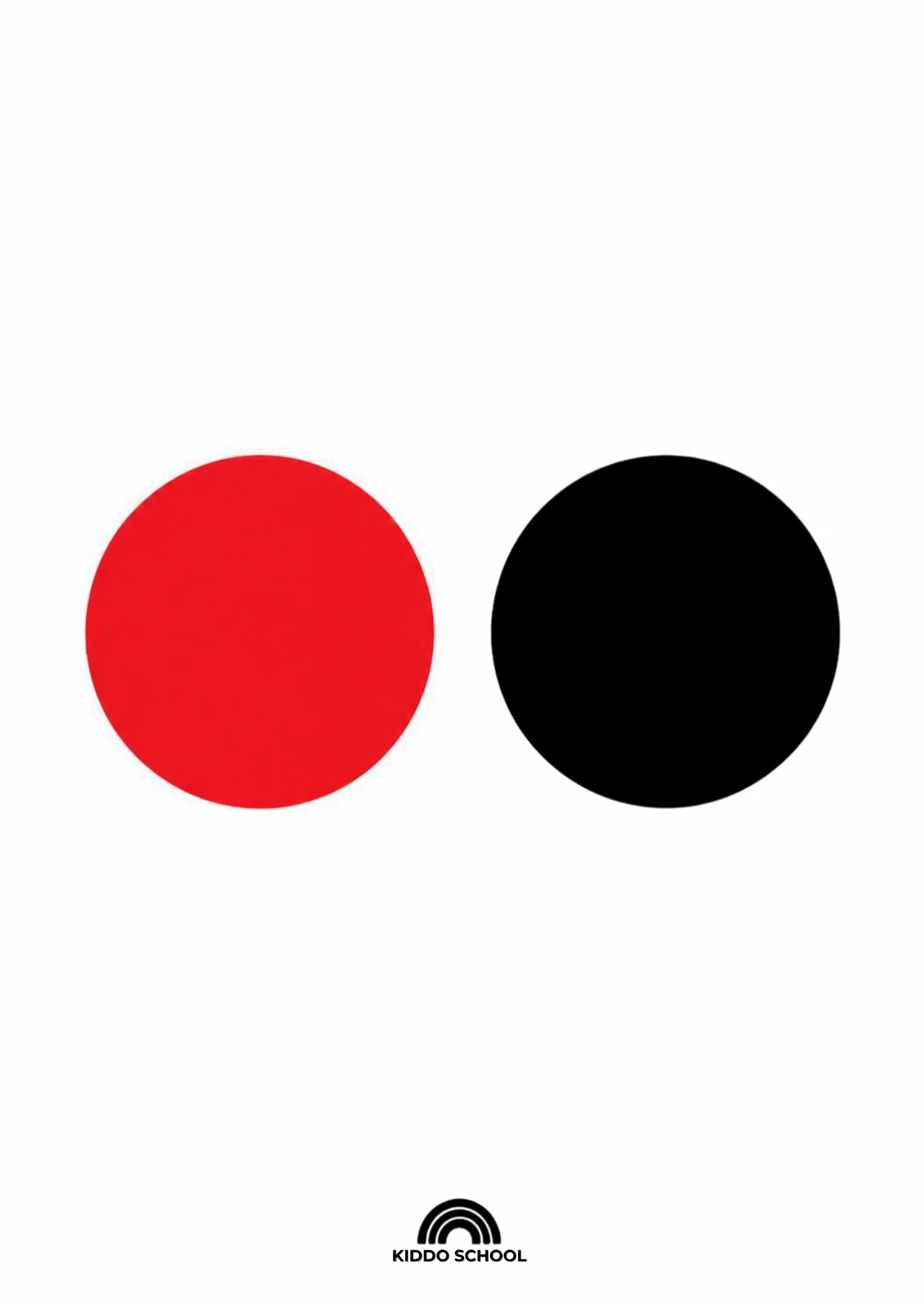
What is this?
A red-and-black card joins the two visual worlds your baby now lives between — the high contrast they have known for weeks and the colour they met in the last card. Same boldness, two inks, one image.
What does it mean?
Mixed cards are stepping stones by design. The black keeps the contrast signal strong while the red rides along inside the same picture, so colour gets rehearsed in the most comfortable format a young eye knows.
What does the child need to know?
Your finger is the sorter: touch a red part and name it, touch a black part and name it, taking turns. The sorting is yours to perform aloud — your baby supplies the looking, and the looking is the learning.
Why this matters
Part-naming is the seed of every later description — red wheel, black wheel, big dog, small dog. An image that comes in two clear parts makes the part-and-name game easy to run and easy to repeat.
What it teaches
Part-whole perception, colour naming in narration, visual sorting by following your touch, and steady shared attention on one multi-part image.
Words to learn
redblackpartherethereboth
Say this to your child
“"Red and black! This part is red... and this part is black. Red here, black there, red and black sharing one card. Two colours, one picture, and your eyes seeing both at once. Clever eyes."”
Step by step
- Show the card at focusing distance and give it its honest name: "Red and black together."
- Trace the red parts first, one slow touch each, saying red every time your finger lands.
- Then tour the black parts the same way — black, black, black — at the same unhurried speed.
- Mix the order on the second lap: red, black, red, black, so the eyes start jumping between the two.
- End with the whole card in one view and one summary line — "red and black, all on one card" — then stop talking and let the looking finish the session.
Look closer at the picture
The artwork lays red shapes against solid black shapes on one card — describe that much and move on. The richer noticing is behavioural: does your baby’s gaze jump when you jump, from red part to black part? Following your finger is joint attention arriving on schedule.
Ask your child
Watch the jumps: does the gaze shadow each touch, or wander off on its own route? Does one colour collect more looking? Wonder aloud: "I wonder if the red parts feel louder to you, or just newer."
What your child can say or do
Eyes that follow your fingertip part by part, a longer look at one colour’s territory, soft babbling that answers your naming rhythm, or a hand batting towards the card mid-lap — each is a version of "I see what you are doing".
Out in the real world
The pairing is everywhere: a red toy on a dark rug, red letters on a black sign, ladybirds on the lawn. Wherever red sits against dark, a two-second "red and black" keeps this card echoing through the week.
Try it together
Two-hands game: one hand touches a red part, the other a black part, taking turns — and your baby’s eyes swing between them like a slow tennis match. Two players, one card, zero equipment.
Understanding check
Self-check: did you name parts in turns rather than all at once, and did your baby’s gaze make at least one clear jump between colours? The turn-taking is your half; the jumping is theirs — both count.
Parent tips
Keep the naming rhythm slower than speech — this is dictation for the eyes. If your baby prefers one colour’s territory, follow their lead and start there next time; preference is fuel, not a problem.
Staying safe
This is a look-and-touch card, so it will attract hands eventually — let grabs happen against your held card, not against a propped one. Inspect the card after any gumming; soft corners get retired before they can flake.
This lesson pairs with the Red and black flashcard in the library — print it, show it, keep it on the fridge. Back to Faces & Visual Tracking (Newborn 2).