
Sit — a step-by-step lesson for grown-up and child
This lesson teaches sitting down as a real skill: criss-cross legs, hands resting, body calm — the superpower that runs story time, circle time and every classroom after.
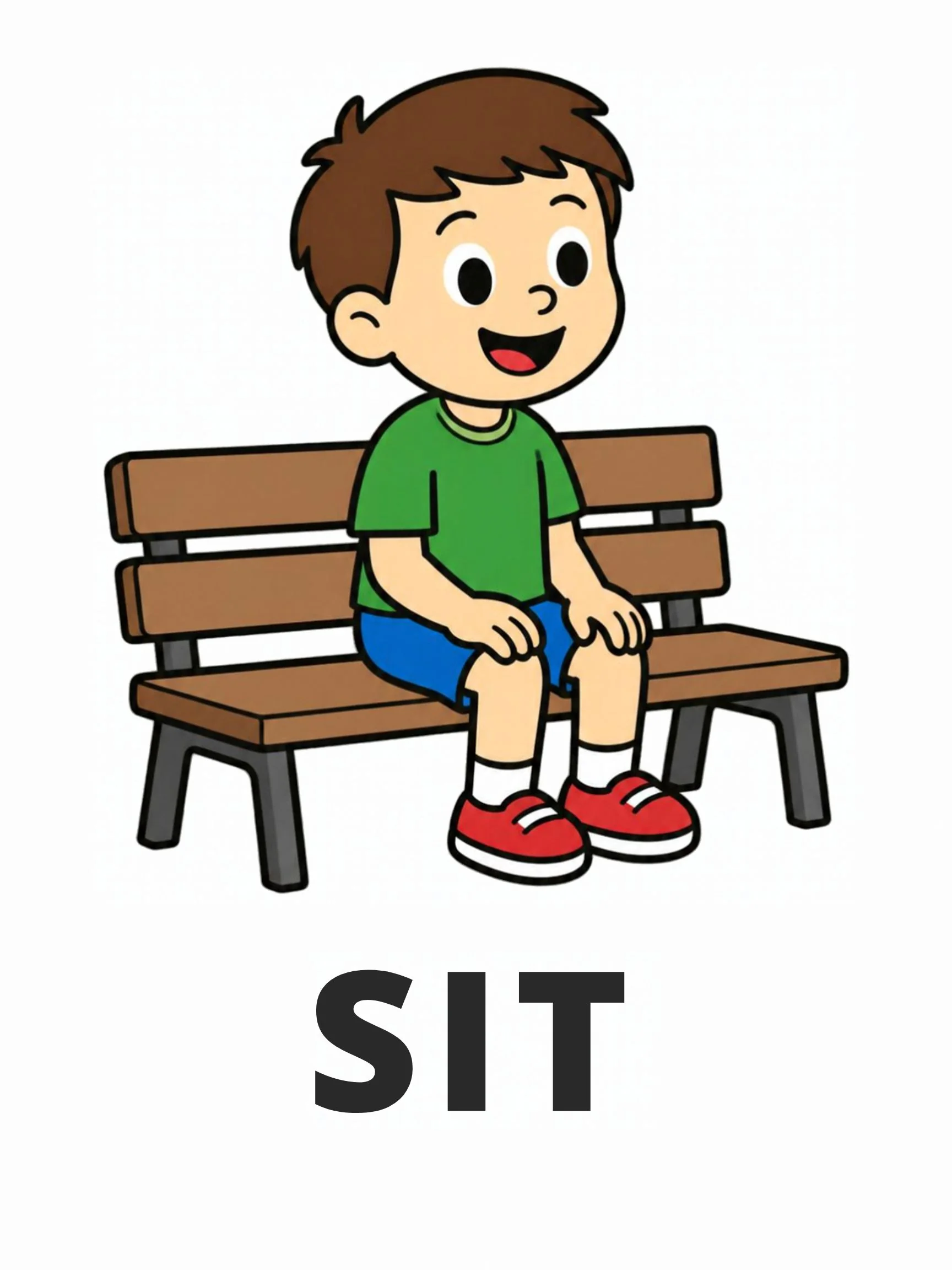
What is this?
Sit is coming to rest on the ground or a seat: cross the legs (criss-cross!), rest the hands, settle the body — sitting still is listening with your whole posture.
What does it mean?
Between the running and the climbing sits the sit — the skill that lets a child JOIN story time, assembly and every group moment. Framed as a skill (not a command), sitting calm becomes something children can practise and own.
What does the child need to know?
Your child needs three sit ideas: criss-cross legs make a steady base — a basket the body sits in; hands REST — in the lap, on the knees, holding a book; and calm is the game — still body, soft face, ears open.
Why this matters
Group sitting is the gateway to every classroom skill for the next twelve years — taught here as a game on the grass, where it first belongs.
What it teaches
Postural control, stillness stamina (built in seconds, not demands), group calm, and the transition skill — running to sitting to running.
Words to learn
sitcriss-crosscalmstilllapstory timesettle
Say this to your child
“"Sitting down is a real skill! Cross your legs — criss-cross — and sit in the basket: steady base, tall back. Hands REST in your lap. Then the settle: three slow breaths, shoulders down — calm as a pond. Sitting calm lets you join every story, every circle, every song. Criss-cross… settle… listen!"”
Step by step
- Show the card: "This is sit — the calm-down skill!"
- The basket: cross the legs — criss-cross — and sit INSIDE the basket: steady base, tall back.
- The resting hands: hands go to the lap or the knees — resting, not fidgeting. Try both; pick a home for the hands.
- The settle: three slow breaths, shoulders down, soft face — sitting calm is a game you can win.
- Play the sitting games below and close: "criss-cross, hands rest, settle."
Look closer at the picture
On this card the word "Sit" stands in big navy capitals inside the rounded frame, with a friendly sitting illustration below — exactly as the criss-cross calm looks.
Ask your child
"What does criss-cross make — a basket or a puddle? Where do the hands rest? How many breaths in the settle?"
What your child can say or do
Your child might say: "Criss-cross basket!" "Hands rest in my lap!" or the settled one: "Three breaths — calm as a pond!"
Out in the real world
Sitting moments fill every day: story time, meal time, bus seats, the cinema — and the criss-cross basket transfers to all of them. The settle is also the bedtime trick.
Try it together
Circle-Time Practice: everyone sits criss-cross in a circle — the settle, three breaths. Then story time for ONE minute (a very short story!) with statue-calm: still body, hands resting. Break, run a lap, sit again — the run-to-sit transition is the real skill. Three rounds, story a little longer each time. Criss-cross, hands rest, settle: the classroom superpower, grown on grass.
Understanding check
Ask: "What does criss-cross make? Where do the hands go? What is the settle?" A basket, the lap, three breaths — three answers and the circle is calm.
Parent tips
Seconds matter: ten calm seconds is a win at two, a minute is a triumph at four — grow slowly. And let the run-lap between sits be joyous: the transition is half the skill.
This lesson pairs with the Sit flashcard in the library — print it, show it, keep it on the fridge. Back to Playground.