
Nest — a step-by-step lesson for grown-up and child
This lesson settles in: your child feels the nnn buzz in their nose, builds a pretend nest big enough to sit in, and discovers that N and M are humming twins with different lips.
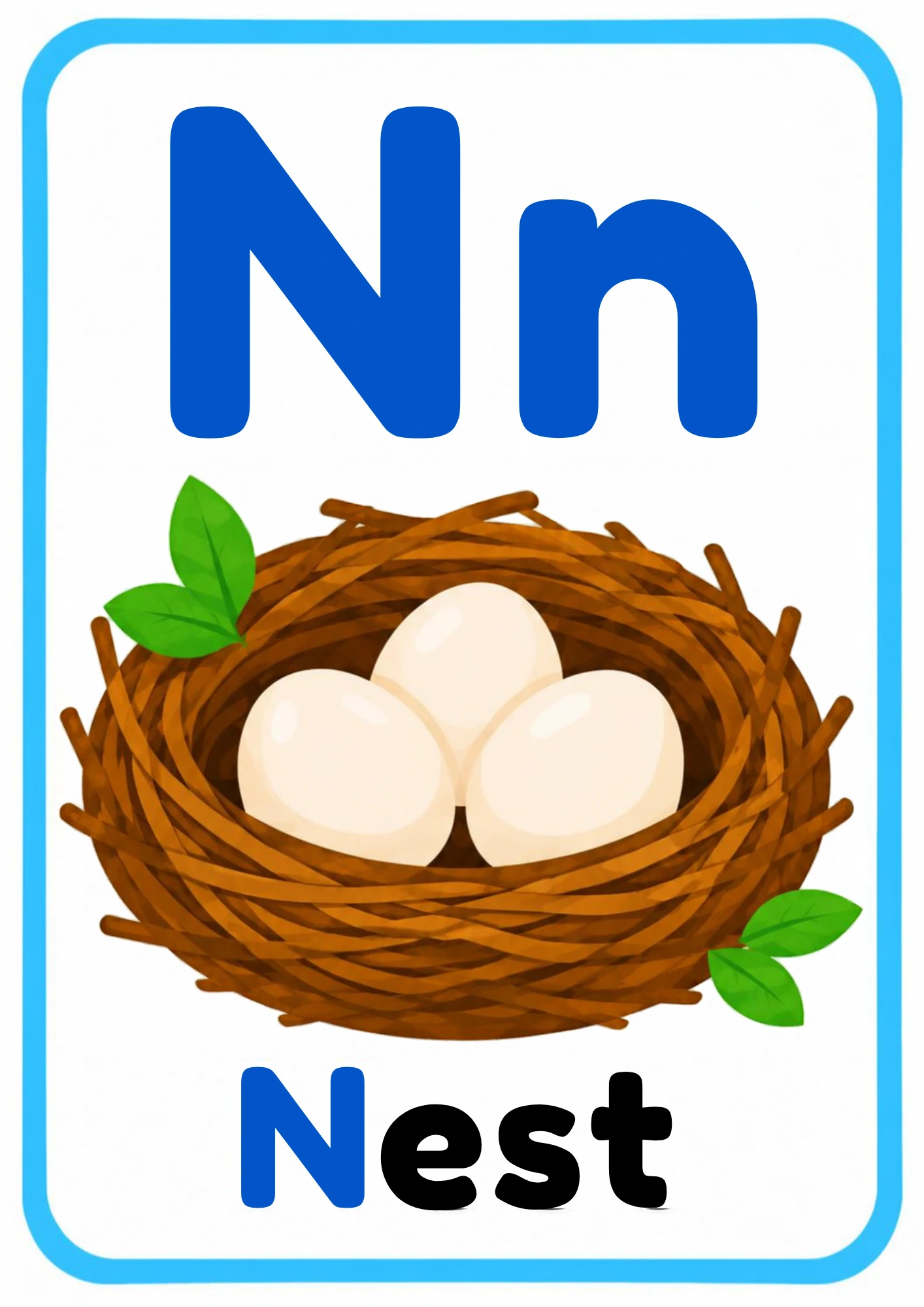
What is this?
N is the fourteenth letter of the alphabet. Big N and little n make the n sound — nnn, lips shut with a gentle tingle buzzing in the nose. The tongue rises to make it; the lips stay closed.
What does it mean?
N is a nose sound, which makes it instantly findable: feel the tingle. And nest is a word with a build-it game attached, so this letter comes with furniture included.
What does the child need to know?
The letter is called N; the sound is nnn — lips closed, tongue up, nose buzzing. M and n are the humming twins: mmm closes with both lips, nnn hums with only the tongue lifted. One mirror moment settles it.
Why this matters
A sound your child can feel in the nose and a word they can physically sit inside makes this card a rainy-day favourite. The M-N comparison, done gently, prevents years of letter confusion.
What it teaches
Nasal sound awareness, tongue-versus-lip discrimination against M, letter recognition in two cases, cushion-and-blanket construction play, and whisper-voice control for indoor nest sitting.
Words to learn
Nnestnnnnosebirdsnug
Say this to your child
“"This is the letter N — hello, N! N says nnn — lips closed, tongue up, and your nose tingles. Feel it buzzing? Now say it softly: nnn, nnn, nest. Shall we build one? Cushions here, blanket there... climb in, little bird. Nnn-nest. Cosy, isn’t it?"”
Step by step
- Show the card and introduce the home: this is the letter N, and this is a nest — a bird’s bed, made of sticks and built high in a tree.
- Make the sound: lips closed, tongue lifts — nnn. Feel the tingle in your nose. Try nnn three times, then nnn-nest.
- Trace big N — one tall line down, a diagonal slide, another tall line — and little n: a short stick with one doorway hump.
- Build the nest: cushions and blankets arranged together, then climb inside like a bird settling down and whisper nnn, nnn, nest.
- End with an n-hunt: find three n-things — a nut from the kitchen, a toy nail, your own nose — and buzz the sound at each.
Look closer at the picture
Find the big uppercase N and the little lowercase n on the card, then the nest and the word Nest. Ask how the letters differ from M — big N has a slide in the middle, and little n wears one hump where m wears two.
Ask your child
"What is this letter called?" "What sound does N make?" "Where do you feel the tingle?" "Can you build a nest for your toy bird?" — answered with a name, a nose-buzz, a pointing finger and a cushion arrangement.
What your child can say or do
"Nnn! Nnn-nest!" Expect nose-tingling announcements, n-sounds offered to bananas and naps, and cushion nests appearing in the living room without warning. Toy birds may be tucked in nightly. The snuggle is the lesson holding.
Out in the real world
N hums quietly through the day: nap, nose, noodles, nine, the night-night at bedtime. Every tongue-up hum is the card again — and any real nest spotted on a walk is the word standing in a tree, made of sticks.
Try it together
Nest builders: gather cushions, blankets and a laundry basket into a snug corner nest, climb in and take turns whispering nnn-words — nest, nap, night-night. The quietest bird gets the softest cushion; loud birds relocate politely.
Understanding check
Ask what N says: a tongue-up hum with lips closed means the sound landed — check that it is nnn, not mmm, by watching the lips. A little n traced in the air completes the nest.
Parent tips
If N slides into M, do not lecture — sit at a mirror once, hum both sounds and let your child watch which one lifts the tongue. One comparison a week is plenty; mix-ups here are normal and temporary.
Staying safe
Nest-building keeps cushions away from stair edges and never stacks higher than safe climbing. Blankets stay loose enough to breathe easily, and the game includes climbing out on request — no tucked-in birds without consent.
This lesson pairs with the Nest flashcard in the library — print it, show it, keep it on the fridge. Back to Alphabet A–Z (Preschool).