
Zebra — a step-by-step lesson for grown-up and child
This lesson finishes in style: your child switches the buzz onto the s sound, draws stripes while zzz-ing, traces the last letter of the alphabet and celebrates twenty-six doors opened.
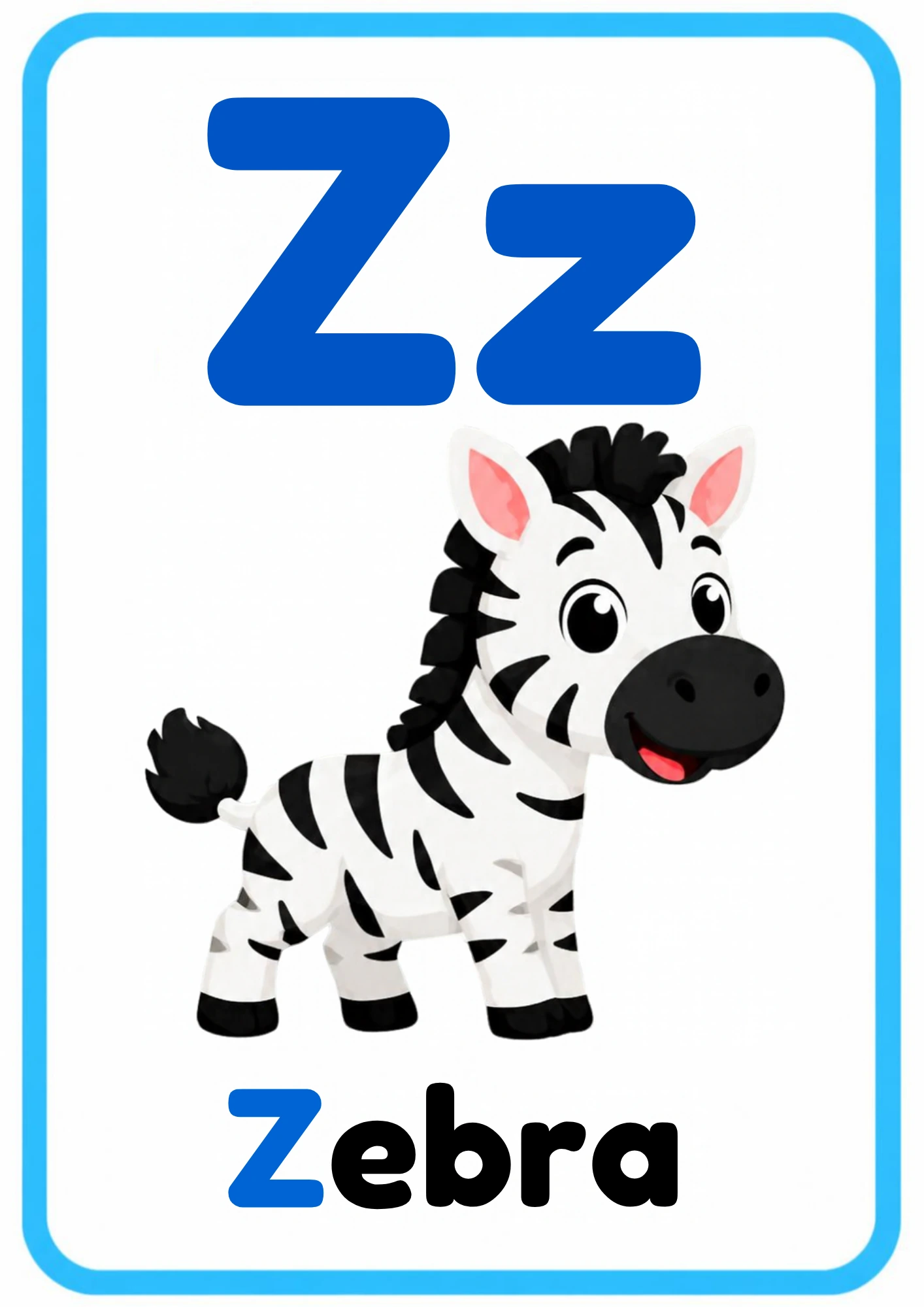
What is this?
Z is the twenty-sixth and last letter of the alphabet. It makes the z sound — zzz, the same hiss as s with the voice switched on. Hold your throat and compare: s whispers, z hums like a tiny bee.
What does it mean?
Z closes the set with a sound your child already owns: they have been hissing sss since the sun card, and z is that hiss with the motor on. Ending by upgrading a known sound is the gentlest finale there is.
What does the child need to know?
The letter is called Z; the sound is zzz — voice on, teeth close, a buzz you can hold. Z is also the sideways letter: tip a z onto its back and you have drawn a stripe, which the zebra demonstrates gladly.
Why this matters
Finishing the alphabet deserves a fanfare, and stripes give small fingers a road to trace from the letter to the animal and back again. The celebration is real: your child now owns a door for every sound.
What it teaches
Voiced sibilant production (s with the voice switched on), letter recognition across the whole set, stripe-line drawing for controlled strokes, and the happy memory work of recalling favourite letters from A to Z.
Words to learn
Zzebrazzzbuzzstripesfinish
Say this to your child
“"This is the letter Z — hello, Z! The very last letter! Z says zzz — start with a hiss, sss, then switch your voice on: zzz. Feel it buzz like a tiny bee? Now draw stripes with me — zzz, zzz, zebra! And then... the whole alphabet, from A all the way here. You did it. Twenty-six letters, all yours."”
Step by step
- Show the card and announce the finale: this is the letter Z — the very last one — and this is a zebra, dressed for the occasion.
- Make the buzz: hiss sss first, then switch your voice on — zzz. Feel your throat purr? Try sss-zzz, sss-zzz, and hear the twins.
- Trace big Z — straight across, slide down, straight across, like a zigzag — and little z: the same zigzag, smaller.
- Draw stripes: across a paper zebra, or up your own arm with a washable marker — one zzz per stripe. Stripes are only the letter z tipped on its side.
- End with the grand tour: say the alphabet together, naming every letter you both met this year, and give Z three final zzz-buzzes for the road.
Look closer at the picture
Find the big uppercase Z and the little lowercase z on the card, then the zebra and the word Zebra. Ask what the letters and the animal share — stripes run across the page the same way a z lies sideways.
Ask your child
"What is this letter called?" "What sound does Z make?" "How is zzz different from sss?" "Can you name your favourite letter of all?" — answered with a name, a buzzing zzz, a throat-check answer and a proud choice.
What your child can say or do
"Zzz! Zzz-zebra!" Expect buzzes at sleeping cats and bees, z-sounds offered to zips and zooms, and stripes counted on every zebra in every book. The alphabet tour will be requested nightly. Twenty-six doors, all opening.
Out in the real world
Z buzzes softly through the week: zips on coats, zoom through the park, the z of sleeping sounds at naptime. Every buzz is the card celebrating — and the alphabet itself is now a road your child can walk end to end.
Try it together
Alphabet tour: lay out as many letter cards as you own — or write letters on paper plates — and walk the whole A-to-Z road together, saying each name and sound at every stop. Z’s stop comes last, with three buzzes and a bow.
Understanding check
Ask what Z says: a held buzz with the voice switched on means the sound landed — an sss without buzz is still s. A zigzag little z traced in the air closes the alphabet for good.
Parent tips
This is the finish, so let it feel like one: revisit favourite letters, keep the zebra drawing and stop before anyone is tired. The next lessons will find these same letters waiting inside real words — the doors are built; walking them comes next.
Staying safe
Washable markers only for arm-stripes, with a patch check on the skin first and no drawing near eyes or mouths. The alphabet tour needs clear walking space, and the celebration ends with tidying up — even zebras help put the cushions back.
This lesson pairs with the Zebra flashcard in the library — print it, show it, keep it on the fridge. Back to Alphabet A–Z (Preschool).