
Apple — a step-by-step lesson for grown-up and child
This lesson opens the alphabet at the friendliest door: your child names the letter A, hears its aaaa sound inside a word they eat every week, and traces their very first letters.
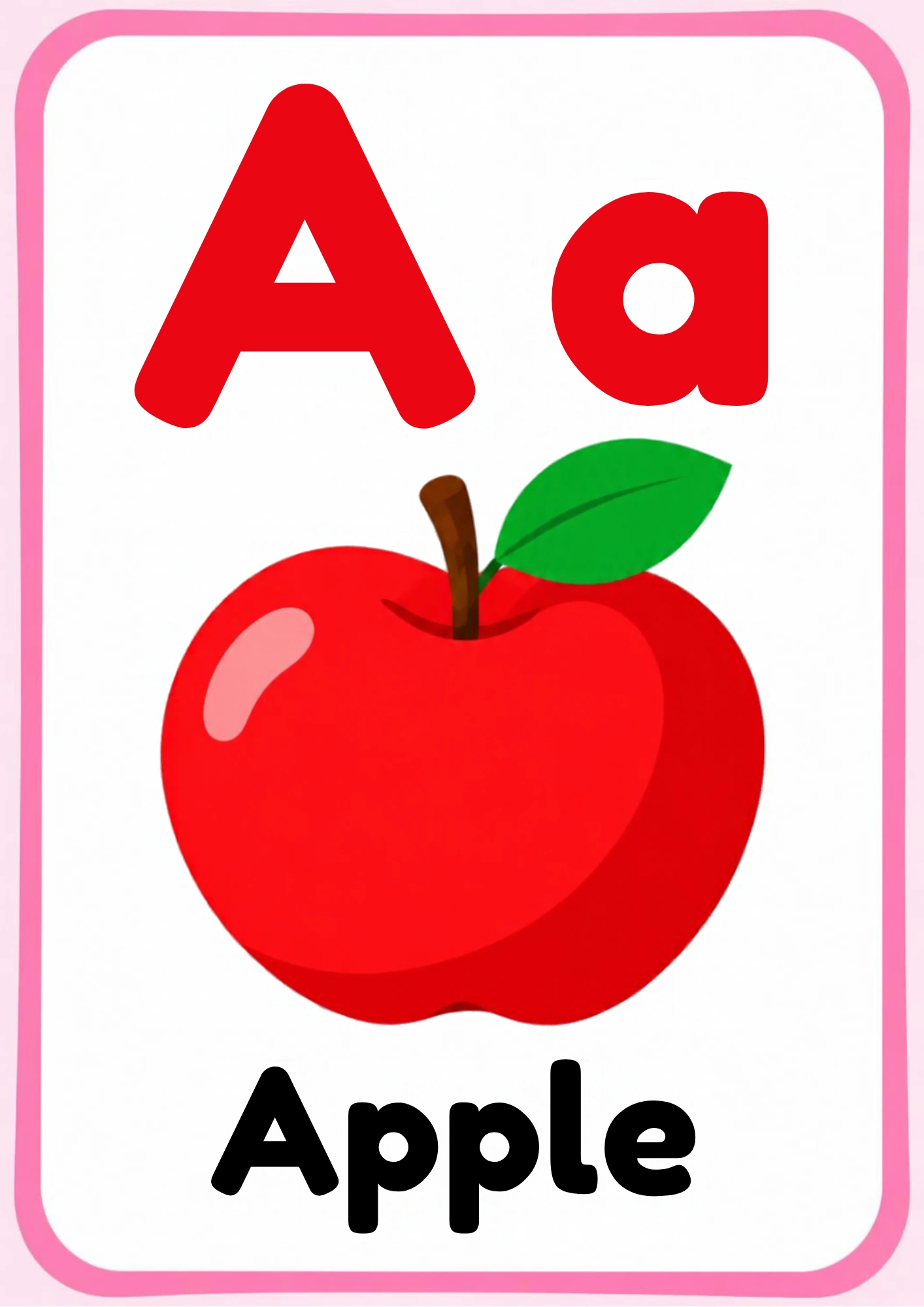
What is this?
A is the first letter of the alphabet. Big A and little a make the aaaa sound — the one at the start of apple, ant and apron... well, apron comes later; today is the aaaa in apple.
What does it mean?
Letters are pictures of sounds, and A is where that idea is born. Your child already owns the word apple; the lesson simply clips a sound and a shape onto something familiar, which is the gentlest possible start.
What does the child need to know?
Two things today: the letter is called A, and in apple it says aaaa — the open mouth sound. Big A and little a are the same letter in two sizes, and both can be traced with one finger.
Why this matters
Starting with a word your child can taste turns the alphabet from abstract to edible. The name-versus-sound distinction, planted gently now, prevents a year of muddled phonics later.
What it teaches
Letter recognition in two cases, sound isolation (the first sound in a word), finger-tracing pre-writing skills, snack-time turn-taking, and the confidence of starting the alphabet with a win.
Words to learn
Aapplesoundnametracefirst
Say this to your child
“"This is the letter A — hello, A! And this is an apple. A is the letter’s name, like yours. The sound A makes in apple is aaaa — open your mouth wide and try it: aaaa-apple! Now trace the big A for me, and the little a. Lovely. You just started the whole alphabet."”
Step by step
- Show the card and say both facts slowly: this is the letter A — and this is an apple. Two names for two things on one card.
- Make the sound with the mouth wide: aaaa, like the doctor asking you to say ahh. Let your child watch your jaw drop open.
- Trace big A with one finger — slide down, slide down, cross the middle — then little a: around and down. Air-tracing counts.
- Play the snack game: set out an apple, a banana and a cracker, and ask which one starts with aaaa. The bite is the prize.
- Close by hunting: find three things in the room whose names start with the aaaa sound — arm, animal, anything — and give A a wave goodbye.
Look closer at the picture
Find the big uppercase A and the little lowercase a on the card, then the shiny apple and the word Apple underneath. Trace each letter with one finger — the card is your child’s first tracing sheet.
Ask your child
"What is this letter called?" "What does A say in apple?" "Can you trace the big A?" "Which snack starts with aaaa?" — four questions, answered with a name, a sound, a finger-slide and a happy bite.
What your child can say or do
"A! Aaaa-apple!" Expect ahh-sounds at the dinner table, A-spotted on shop signs and cereal boxes, and air-letters drawn in the bath steam. The snack game will be requested daily — A is a delicious letter.
Out in the real world
A turns up everywhere: on shop signs, food boxes, the first letter of names. Every spotting is a rerun — name the letter, make the aaaa sound — and snack time is the standing practice ground.
Try it together
Sound basket: put four objects on the table — one starting with aaaa (an apple or a toy ant), three that do not. Your child picks the aaaa one, says aaaa aloud, and earns the right to arrange the rest.
Understanding check
Ask tomorrow what A says: "aaaa!" with a wide-open mouth means the sound landed. Tracing a little a in the air on request seals the lesson.
Parent tips
Keep name and sound clearly separate — "A is its name, aaaa is what it says in apple" said once per session is plenty. Two letters a day is the ceiling; one is better, and stopping while it is still fun is the rule.
Staying safe
Snack games need allergy awareness — check for reactions before playing with food, and keep bites sitting-down bites. Nothing else about this card bites back.
This lesson pairs with the Apple flashcard in the library — print it, show it, keep it on the fridge. Back to Alphabet A–Z (Preschool).