
Bird — a step-by-step lesson for grown-up and child
This lesson closes the set with the tiniest voice and the biggest reach. Tweet is our word for the little high calls birds sing — and it is the only animal sound in the collection your child can hear live, free, from the kitchen window.
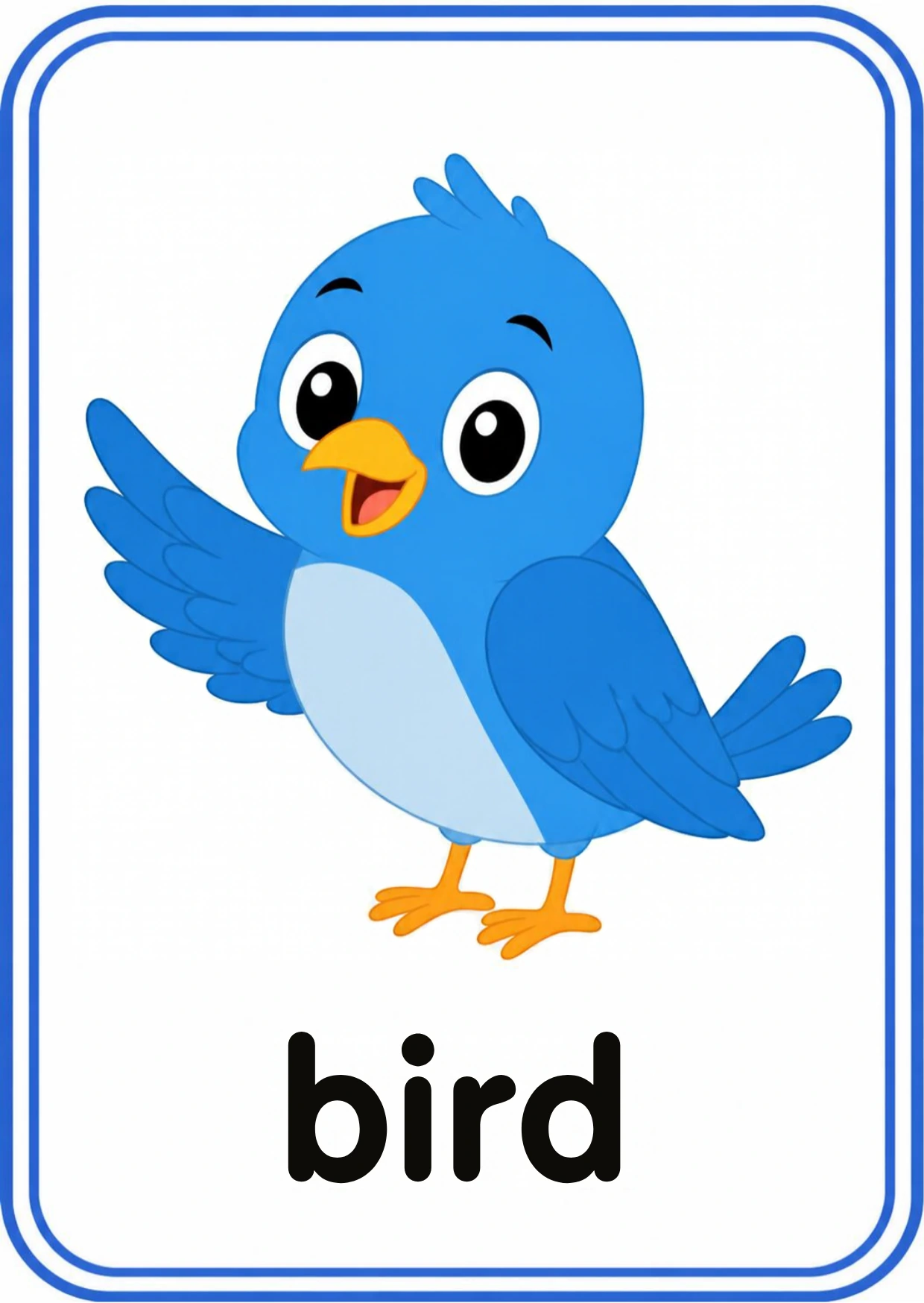
What is this?
A bird is the animal everyone can hear from the window: wings, feathers, and a voice far bigger than its body. Birds sing many different songs, and people copy the little high ones as tweet — the smallest sound in the whole set.
What does it mean?
Tweet is our copy of a bird’s tiny high notes — but no two birds sing exactly alike, which makes tweet the umbrella word for a whole chorus. Real tweets come in twiddles and trills; the word is the simple version, like a stick drawing of a wave.
What does the child need to know?
Your child needs to know: the little high bird sounds are written tweet in English, birds sing with their throats and fly with their wings, they live in nests and sing most at sunrise, and the real thing is available outside — ears ready.
Why this matters
The bird gives animal sounds their grand finale: the step from card to world. Every other voice needed imagination; this one needs only a window and a quiet minute. Hearing a real tweet and matching it to the word is the moment the whole collection becomes true.
What it teaches
Quiet listening — a genuinely hard skill at three, and a foundational one — matching heard sounds to words, bird and nature vocabulary, sunrise-and-nesting science at a gentle level, and the stillness that lets wild things come near.
Words to learn
birdtweetwingssingnestlisten
Say this to your child
“"The bird says tweet! Tweet, tweet — the tiniest voice on all our cards. Tweet is our word for the little high sounds birds sing. Now the brave part: be as quiet as a statue, ears open, and let us count the real tweets outside. One… two… you just met a bird in person."”
Step by step
- Show the card and ask what the little bluebird says. Offer the smallest voice in the set: tweet, tweet — high and tiny.
- Say the pair — the bird says tweet — and make it tiny: pinch the sound high and small, three or four quick notes.
- Look at the picture: the little bluebird, one wing lifted in a wave. Wave back, then flap both arms and ask what wings are for.
- Play the listening minute: sit by the window or step outside, get as quiet as statues, and raise one finger for every tweet heard. Two fingers is a triumph.
- Finish with the nest story: birds build nests, lay eggs, and sing to greet the morning — which is why the day starts with birdsong whether we are up or not.
Look closer at the picture
Look at the picture together: how tiny is this bird — small enough for a hand? What color are its feathers? Which wing is lifted — is it waving? What word sits with the bird?
Ask your child
"What does the bird say?" "What do birds use their wings for?" "Where do birds sleep and lay their eggs?" "How quiet do we have to be to hear a real tweet?"
What your child can say or do
Your child may hold a finger up in absolute silence and whisper "one tweet!", sing morning tweets from bed before any words arrive, or announce every garden bird with proprietary delight — the smallest card, the proudest owner.
Out in the real world
Birds deliver the lesson daily and free: the dawn chorus, pigeons in the square, sparrows at the bus stop. Each tweet heard out loud is a repetition no flashcard can match — and each one lands on a child who now has the word for it.
Try it together
The listening minute: same time each day, one quiet minute by the window or on the step, counting tweets on raised fingers. Keep a tally with a sticker for every bird minute — the quiet is the practice, and the streak is the motivation.
Understanding check
Ask: "What does the bird say? What are wings for? How do we find out if a real bird is singing?" The tiny high tweet, the flying and one finger held up — that is the lesson landed.
Parent tips
The listening minute works best with a grown-up being quiet too — your stillness is the permission for theirs. If no tweets appear, any bird sound counts: coos, caws, chirps are all bird voices, and your child will happily name them all tweets for now.
Staying safe
Bird watching happens with eyes and ears: birds stay wild, nests stay untouched, and chicks on the ground get reported to a grown-up rather than rescued by small hands.
This lesson pairs with the Bird flashcard in the library — print it, show it, keep it on the fridge. Back to Animals & Their Sounds.