Age 3 YearsClass Preschool 8Subjects Fruits & vegetables
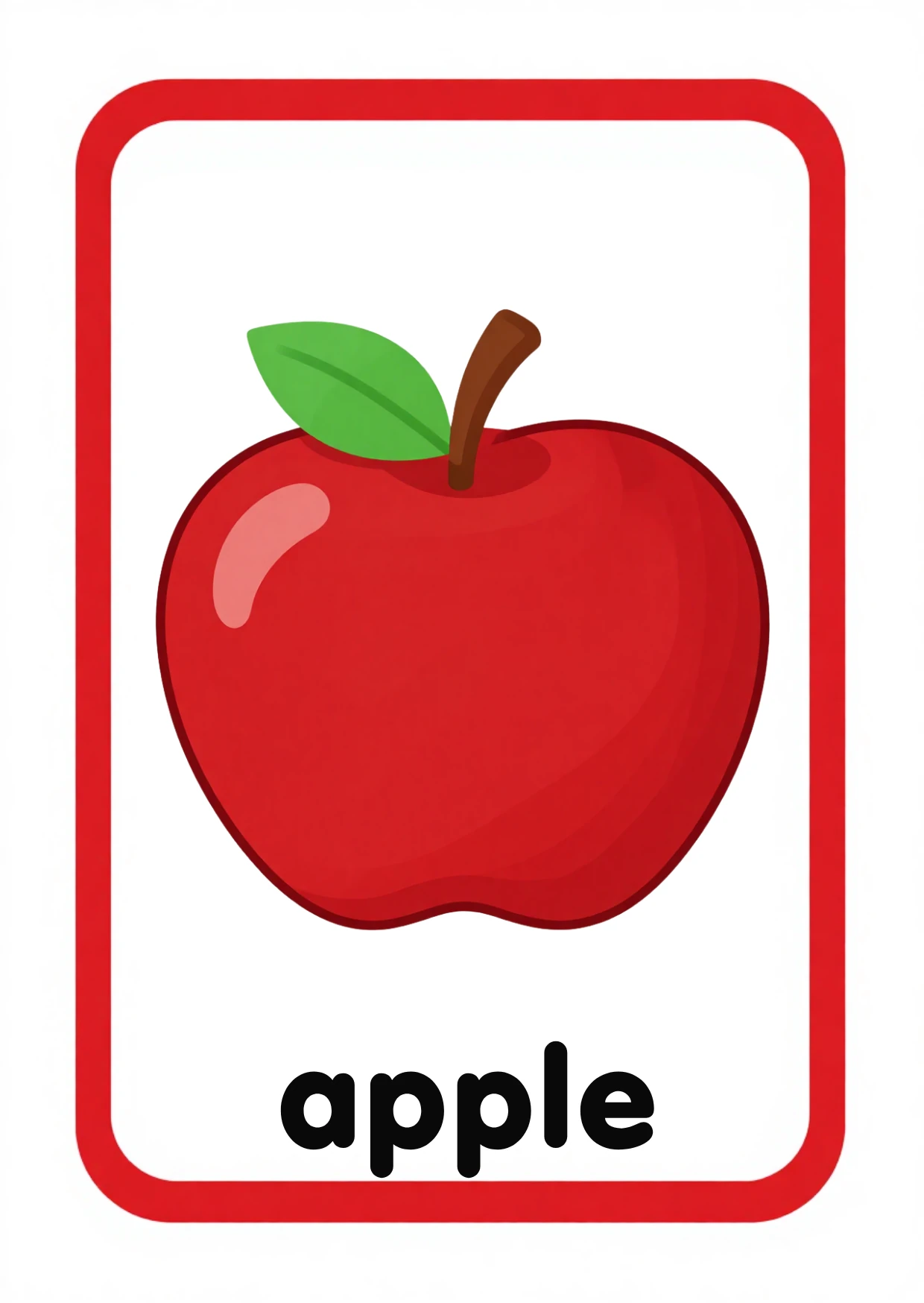
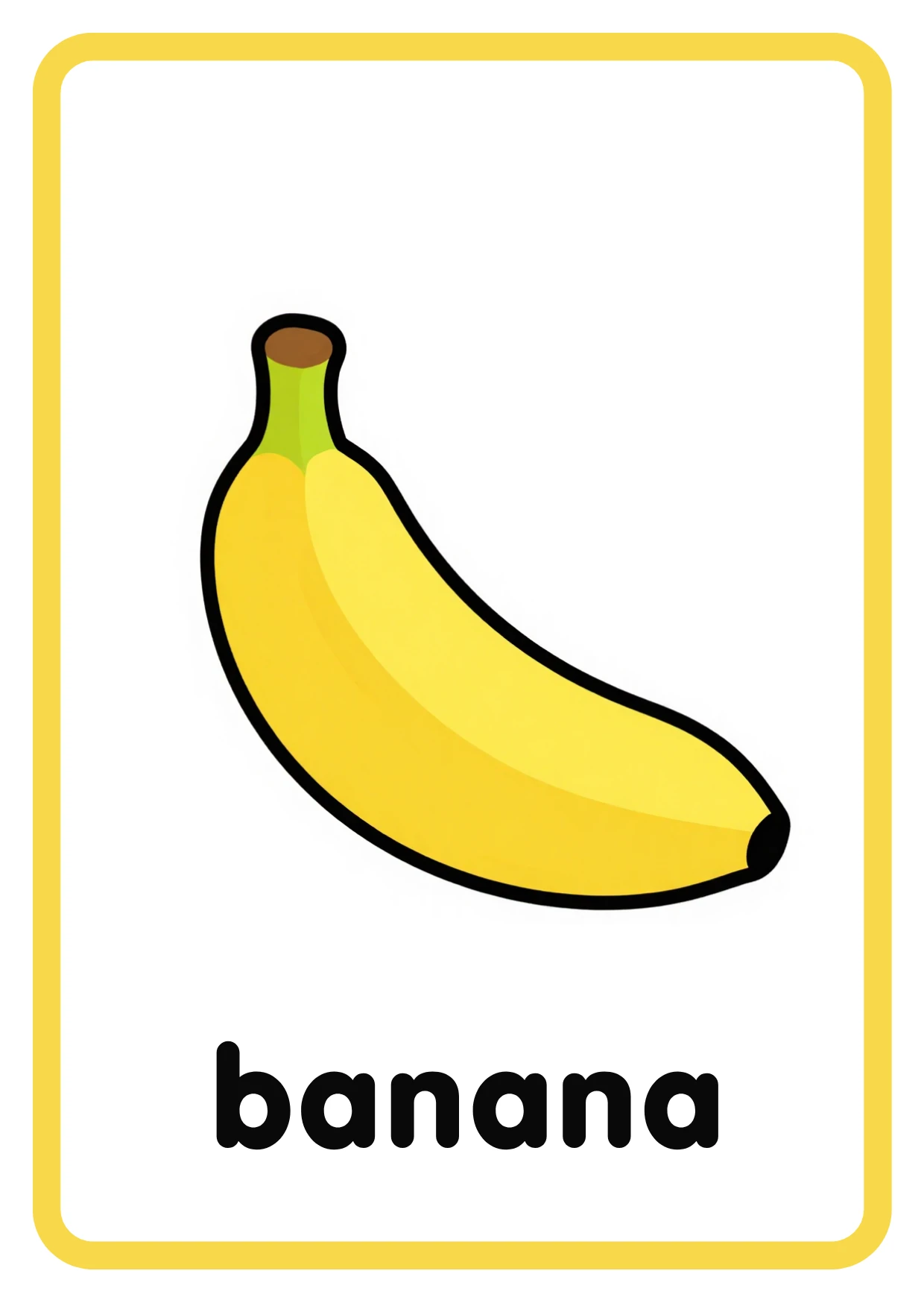
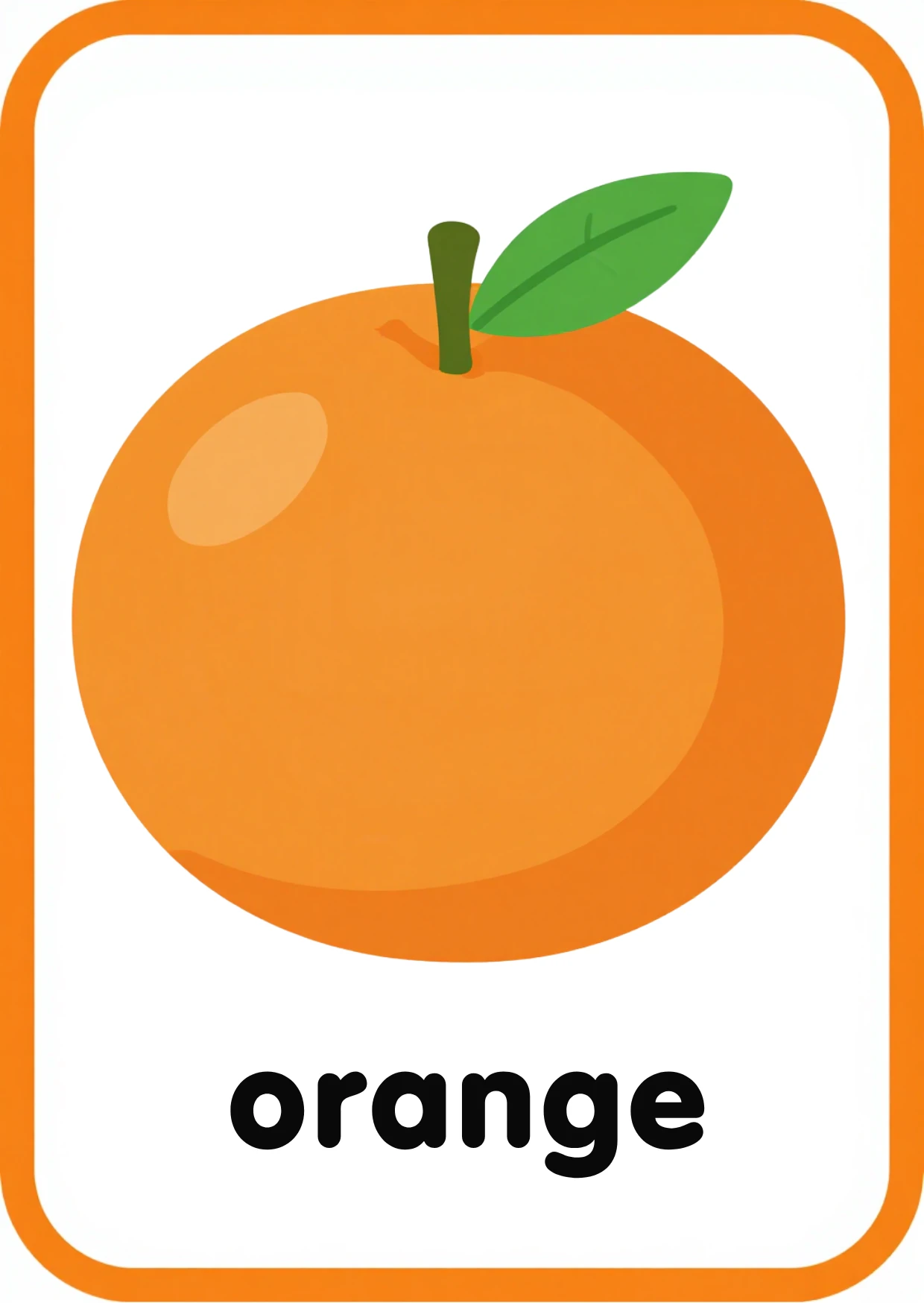
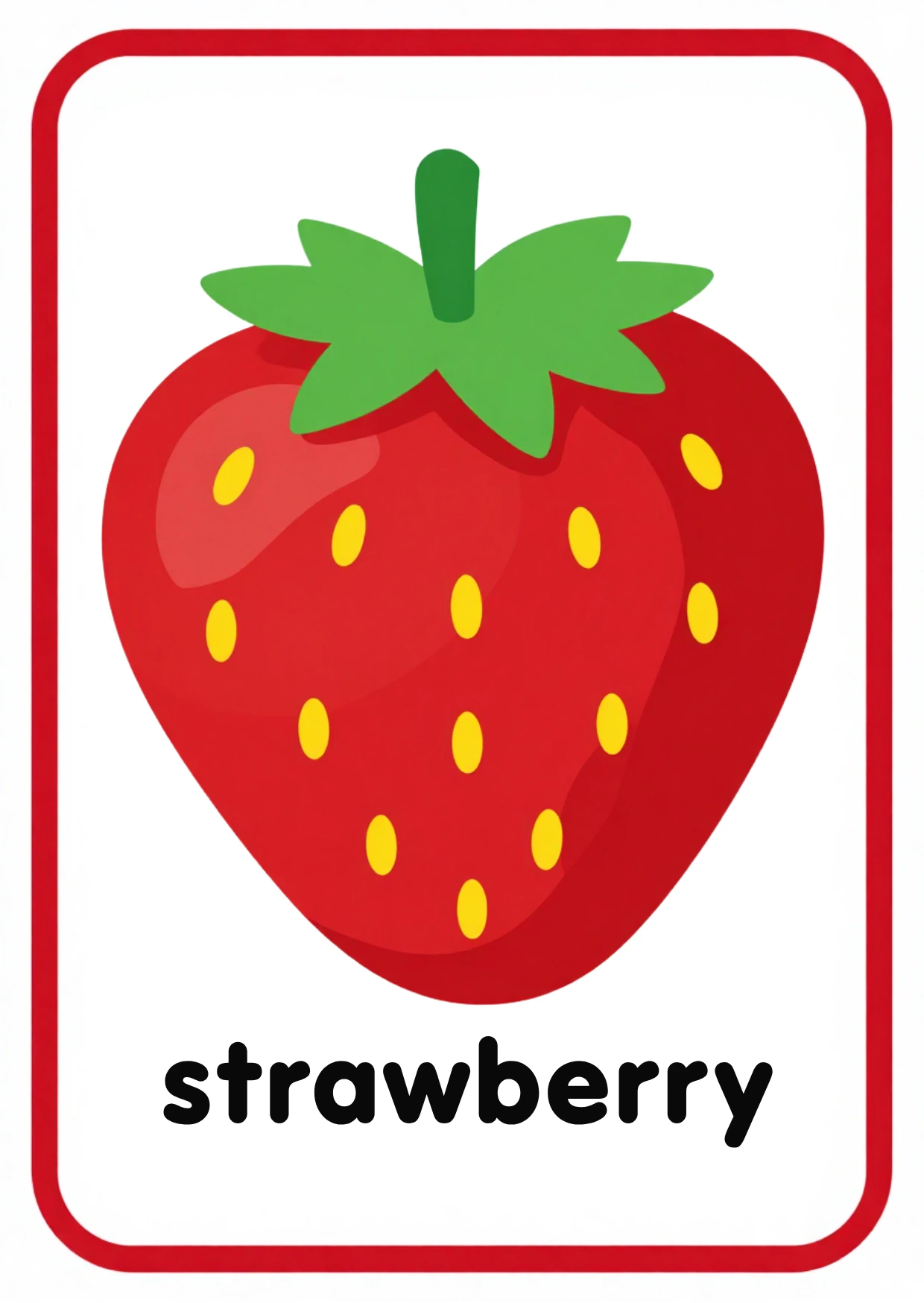
Sixteen cards about the foods your child already knows: eight fruits, eight vegetables. Meet them all, sort them into their bowls, find them, match them, line them up by color and count them together — this class follows Body Parts & My Five Senses on the preschool path.
Food words are words children use three times a day. You say the name, your child finds the real thing in the kitchen — and suddenly the flashcards and the fruit bowl are the same game.
Five little steps, in any order that suits you: a welcome from your teacher, all sixteen food cards, colors and counting, solving the food sheets together, off-screen kitchen play, and a warm goodbye. Stop after any step — that is a complete class, and there is never a score at the end.
1 Teacher welcome
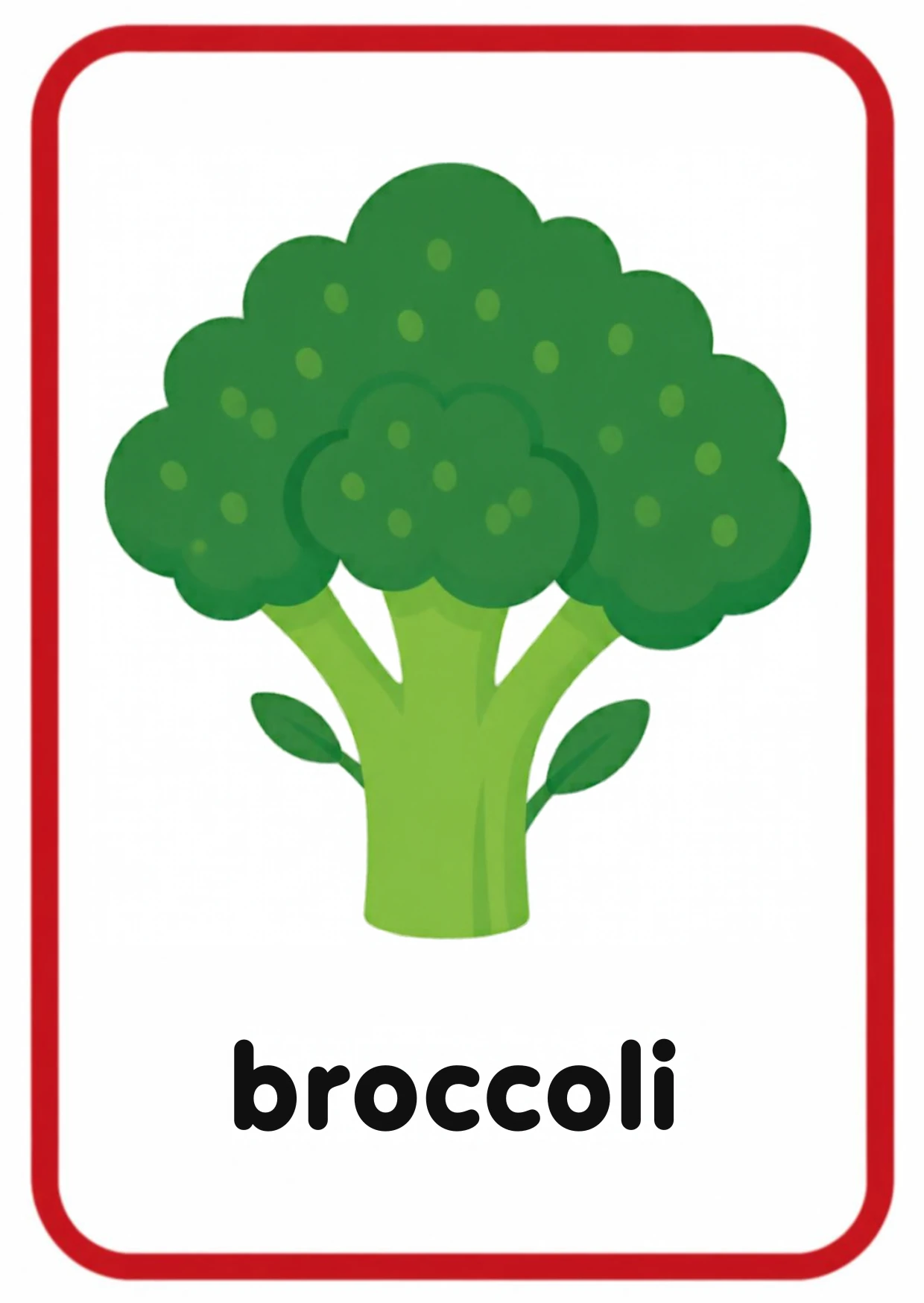
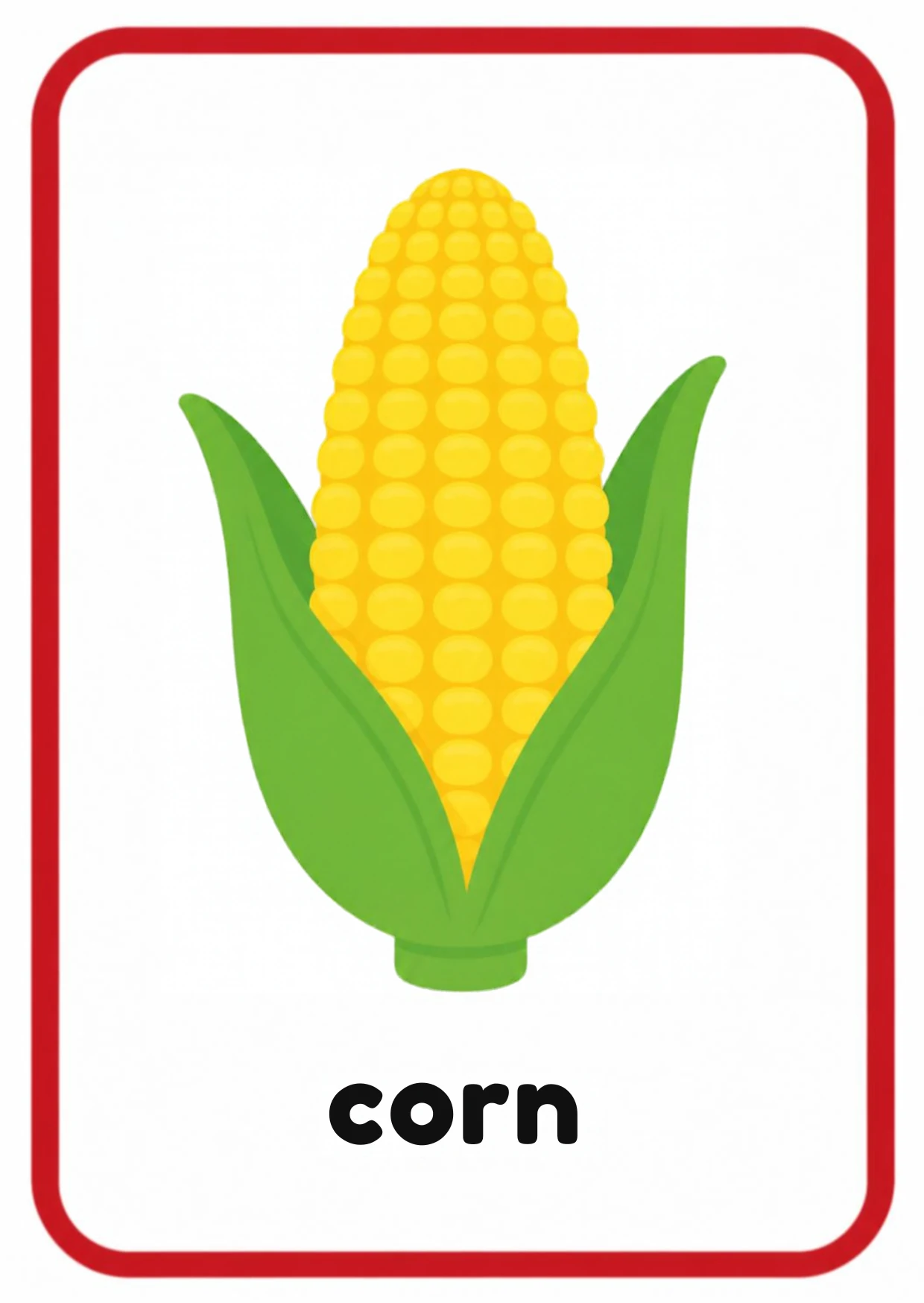
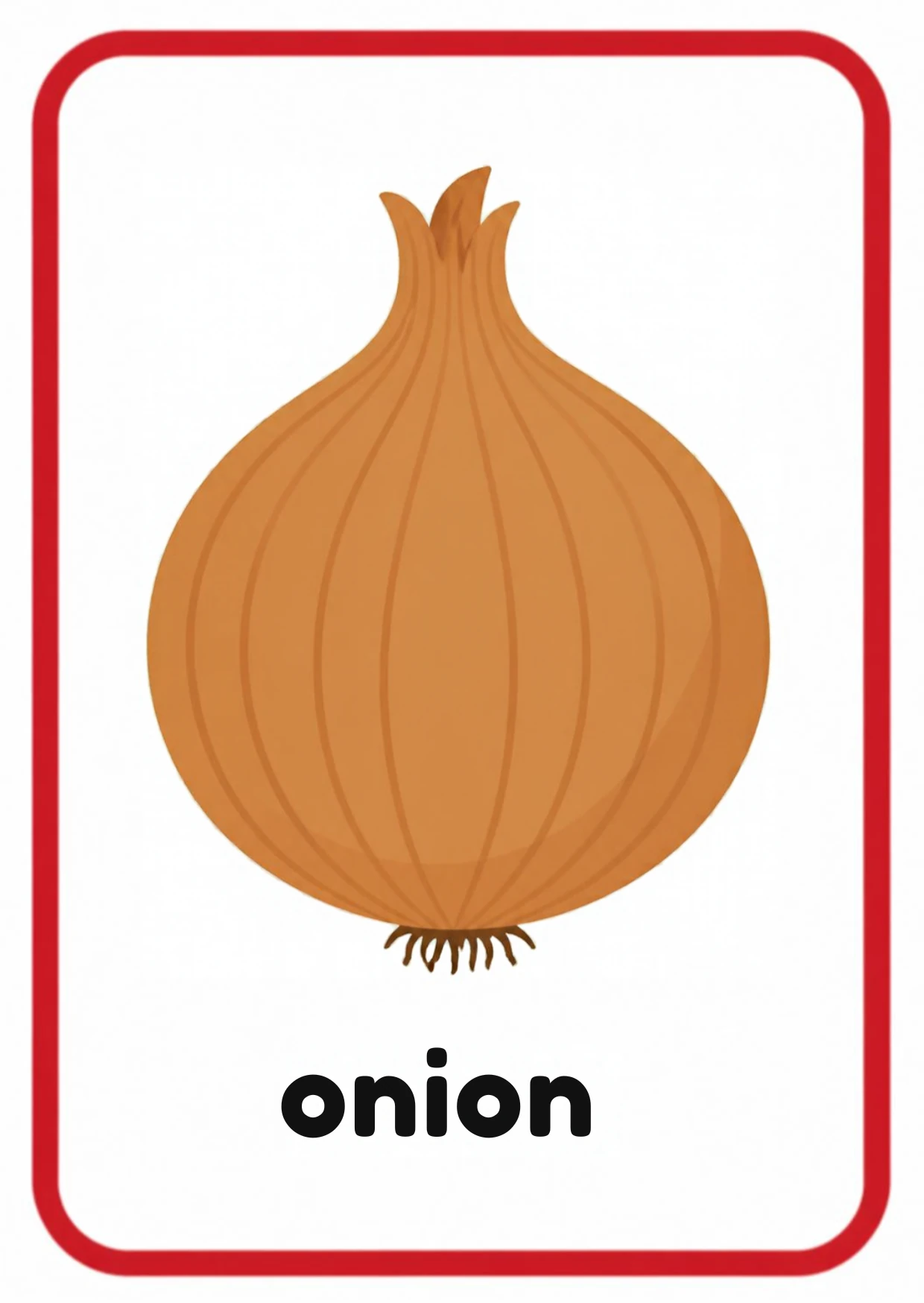
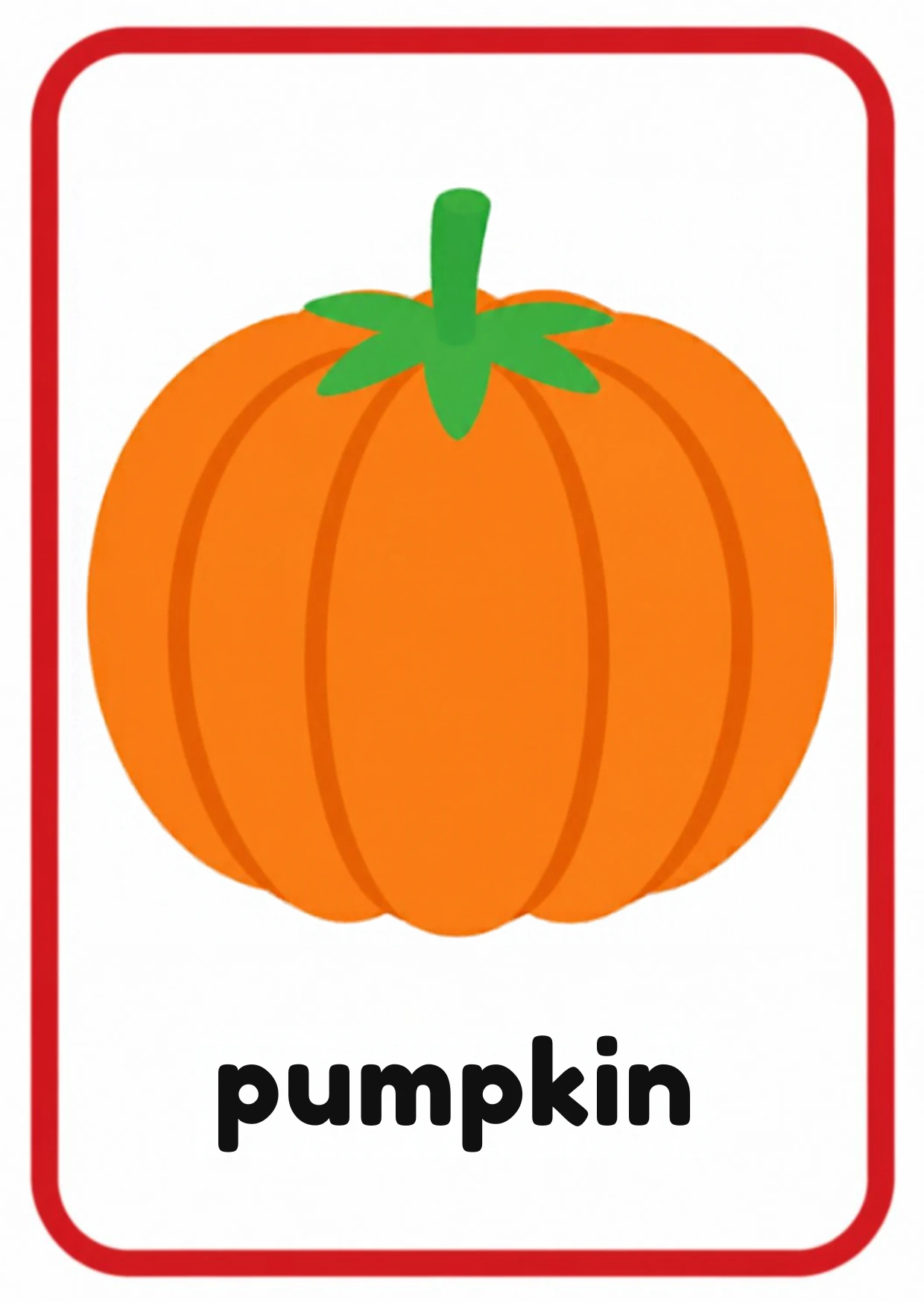
2 Meet the foods
3 Colors & counting
4 Solve the sheets
5 Take it off screen
6 Class complete
TEACHER WELCOME
“Hello, my friend — and hello to you, grown-up helper! Today’s class smells wonderful: sixteen foods are waiting — fruits for one bowl, vegetables for the other, and a whole rainbow to count. Wash your hands and let’s begin!”
Say each food’s name as it arrives, then hunt for the real one in your kitchen later — the pair is the whole lesson. Use the arrows to wander, or simply scroll: all sixteen cards are below.
After every few cards, ask “where do we keep the…?” — bananas on the counter, carrots in the drawer. Food words live in places.
COLORS & COUNTING
A rainbow you can eat.
Foods come in every color. Read each row together, count the cards in it, then try the counting games below — all of them use the sixteen cards you already met.
Red foods
Three red foods — count them: one, two, three!
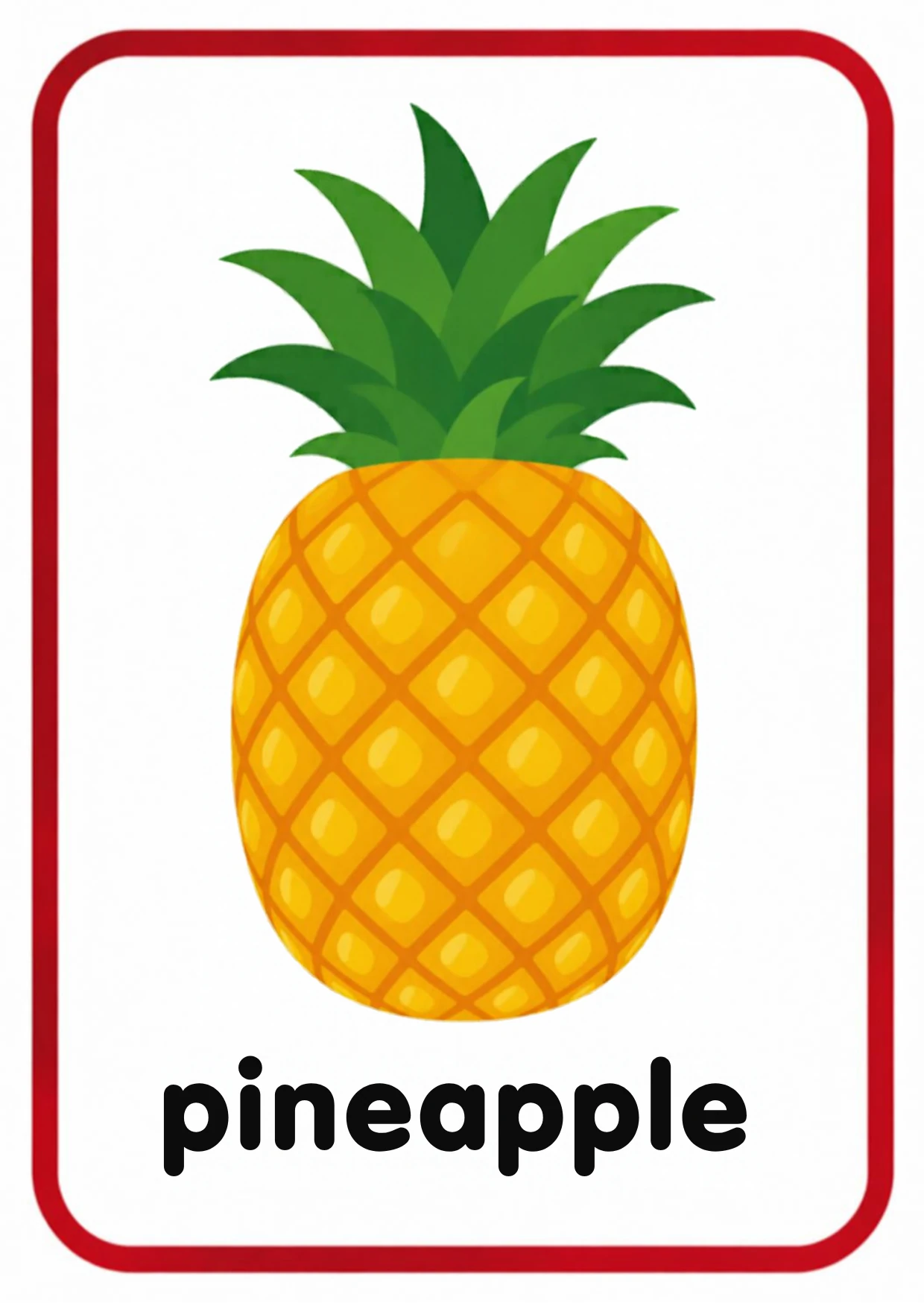
Yellow foods
Three yellow foods — count them again!
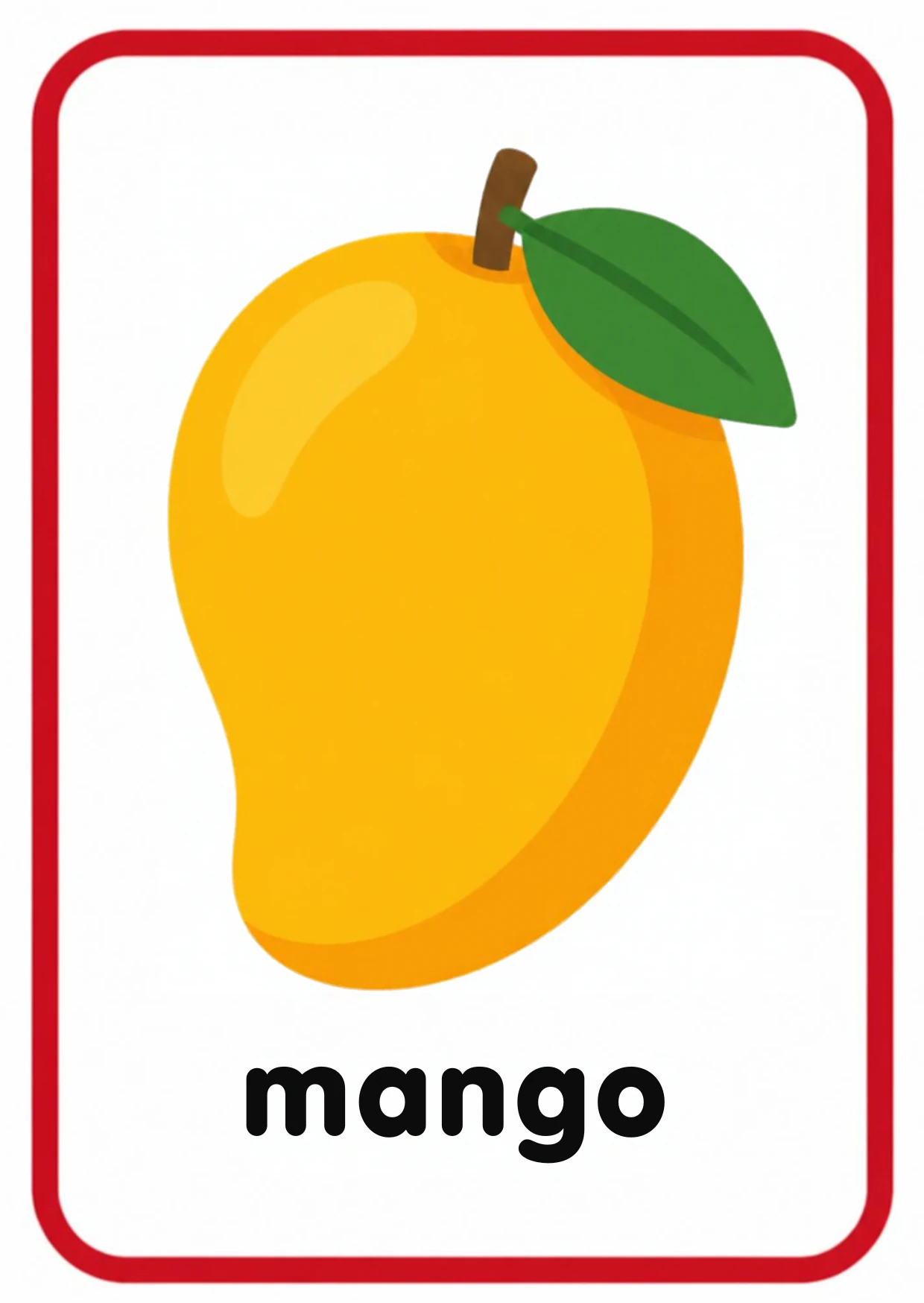
Orange foods
Three orange foods — the color and the fruit share a name on one of them.
Green foods
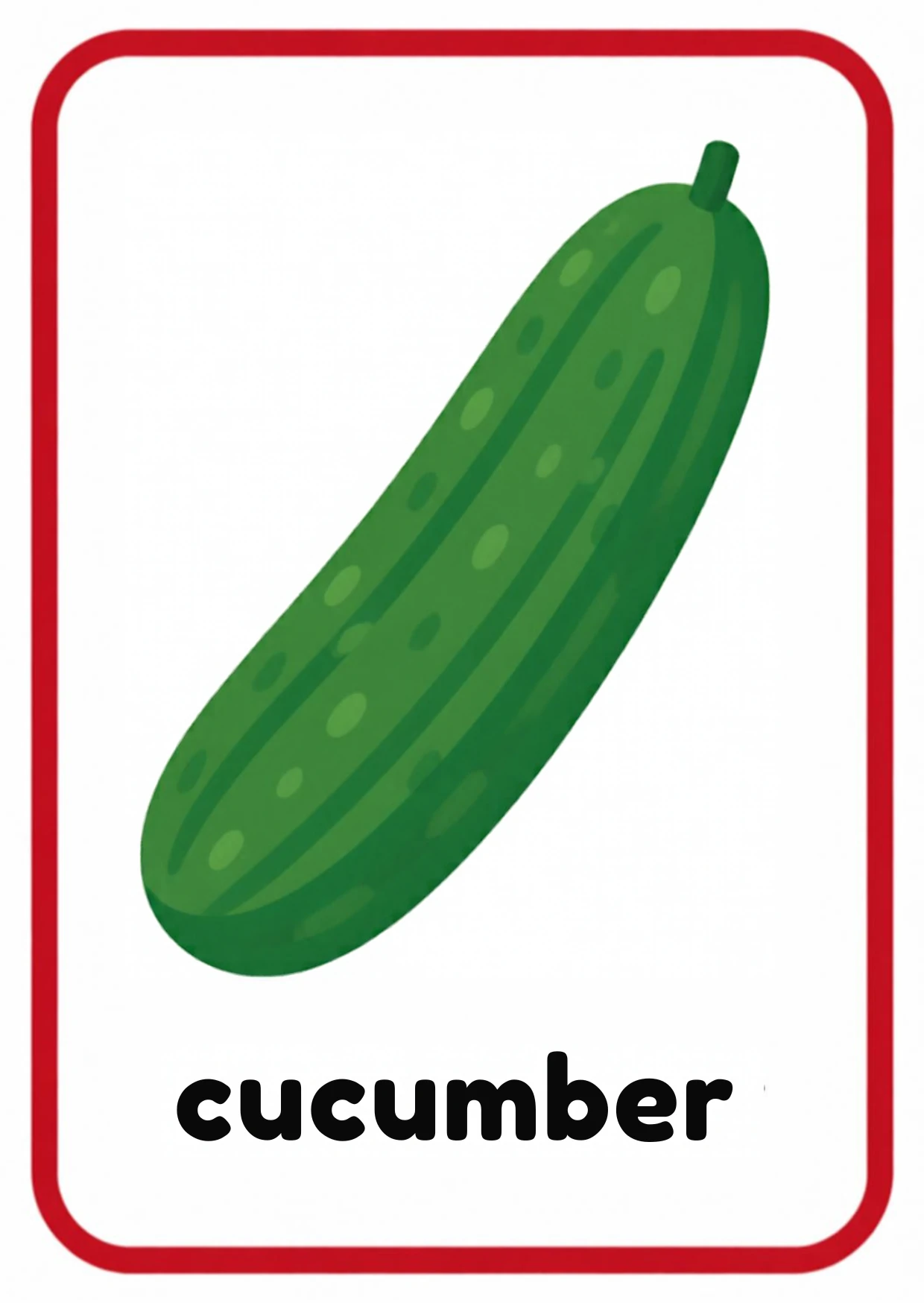
Three green foods — two of them crunch, one is sweet.
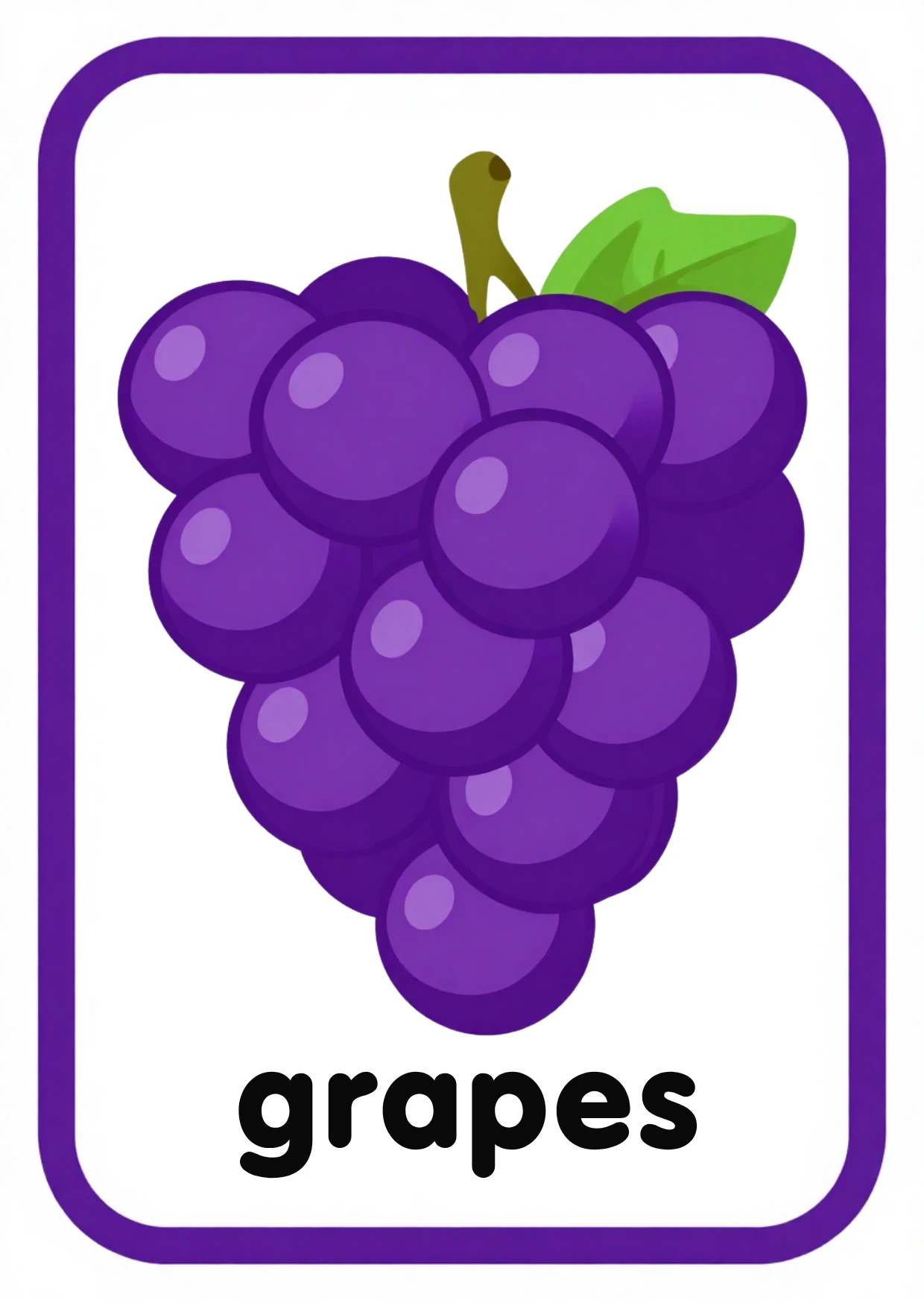
Purple & brown foods
One purple bunch, two brown friends — three cards in this row.
Count any row in the chart above — three foods in every row. Which color is your favorite?
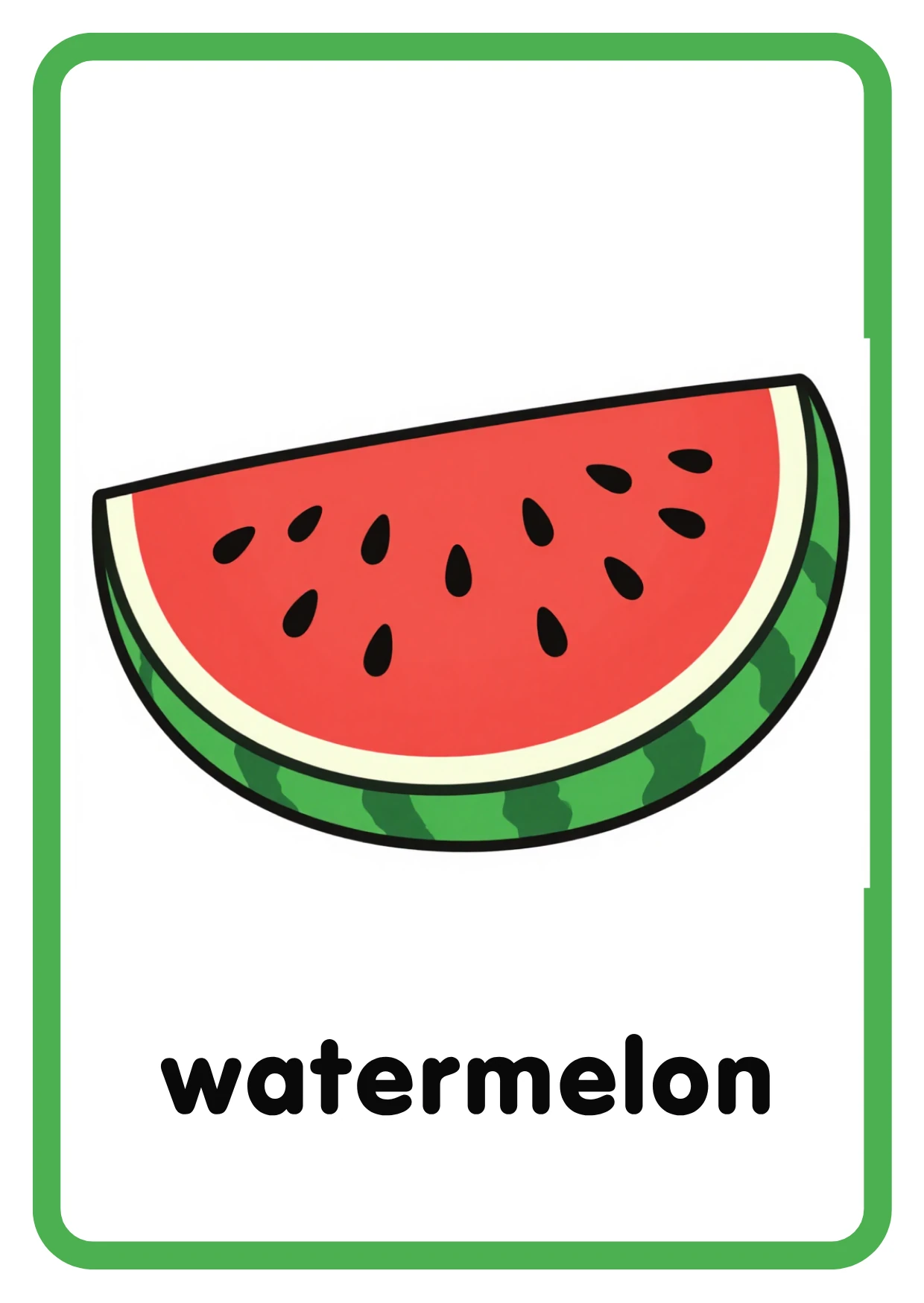
Watermelon seeds and pumpkin seeds: too many to count — counting them anyway is the fun part.
SOLVE THE SHEETS — ON PAPER OR ON SCREEN
Solve the food sheets together.
The sixteen food cards print two to a page, straight from your browser. Printed, cut and named, they are the class’s real worksheets — and on screen, every card page can be drawn on directly.
01
Print the cards
Open the printable cards and print all sixteen, two to a page. Cut them out together, naming each food as it is cut.
02
Fruit or vegetable?
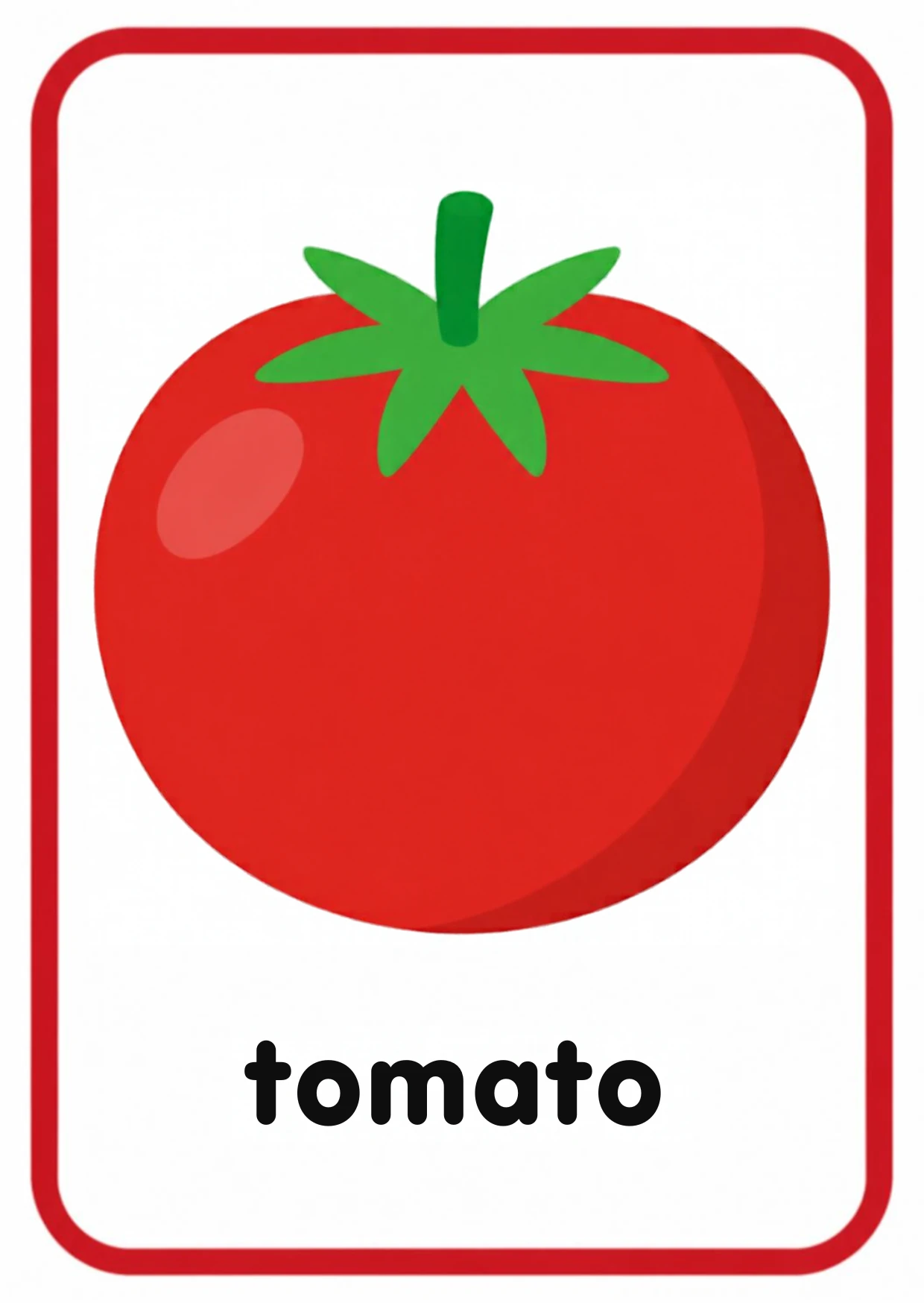
Sort the cut cards into two bowls — fruits here, vegetables there. Scientists sort the tomato with the fruits, cooks sort it with the vegetables — both are right.
03
Count the bowls
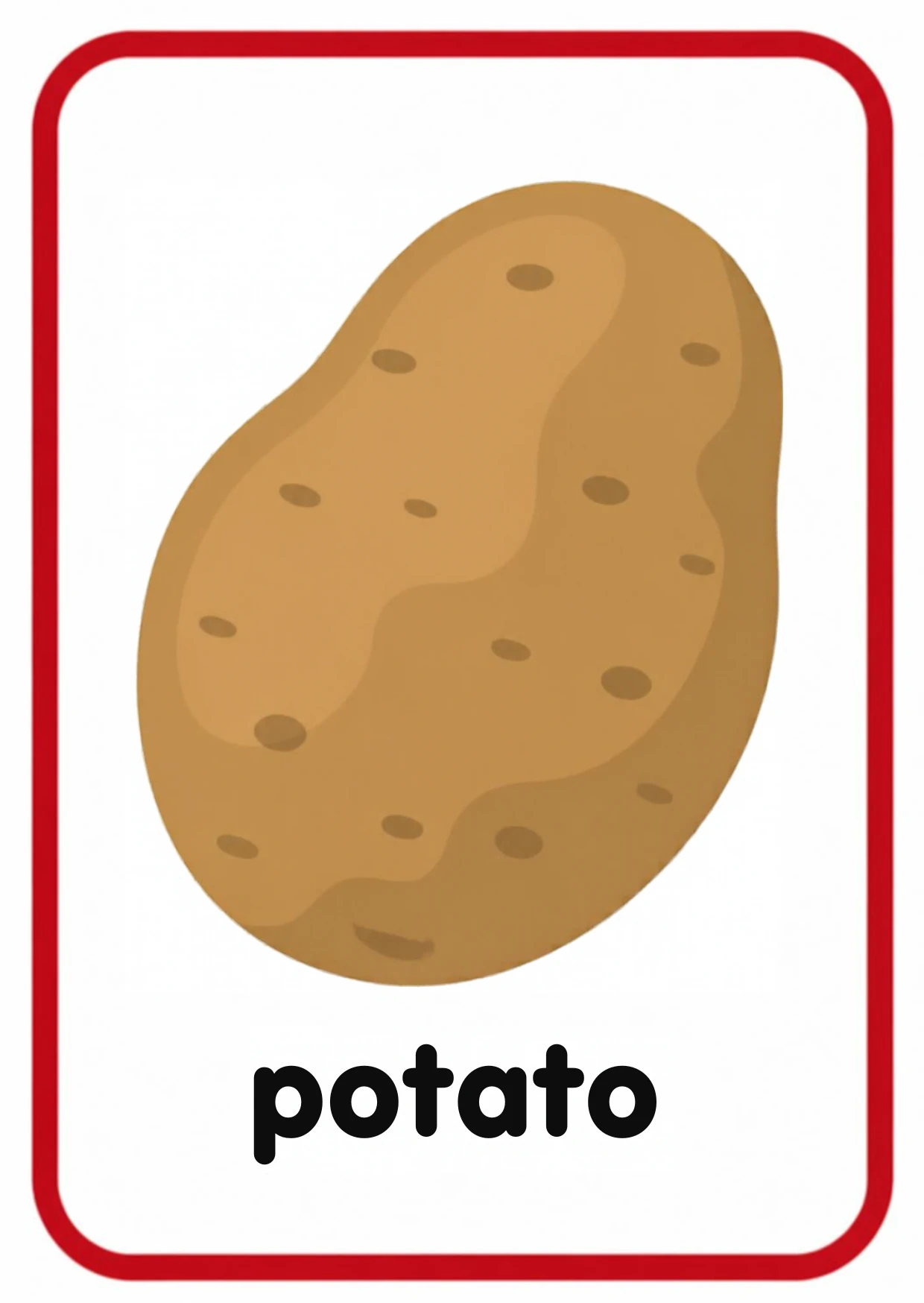
Count the cards in each bowl together. Then line them up by color: a red row, a green row, a yellow row.
04
Find them in the kitchen
Take two or three cards to the real kitchen and find their twins in the fruit bowl. Then color a favourite card with the Write & Color layer.
Every card page has a Write & Color layer: your child can draw right on the card with a finger, a stylus or the mouse, then save the finished work. Nothing is uploaded anywhere.
OFF-SCREEN PLAY
The kitchen is the classroom.
Food words are kitchen words. Pick one of these — five minutes is plenty — and let your child lead the hunt.
The kitchen food hunt
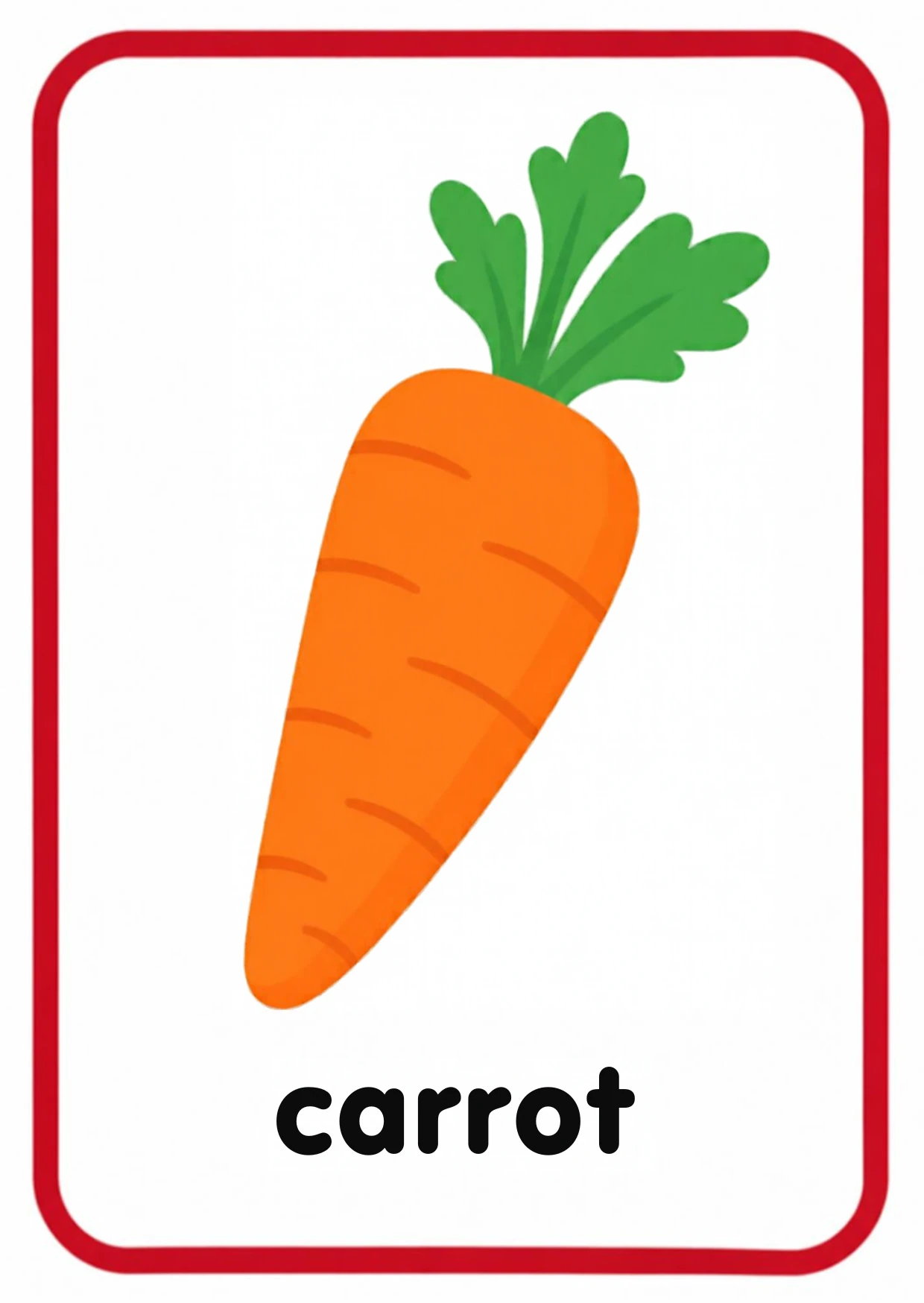
Take three cards — say an apple, a carrot and a corn — and hunt the kitchen for each one. Hold the real food next to its card: same, same, same!
Two bowls, for real
Set out two bowls and sort the actual shopping: fruit in one, vegetables in the other. The sorting game from today, played with things you can eat afterwards.
Market twin hunt
Take one card to the shop or market and find its twin in the pile. One matched carrot is a whole class.
Wash it together
Before any tasting, wash the fruits and vegetables together at the sink. Rubbing a shiny apple dry is a food-hygiene habit that starts here — and a quiet color-and-count moment too.
One safety word for this class: wash foods before touching mouths, grown-ups do all the cutting, whole grapes and cherry tomatoes are cut small for little mouths, and everyone sits down while eating. Tasting is for real food a grown-up has checked — never anything found on the floor or offered by curiosity.
PRINT THE CARDS
Take the market to the kitchen table.
All sixteen cards print two to a page, in card order, straight from your browser — no PDF, nothing to install. Cut them out and the whole market plays on the table.
Printed cards love fridges, snack cups and shopping bags. The same cards also live in the flashcards library, each with its own page.
TEACHER NOTE
One last word from class.
“What a delicious class! Your child named fruits, sorted vegetables, matched twins and counted a whole rainbow of foods — that is real vocabulary, real math and real healthy-eating practice, all in one. Keep the game alive at every meal: name it, find it, count it. See you in class!”
— Your Kiddo School teacher
A NOTE FROM THE PRINCIPAL
For the grown-ups.
Naming and sorting food does something quietly powerful: it makes unfamiliar foods familiar before they ever reach the plate. A child who has said “broccoli”, matched its card and held a real one is far more likely to try a bite — curiosity does the persuading, not pressure. Keep meals free of scores and negotiations: the game is naming, finding, washing and counting, and a food that is only looked at today still counts as a win.
Whether you met four foods or all sixteen, that was the whole class — and stopping early is always allowed. The cards will be right here, and so will the sorting bowls and the match board, whenever you come back. The food words are already busy in your house: in the fruit bowl, in the shopping bag, at every snack.
Say the word and hold the real food — the pair is what sticks. “Carrot!” while you both touch a carrot in the drawer teaches faster than the screen alone, because the kitchen makes the word true. Let your child take every tap and every sort, even when the answer looks obvious: the finger teaches the mind.
Then flip the game: your child says a food word and YOU hunt for it. Getting one wrong on purpose — “this tomato is actually an apple, look!” — keeps the sorting game alive for weeks, and being the caller is powerful practice for a three-year-old.
Age 3 is a guide, not a deadline. If today’s class was one banana and two claps, today’s class was a success.
FAMILY FEEDBACK
How was this activity?
Your feedback helps us make Kiddo School better. This is feedback about the activity, for the grown-ups who make it — it is never about a child.
Comments from our school community
FLASHCARDS
Prefer printed cards?
The cards from this class also live in the flashcards library — every card has its own page with the picture, the words to say together and a download button, ready for away-from-screen time.



Comments from our school community