
Rabbit — a step-by-step lesson for grown-up and child
This lesson teaches what a meadow actually is and why it suits the rabbit perfectly: dinner and a hiding place growing from the same soil, plus a burrow underneath for the night.
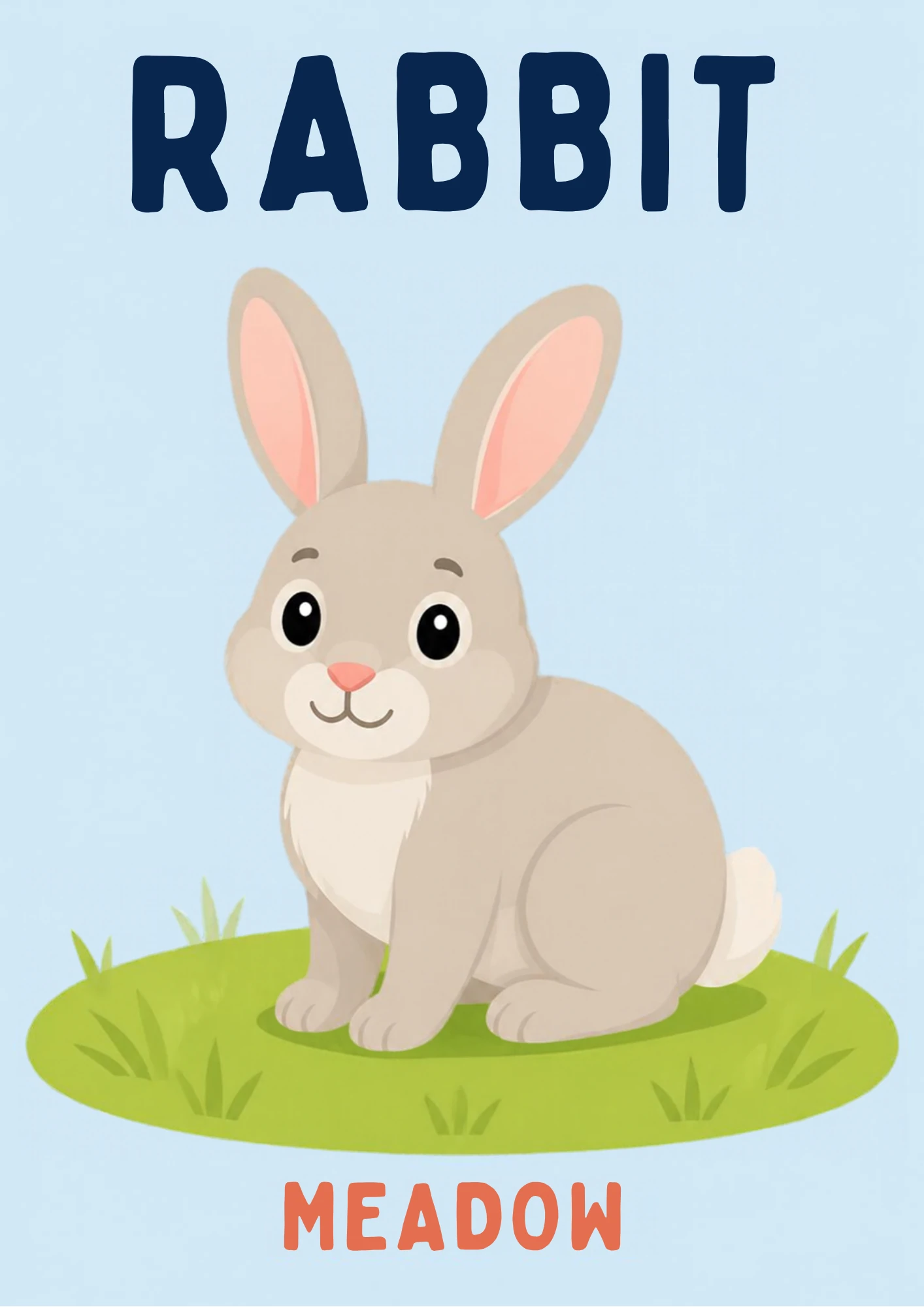
What is this?
A meadow is a field of tall grass and wildflowers that is allowed to grow long. No pavements, no lawn mower — just grass, stems, seeds and the small tunnels underneath.
What does it mean?
For a rabbit the tall growth does two jobs at the same time. It is food — rabbits nibble grass almost all day — and it is cover: a rabbit low in long grass is nearly invisible from above. Home that feeds you and hides you is a good home.
What does the child need to know?
Your child needs three meadow ideas: meadows are fields of tall grass, not empty gaps; the grass is the rabbit’s dinner and its hiding spot in one; and underneath it all the rabbit digs a burrow — a tunnel home where it sleeps and raises its babies.
Why this matters
The rabbit is the friendliest possible door into habitats, because children already know rabbits from stories. The discovery is that the rabbit in the book cannot actually live anywhere: it needs the meadow, specifically, and once a child sees that, every other animal-home pairing in this class starts making sense.
What it teaches
Habitat matching (animal to home), the idea that bodies suit their homes — big ears for hearing danger, strong back legs for hopping away — plus empathy through hiding play, and the first green word every ecologist needs: grassland.
Words to learn
meadowgrasstallhideburrownibblehop
Say this to your child
“"The rabbit lives in the meadow. The tall grass is its lunch and its hiding place at the same time — and underneath, the rabbit has dug a burrow where it sleeps. Nobody can see it from up high. That is why the meadow is the right home for a rabbit."”
Step by step
- Show the card: "This is a rabbit, and this is its home — a meadow."
- Say the two-job idea slowly: the tall grass is the rabbit’s food AND its hiding place. One plant, both jobs.
- Point at the picture: where could the burrow be? Under the green mound — the rabbit’s front door is a hole.
- Ask what the rabbit’s big ears and big back legs are for. Hearing danger early, and hopping away fast — the meadow rewards both.
- Finish with the crouch game (below) and one sentence to take away: "the rabbit lives in the meadow because the meadow feeds it and hides it."
Look closer at the picture
On this card a soft beige rabbit with pink-lined ears and a tiny smile sits calmly on a round green mound of grass. Behind it the sky is plain and pale, and the word "meadow" sits below — the rabbit is outdoors, low, and surrounded by exactly the green it eats.
Ask your child
"What does the rabbit eat in the meadow?" "Where does the grass hide the rabbit from?" "Where does the rabbit sleep at night — in a bed, or a hole?" "What are those big ears for?"
What your child can say or do
Your child might say: "The grass is the rabbit’s food," "It hides in the tall grass so nobody sees it," or the burrow line: "It sleeps in a hole under the ground!"
Out in the real world
Find any unmown strip — a park edge, a roadside verge, a corner of the garden — and crouch down inside it. From rabbit height the grass is a roof overhead. That little flip of scale, forest of grass, is the meadow understood.
Try it together
Hide-the-rabbit: one player closes their eyes while the "rabbit" curls small behind grass-colored things or under a green blanket. The seeker gets one look from standing height only — then must find the rabbit by walking low. Hiding works better low. That is the whole meadow lesson, played.
Understanding check
Ask: "Where does a rabbit live? What are the two jobs of the tall grass? Where does it sleep?" Meadow, food-and-hiding, burrow — three answers and the lesson is home.
Parent tips
If your child worries the rabbit is lonely or scared out there, lean in: the burrow has a whole family in it. Meadow, food, family underground — rabbits live a small, warm life that children find very satisfying once it is described.
This lesson pairs with the Rabbit flashcard in the library — print it, show it, keep it on the fridge. Back to Animals & Their Habitats (Class 36).