
Hairdresser — a step-by-step lesson for grown-up and child
This lesson narrates the whole haircut — cape, mist, snip, buzz, mirror spin — so the real salon chair feels like a story your child already knows.
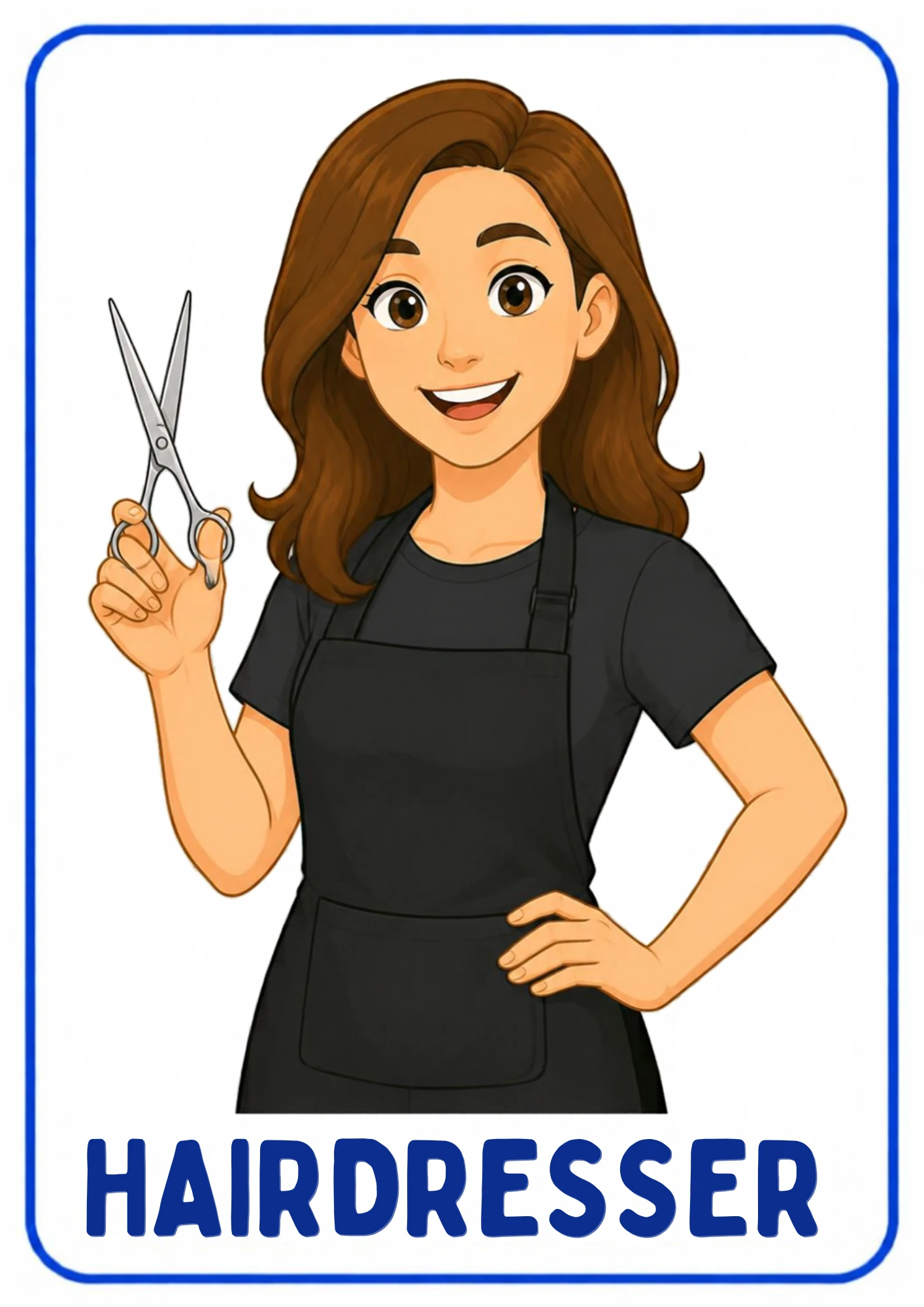
What is this?
A hairdresser is a grooming helper who washes, cuts and styles hair so people leave the salon feeling great.
What does it mean?
Salons have special up-down chairs, big mirrors, spray bottles, combs, scissors and clippers. Hairdressers listen first, then cut carefully and sweep up after.
What does the child need to know?
Salon know-how: we sit very still while the hairdresser works; tools are sharp or hot and belong to the hairdresser; telling the hairdresser what we want is part of the job.
Why this matters
For children who flinch at haircuts, the fear is the unknown: sounds, capes, stillness. Narrating the process turns each strange element into a chapter they can predict.
What it teaches
Sitting-still stamina (a real self-regulation win), process vocabulary, asking-for-what-you-want, sensory prediction (buzz, mist, snip), and body-care identity.
Words to learn
hairdressersaloncapescissorsstyleclippers
Say this to your child
“"The hairdresser asks what we want, puts the cape on, and cuts slowly and carefully. We sit still like statues, watch in the mirror — and then the big spin to see the new hairdo!"”
Step by step
- Show the card: "This is a hairdresser. They cut and style hair so we look and feel great."
- Find the scissors, the mirror, the chair. "The chair goes up and down — that is the fun part."
- Tell the haircut story in order: choose the style → cape on → mist of water → snip with scissors or buzz with clippers → dry → mirror spin → "all done!"
- Be honest about sensations: the cape feels tickly, the spray is cold, the clippers buzz your hand’s favourite song. Naming makes them friendly.
- Rehearse with the teddy salon before any real appointment.
Look closer at the picture
Ask: what is the hairdresser doing? Can you find the mirror and the cape? Is the customer sitting still? What would YOU ask the hairdresser for?
Ask your child
"Who cuts hair? What does the cape do? Why do we sit very still? What would you tell the hairdresser about your haircut?"
What your child can say or do
The order line: "A short cut please, with a spiky top!" And the stillness challenge: "Statue sit!" — five seconds, building up.
Out in the real world
Narrate your own salon visits; point out salons on walks. Home haircuts: name the sound of the scissors and the mist of the bottle as "salon sounds".
Try it together
Teddy salon: doll in the "chair", paper cape with a towel collar, yarn or paper-strip hair to "cut" with play scissors, a comb, the big finish — mirror spin and "ooh la la!" Swap roles; the barber gets a turn in the chair too.
Understanding check
Ask: "Who cuts hair? What do we do in the chair? Whose hands use the scissors?" Hairdresser + statue-still + theirs = pass.
Parent tips
Book morning appointments and say what will happen in order beforehand. For clipper-fear, let them feel the buzz on their own arm first — vibration is friendlier than surprise. Bring the teddy; even superheroes need haircuts.
Staying safe
Real scissors, clippers and hot dryers are hairdresser tools only. In the salon, hands stay in laps — no reaching for tools, no grabbing the cape.
This lesson pairs with the Hairdresser flashcard in the library — print it, show it, keep it on the fridge. Back to Community Helpers & Our Neighborhood (Class 33).