
Librarian — a step-by-step lesson for grown-up and child
This lesson makes the library a known place before the first visit: who the librarian is, how borrowing works, and the little skills that make trips joyful.
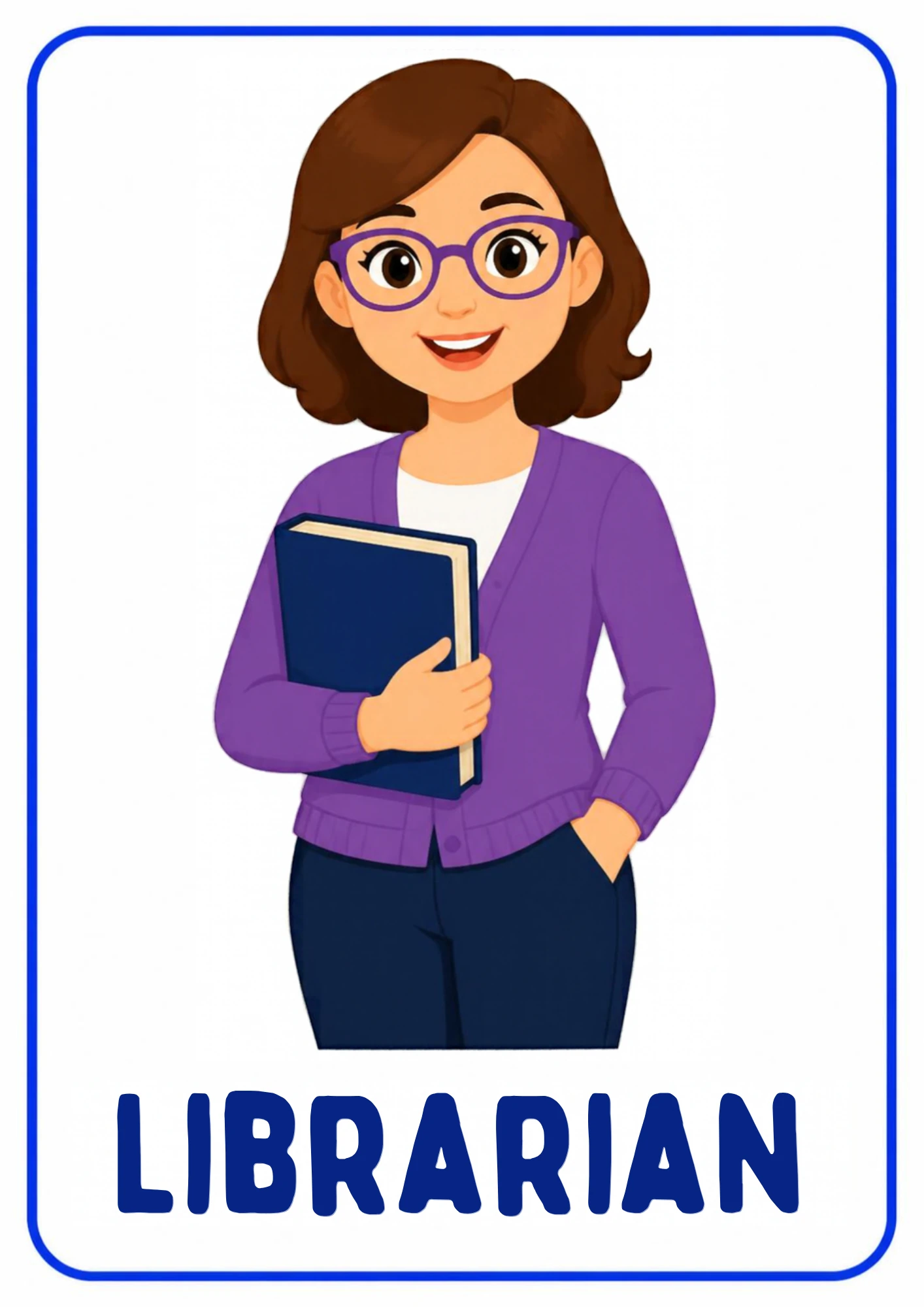
What is this?
A librarian is a book helper who takes care of the library and helps every visitor find exactly the right book.
What does it mean?
Libraries hold thousands of books everyone can borrow for free. Librarians arrange them so they can be found, run story times, and lend books with a library card.
What does the child need to know?
Library skills: books live in order, we ask the librarian to find things, borrowing means take-home-and-bring-back, and the library voice is soft.
Why this matters
A library card is a child’s first membership of the grown-up world. Knowing the borrowing loop — choose, borrow, care, return — is responsibility with stories as the reward.
What it teaches
Sequencing (choose→borrow→read→return), care-of-shared-things, asking-adults-for-help, quiet-voice self-regulation, and print motivation — the strongest early-reading predictor.
Words to learn
librarianlibraryborrowreturnstory timecard
Say this to your child
“"The librarian helps us find wonderful books. We borrow them with our card, read them at home, and bring them back for the next family. Librarians know where every dinosaur hides."”
Step by step
- Show the card: "This is a librarian. They help us find books and take them home."
- Find the shelves, the books, the helper. "There are so many books — the librarian knows where every one lives."
- Explain borrowing like a tick-tock: choose a book → the librarian stamps it → we take it home → we read it lots → we bring it back so the next child can love it.
- Practise the library voice: whisper "where are the truck books?" — then practise asking it, because librarians LOVE that question.
- Plan the first visit: what two books will you look for?
Look closer at the picture
Ask: what is the librarian doing — reading, helping, tidying? How many books can you count? What would YOU look for first on those shelves?
Ask your child
"Who helps us find books?" "What happens when we borrow a book?" "What do we do with a book we love and finished?" "What should we ask the librarian on our visit?"
What your child can say or do
Practise the ask: "Where are the books about trucks, please?" And the borrowing line at the counter: "I would like to borrow these books, please."
Out in the real world
Libraries run free story times — go once and your child meets the librarian in their favourite role. Spot "return here" boxes around town: book journeys never stop.
Try it together
Home library: line up ten books face-out, make paper "cards", take turns being librarian and borrower. The stamp can be a sticker; the return basket is the book-drop. Repeat until the loop is automatic.
Understanding check
Ask: "Who helps us in the library? What do we do with a borrowed book when we finish? Show me your library voice." Helper + return + whisper = pass.
Parent tips
Let your child carry the card and hand the books over — the transaction IS the lesson. Damaged-book moments happen; talk kindly about caring for borrowed things and move on.
This lesson pairs with the Librarian flashcard in the library — print it, show it, keep it on the fridge. Back to Community Helpers & Our Neighborhood (Class 33).