
Teacher — a step-by-step lesson for grown-up and child
This lesson opens the classroom door: what teachers actually do, the little rules that make class work, and a rehearsal for your child’s own school days.
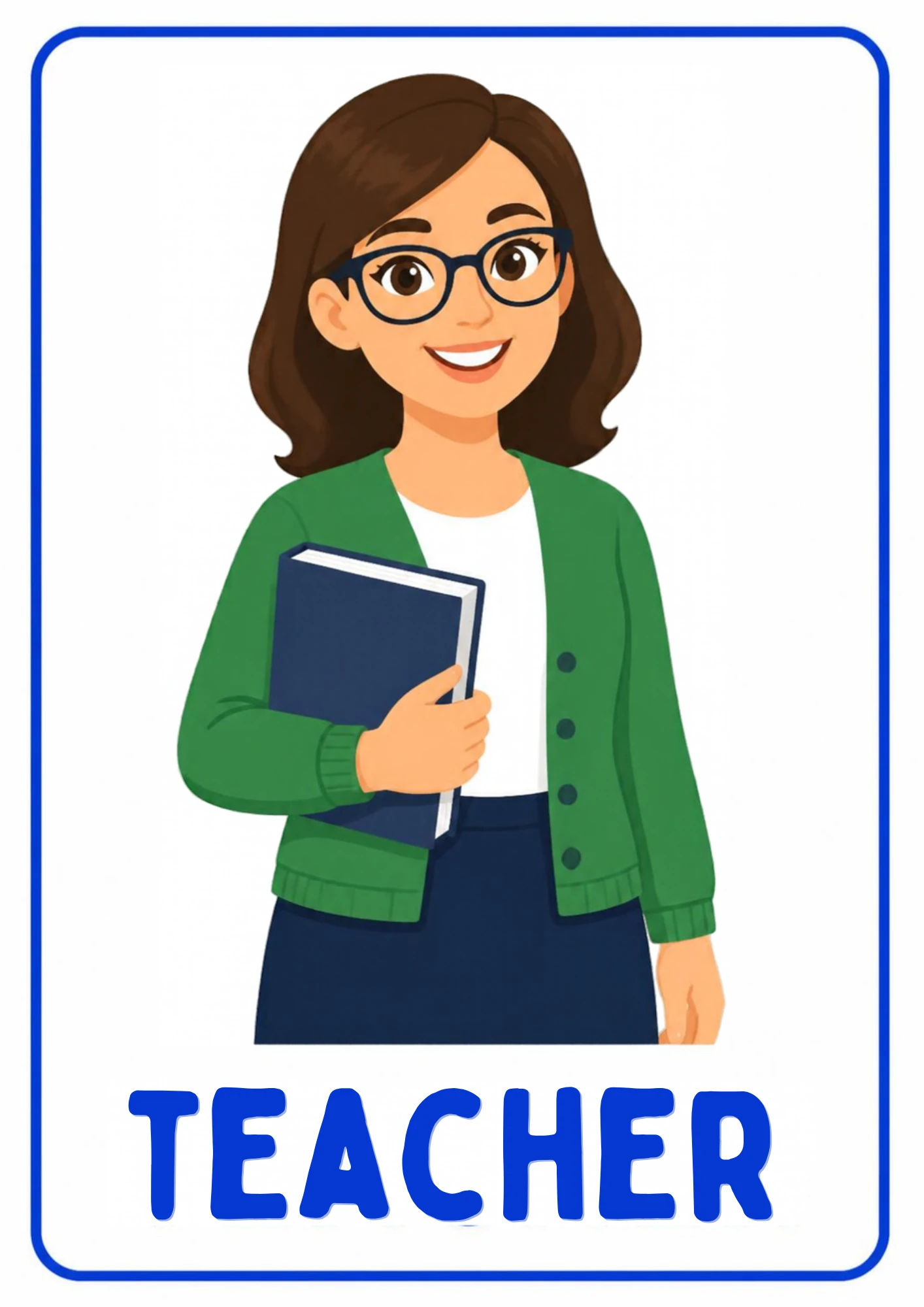
What is this?
A teacher is a learning helper who shows children new things — letters, numbers, songs, science, and how to be a good friend.
What does it mean?
Teachers work in schools. They plan the day, explain ideas step by step, read aloud, help with sharing and turn-taking, and tell families how the day went.
What does the child need to know?
Classroom know-how: teachers love questions, we raise a hand to take a turn, and "I need help" is a welcome sentence, not a failure.
Why this matters
A teacher is your child’s first grown-up outside the family. Knowing the job and the routines turns first-days wobble into "I know how this works".
What it teaches
School-readiness scripting, question-asking courage, listening turns, memory retell (what did we learn today?), and respect-for-guides that transfers to coaches and librarians.
Words to learn
teacherclassroomraise your handlearnquestionturn
Say this to your child
“"Teachers help us learn. When you wonder about something, raise your hand and ask — teachers LOVE questions. And if something is tricky, saying ‘help me please’ is exactly right."”
Step by step
- Show the card: "This is a teacher. Teachers help children learn new things every day."
- Find the classroom things on the card: books, board, children listening. What is YOUR classroom like?
- Explain the rhythm of a school day: come in, listen, try, play, ask, go home. Use your hands to show the day’s shape.
- Teach the two golden moves: raise your hand to speak, and say "I need help" proudly.
- Rehearse with play-school so the moves feel familiar before they are needed.
Look closer at the picture
Ask: what is the teacher holding or pointing at? What are the children doing — are they taking turns? What can you see on the walls? Does the classroom look calm or loud?
Ask your child
"What does a teacher do all day?" "What do we do when we want to say something in class?" "What could you ask your teacher tomorrow?"
What your child can say or do
Practise the two moves: "Can I say something?" (hand up) and "I need help, please." Both said proudly — needing help is a skill, not a shame.
Out in the real world
At home, teachers are everywhere: swimming coaches, library story readers, dance teachers. Name the role each time — "your coach is teaching like a teacher".
Try it together
Play-school: your child teaches teddies one song, one letter and one rule. Then swap — you are the student who raises a hand, asks a silly-good question and says "I need help". The swap is where the magic lands.
Understanding check
Ask: "What does a teacher do? What do we do when we want to talk in class? What do we say when something is tricky?" Question + hand + help = pass.
Parent tips
Never joke "wait till real school!" — school should sound like a place with friendly helpers. Ask "what did your teacher show today?" at dinner; retelling builds memory and gives you a window.
This lesson pairs with the Teacher flashcard in the library — print it, show it, keep it on the fridge. Back to Community Helpers & Our Neighborhood (Class 33).