
Follow Directions — a step-by-step lesson for grown-up and child
This lesson turns instructions into missions: first/then language that gives a direction a shape, the say-it-back check that catches confusion early, and why one mission at a time is the rule that keeps success possible.
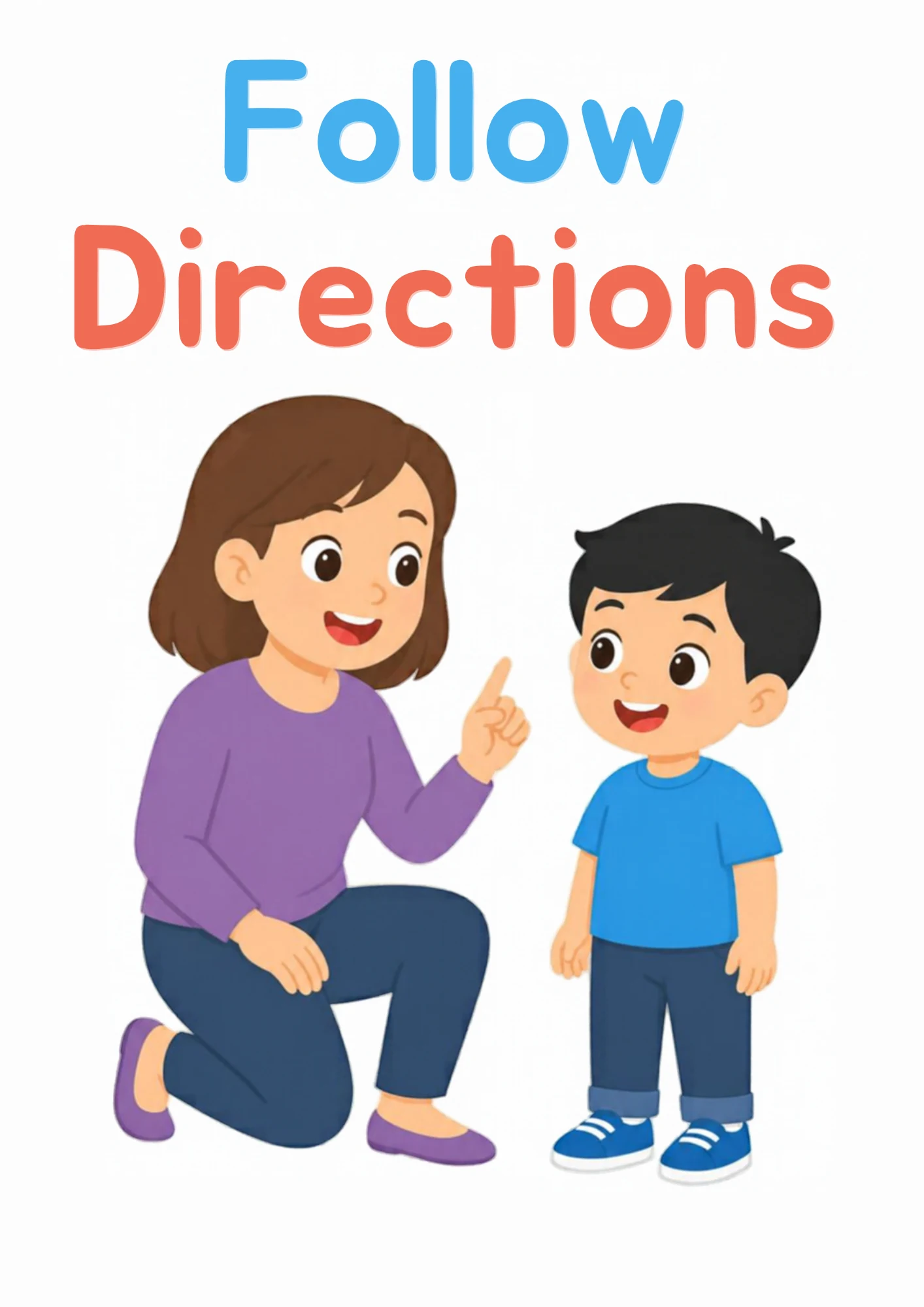
What is this?
Following directions means hearing what is asked, saying it back to be sure, and doing it in order — first this, then that — until the mission is complete.
What does it mean?
Directions work when they are few, clear and ordered: "first shoes, then outside" beats a paragraph. The say-it-back step is not a test — it is a check that catches the mixed-up mission before the mixed-up doing.
What does the child need to know?
The first/then structure is the engine: "first we put on shoes, then we go out." Missions get followed; orders get ignored — the difference is framing. One or two directions at a time, at eye level, with a check: "what is the mission?"
Why this matters
The grown-up world runs on directions: classroom routines, safety steps, recipe steps, game rules. A child who can take a direction, check it and follow it through is equipped for every room they will ever enter.
What it teaches
Sequencing (first/then as flexible grammar), working memory, task completion, cooperation as a chosen role rather than submission, and the pride of the mission-accomplished report-back.
Words to learn
firstthenmissionordercheckdone
Say this to your child
“"This is a mission, not an order. First we hang the towel, then we find your water bottle. Say the mission back to me — good, you have it. Go! ... Mission accomplished? High five. One mission at a time, said back, done in order — that is how big people do things, and now so do you."”
Step by step
- Show the card: the grown-up kneels with one finger up, mid-direction; the boy stands ready, listening with a happy face. Name the picture: a mission being delivered.
- Speak in first/then all day: "first socks, then shoes." "First dinner, then bath." The structure does the remembering for your child.
- Give one mission at a time, at eye level, then ask for the say-it-back: "what is the mission?" — before any feet move.
- Let your child collect the accomplishment out loud: "mission accomplished!" — the report-back is the ceremony that makes the skill lovable.
- When a direction fails, check the mission first: was it two missions pretending to be one? Split it.
Look closer at the picture
Ask your child: what is the grown-up doing — how many fingers are up? Is she kneeling or standing? What is the boy wearing — what colors? What do you think the mission might be? Is he ready or already running?
Ask your child
"What comes first in our morning — socks or shoes?" "What do you say back before you start?" "What is the difference between a mission and an order?" "What was today’s mission?"
What your child can say or do
"First towel, then bottle — mission accomplished!" Your child may assign YOU missions at bedtime ("first pyjamas, then story"), or ask "what is the mission?" when a morning feels muddled.
Out in the real world
Directions run every outing: "first the trolley, then the shop", "first sunscreen, then the pool", the teacher’s line-up call, the coach’s warm-up. Each is a first/then your child can now catch in the air and run with.
Try it together
Mission-of-the-hour: write or draw one two-step mission on a card each day; your child draws it, says it back, completes it and stamps the card DONE. The card pile becomes a trophy shelf of followed directions.
Understanding check
Ask: "What is the first/then shape? What do you say back before starting? How many missions at once?" First-then grammar, say-it-back, one = landed.
Parent tips
Frame as missions and the same words get followed — the framing is free. Check for understanding before compliance: confusion mimics defiance at four. Split any direction that fails into two smaller ones and watch the same child succeed.
Staying safe
Directions carry a rescue clause: if a child cannot do a mission safely — reach the shelf, cross the car park — the mission changes, not the child. And "stop" from a trusted grown-up outranks any mission in motion.
This lesson pairs with the Follow Directions flashcard in the library — print it, show it, keep it on the fridge. Back to Life Skills & Good Habits (Class 32).