
Apple — a step-by-step lesson for grown-up and child
This lesson opens the whole alphabet: the letter Aa and its first sound, the big open "ah" that starts apple. Your child traces the letter on the card, plays the doctor game that makes the sound naturally, and hunts A-sounds around the home.
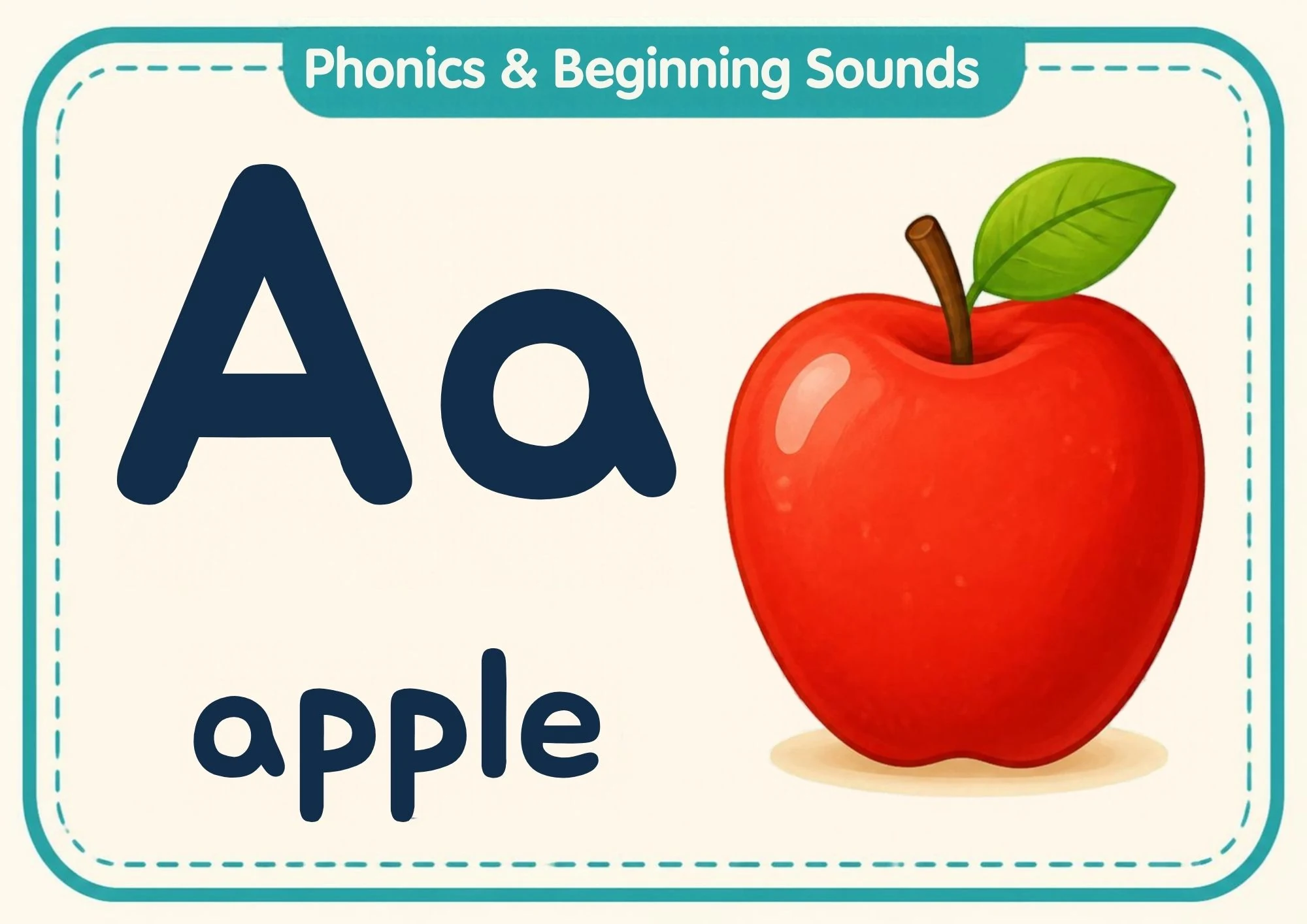
What is this?
Aa is the letter that stands for the first sound in apple — a short, wide "ah". It is the first letter of the alphabet and the first sound on the path to reading.
What does it mean?
The big idea hiding in this lesson: a letter is a picture of a sound. When your child sees Aa and hears "ah" in their head, reading has officially started.
What does the child need to know?
Your child needs three things from this card: that Aa stands for the apple sound, that the sound is short and open (not the letter name "ay"), and that the sound can start many words, not only apple.
Why this matters
/a/ is one of the most common first sounds in little-word land — apple, ant, animal, am. A solid "ah" makes every later vowel lesson easier, because the mouth already knows how to open wide.
What it teaches
Wide-open mouth control (the biggest mouth-shape a vowel asks for), sound-to-letter mapping, and the listening habit of catching a sound at the start of a word.
Words to learn
aappleantapronalligatorah
Say this to your child
“"Open your mouth like the doctor asks — ahhh. That is the sound! A says ahh, like the start of apple. Say it with me and let your mouth open as wide as it can."”
Step by step
- Show the card: "Aa. This is the letter. It says ah — ah — apple."
- Finger-trace the big Aa on the canvas while saying "ah" the whole way round — eyes, fingertip and voice on the same letter at once.
- Play the doctor game below: the sound arrives on its own, no drilling needed.
- Hunt three a-things in the room and name each one with a big open mouth: apple, animal, apron.
- Finish by letting your child say "ah — apple" all by themselves, and celebrate loudly.
How to say it
Drop the jaw, tongue flat and low, and let the voice out with nothing blocking it: "ah". No lip rounding, no teeth touching — the sound is pure open mouth.
Look closer at the picture
On this card the big navy pair Aa sits beside a shiny red apple with a single green leaf, and the word "apple" is printed underneath — letter, picture and word in one glance.
Ask your child
"What sound does A make?" "What is the picture word on this card?" "Can you find something that starts with ah?"
What your child can say or do
Your child might say: "A says ah!" "Ah — apple!" or, mid-doctor-game, a very serious "ahhh" with the tongue out like a real check-up.
Out in the real world
The doctor game is the secret: every check-up ends with "say ahh" — and that IS the A sound. Add apple slices at snack time and ants on the pavement, and the sound has three homes already.
Try it together
Doctor check-up: wrap a scarf around your head, hold a spoon like a tongue depressor and ask your patient to "say ahh". After three "ahhhs", the doctor prescribes an a-word — apple, ant, apron. Swap roles and be the patient yourself.
Understanding check
Show the card again tomorrow and ask "what sound?" — a quick "ah!" (not "ay") means the sound has landed. If they give the letter name, replay the doctor game; the name can wait for the alphabet song.
Parent tips
The sound and the name are two different lessons. If "ay" keeps arriving, go back to the open-mouth game — the mouth remembers what the ears forget, and apples help.
This lesson pairs with the Apple flashcard in the library — print it, show it, keep it on the fridge. Back to Phonics & Beginning Sounds (Class 28).