
Bee — a step-by-step lesson for grown-up and child
This lesson reframes the bee from something to fear into a worker with a delivery job: your child learns what the bee takes, what it leaves behind, and why the flowers in the garden are quietly saying thank you.
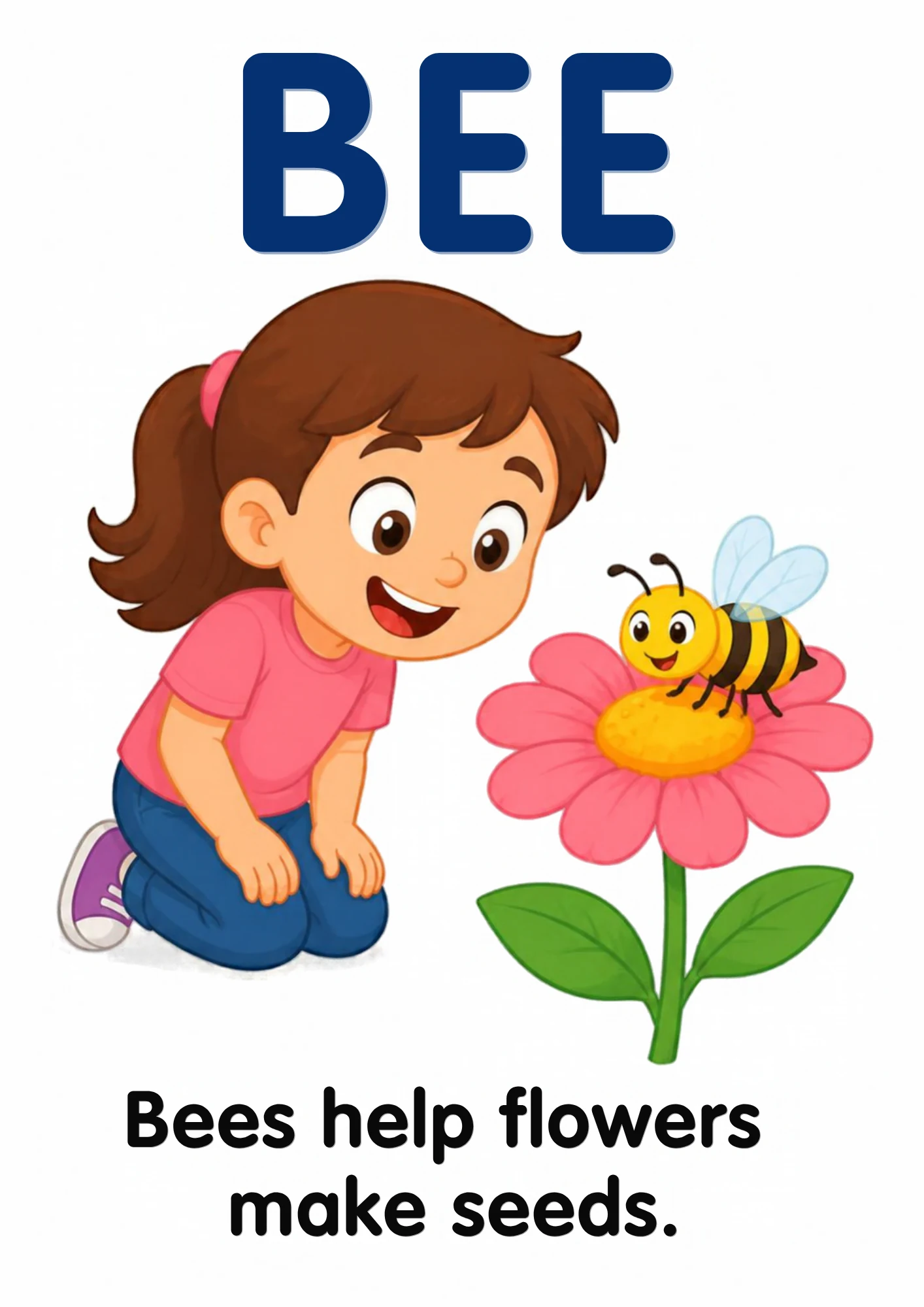
What is this?
Pollination means moving golden pollen dust from flower to flower. Bees do it by accident: they land to sip sweet nectar, pollen sticks to their fuzzy bodies, and some rubs off inside the next blossom.
What does it mean?
The bee wants nectar, not seeds — but the pollen it carries is exactly what flowers need to make seeds and fruit. Two living things helping each other without either one planning it: that is partnership, and it feeds the whole garden.
What does the child need to know?
A bee can visit hundreds of blossoms in a single day. Pollen is a fine yellow dust made inside flowers; fruit — apples, strawberries, tomatoes — only forms after pollen reaches the right place.
Why this matters
Bees connect animals to plants in your child’s head: the apple on the table needed a bee last spring. That link grows respect for small creatures and answers the garden question "why do we never chase bees?" with real science, not just rules.
What it teaches
Careful observation at a distance, cause-and-effect thinking (bee visits, flower makes fruit), emotional learning about creatures that look alarming but mean no harm, and counting practice disguised as flower-watching.
Words to learn
beeflowerpollennectarseedsfruit
Say this to your child
“"The bee is not bothering the flower — it is drinking sweet juice inside it. Look at its legs: golden dust! That dust is called pollen, and when the bee flies to the next flower, some dust falls off. That little dusting is how flowers make seeds and fruit."”
Step by step
- Show the card: what is the child watching, and what is the bee visiting? Name the job — this bee is a flower helper.
- Explain the two-part visit: the bee drinks sweet nectar deep in the flower, and golden pollen dust sticks to its fuzzy body like glitter.
- Count bee visits from a distance: pick two or three flowers in a garden or park, stand back, and tally which one the bees like best.
- Connect it to food: many fruits in the kitchen — apples, strawberries — grew only because a bee carried pollen last year.
- Practise the garden rule together: bees are busy, not mean. We stand still or walk calmly; we never swat or grab.
Look closer at the picture
Ask your child: what is the bee visiting? What is the child in the picture doing — running or watching? Where do you think the bee will fly next? Can you point to where the flowers are?
Ask your child
"What is the bee drinking inside the flower?" "What sticks to the bee’s fuzzy body?" "What do flowers make after a bee visits?" "What do we do when a bee flies near — wave or stand calm?"
What your child can say or do
"The bee is wearing pollen glitter!" "Do not chase bees — they are busy workers." Your child may count bee visits out loud in the garden, or explain to a worried friend that the bee is "just helping flowers make apples".
Out in the real world
Bee work is on every table: apples, berries, cucumbers and even the seeds inside tomatoes exist because bees moved pollen. The next fruit bowl becomes a review lesson — "which of these did bees help grow?" — and the answer is nearly all of them.
Try it together
Pollen glove game: put a sock or glove on your child’s hand, dust it with flour "pollen", and have them touch five paper flowers around the room. Check each flower afterwards for flour — that is pollination, replayed by hand.
Understanding check
Ask: "What does the bee drink? What sticks to its body? What do flowers make from pollen? What do we do near bees?" Nectar, pollen, seeds and fruit, stay calm = landed.
Parent tips
Watch from a step back rather than leaning in — bees sense sudden movement. Bare feet and flower beds do not mix: bees land on clover low in the grass, which is exactly where bare toes go.
Staying safe
Bees sting only when scared or squeezed — a calm child standing still is safe, and a bee buzzing past is on its way somewhere. If a bee does sting, it hurts honestly and briefly: tell a grown-up, wash the spot, and a cold cloth takes the heat down. A very swollen face or any trouble breathing means a grown-up calls a doctor straight away.
This lesson pairs with the Bee flashcard in the library — print it, show it, keep it on the fridge. Back to Science, Nature & Discovery (Class 31).