
What Magnets Attract — a step-by-step lesson for grown-up and child
This lesson is the perfect first experiment: a magnet, ten household objects, and one question — will it stick? Your child predicts, tests and sorts, and discovers that "metal" is not the answer: only iron and steel stick, and the surprises are the lesson.
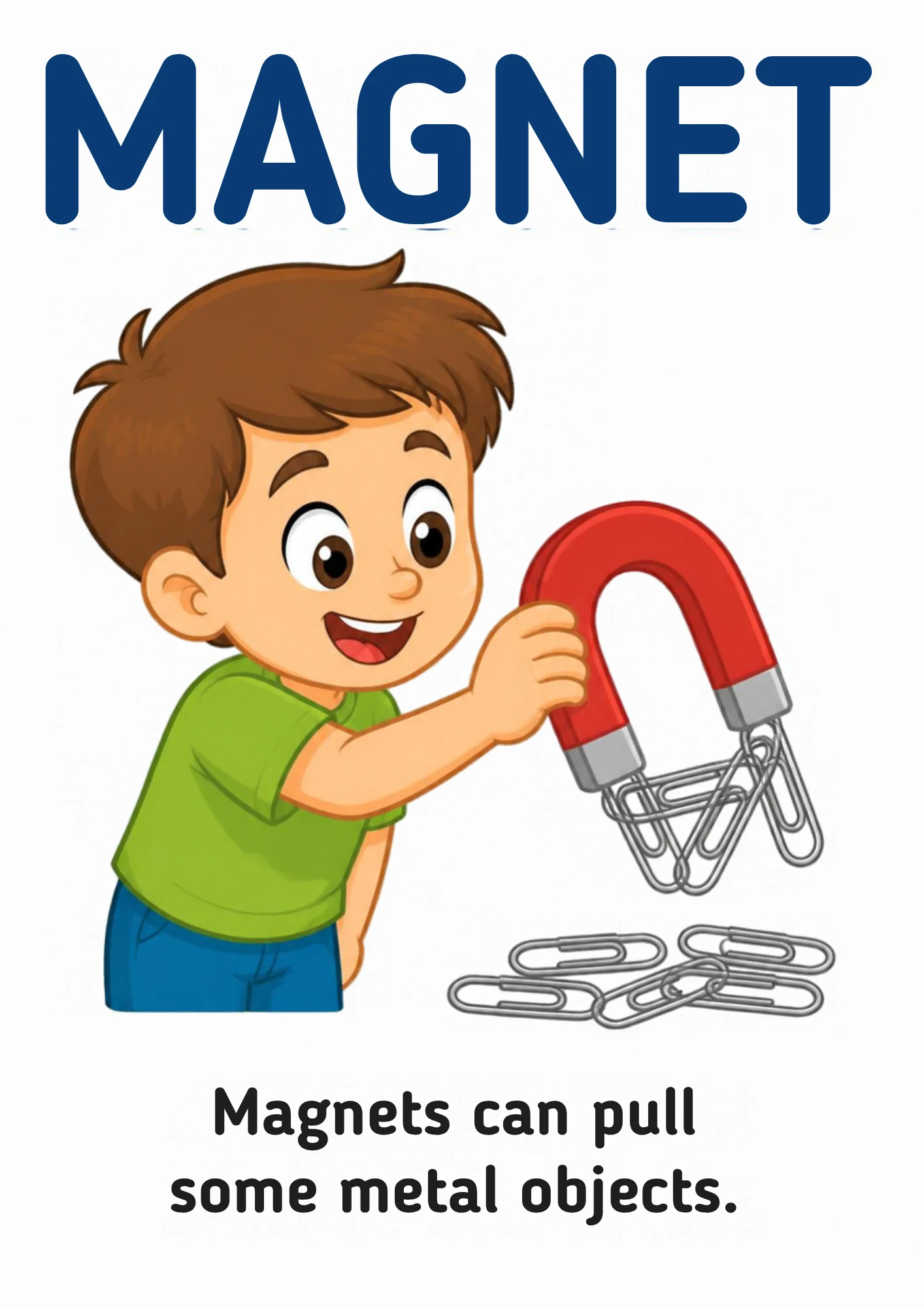
What is this?
Magnets pull — but only on certain things. Iron and steel hold fast; wood, plastic, glass, paper and fabric stay stubborn. Many everyday "metal" objects — most coins, foil and drink cans — are metals a magnet ignores. The magnet is the only honest judge.
What does it mean?
Not all metal is magnetic: the pull works on iron and steel, which is why the fridge door holds a drawing and the aluminium can does not. Sorting stick from no-stick is classification, and the magnet does the sorting instantly — no opinions needed.
What does the child need to know?
A magnet always sticks to iron and steel — spoons, keys, radiators, the fridge door. It never sticks to wood, plastic, glass, paper or cloth, no matter how hard you wish. Foil and most coins fail the test: they are metals, just not the magnetic kind.
Why this matters
This is the full predict-test-conclude cycle in one safe game: your child guesses before touching, tests with the magnet, and sorts results into piles. Being wrong out loud — the spoon stuck, the coin did not — is exactly how experiments teach.
What it teaches
Prediction before testing (the scientist’s core habit), sorting into two clean categories, vocabulary for materials (iron, steel, plastic, wood, metal), and the surprise-mindset: wrong guesses are findings, not failures.
Words to learn
magnetstickmetalsteeltestsort
Say this to your child
“"A magnet is a picky puller — it only sticks to iron and steel. Wooden spoons? No. Plastic bricks? No. The metal zip? Sometimes yes! Before we test, we guess — that is what scientists do. Then the magnet tells the truth, and into the piles it goes: STICKS, and no."”
Step by step
- Show the card: what is in the child’s hand, and what shape does it have? Can you count the paperclips waiting nearby? Name the tool — a horseshoe magnet.
- Set the game: guess FIRST, test SECOND. Will the spoon stick? The coin? The toy car? Call every guess out loud before the magnet touches anything.
- Run the house hunt: ten objects, one magnet — spoons, coins, keys, toys, zips — even the door handle. Stick or no?
- Sort the verdicts: two piles on the table — STICKS on the left, NO on the right. What did the stickers share? Iron and steel, mostly hiding inside things.
- Land the surprise: coins and foil are metal but do NOT stick — not all metal is magnetic. The magnet is the only judge that never gets it wrong.
Look closer at the picture
Ask your child: what is the child holding? What shape is the magnet? Can you find all the paperclips — how many are there? Do you think they will all stick?
Ask your child
"Does a magnet stick to wood?" "What kinds of metal do magnets pull?" "What do we do first — guess or test?" "What did the coin do when we tested it?"
What your child can say or do
"The coin did NOT stick — but the spoon did!" "Guess first, then the magnet tells the truth!" Your child may test every fridge door in the house, walk the kitchen with a magnet like a metal detector, or announce "not all metal sticks!" at unrelated moments for weeks.
Out in the real world
Stick tests are everywhere once the magnet is out: the radiator (sticks), the mirror frame (often not), zip pulls, bath toys, the cutlery drawer. The fridge door becomes a daily test station — and gift shops sell magnet sets that keep the hunt going for years.
Try it together
Mystery-bag magnetism: fill a cloth bag with safe household objects — some steel, some not. Your child predicts what is inside, then fishes with a magnet through the fabric: sticks means steel, no means mystery unsolved — pull it out and check. Sorting, predicting, surprise: the full loop.
Understanding check
Ask: "What do magnets stick to? Do all metals stick? What comes first — the guess or the test?" Iron and steel, no, the guess = landed.
Parent tips
Let your child keep the two sorted piles for a day and re-test anything that objects to its verdict — re-testing is real science. Fridge-magnet letters make a bonus round: they stick because their backs hide soft iron.
Staying safe
Small magnets and small parts are a baby-sibling hazard: swallowed magnets can pinch inside the body and cause real harm, so magnet play happens up high, out of baby territory, and every magnet gets counted back at the end. Big snap-together magnets also pinch fingers hard — little hands use big magnets, gently.
This lesson pairs with the What Magnets Attract flashcard in the library — print it, show it, keep it on the fridge. Back to Science, Nature & Discovery (Class 31).