
Seed — a step-by-step lesson for grown-up and child
This lesson opens a package your child can hold: a seed is a baby plant with its lunch packed, waiting for two signals — warmth and water. Soak one, press it against clear glass, and the first root arrives where they can see it.
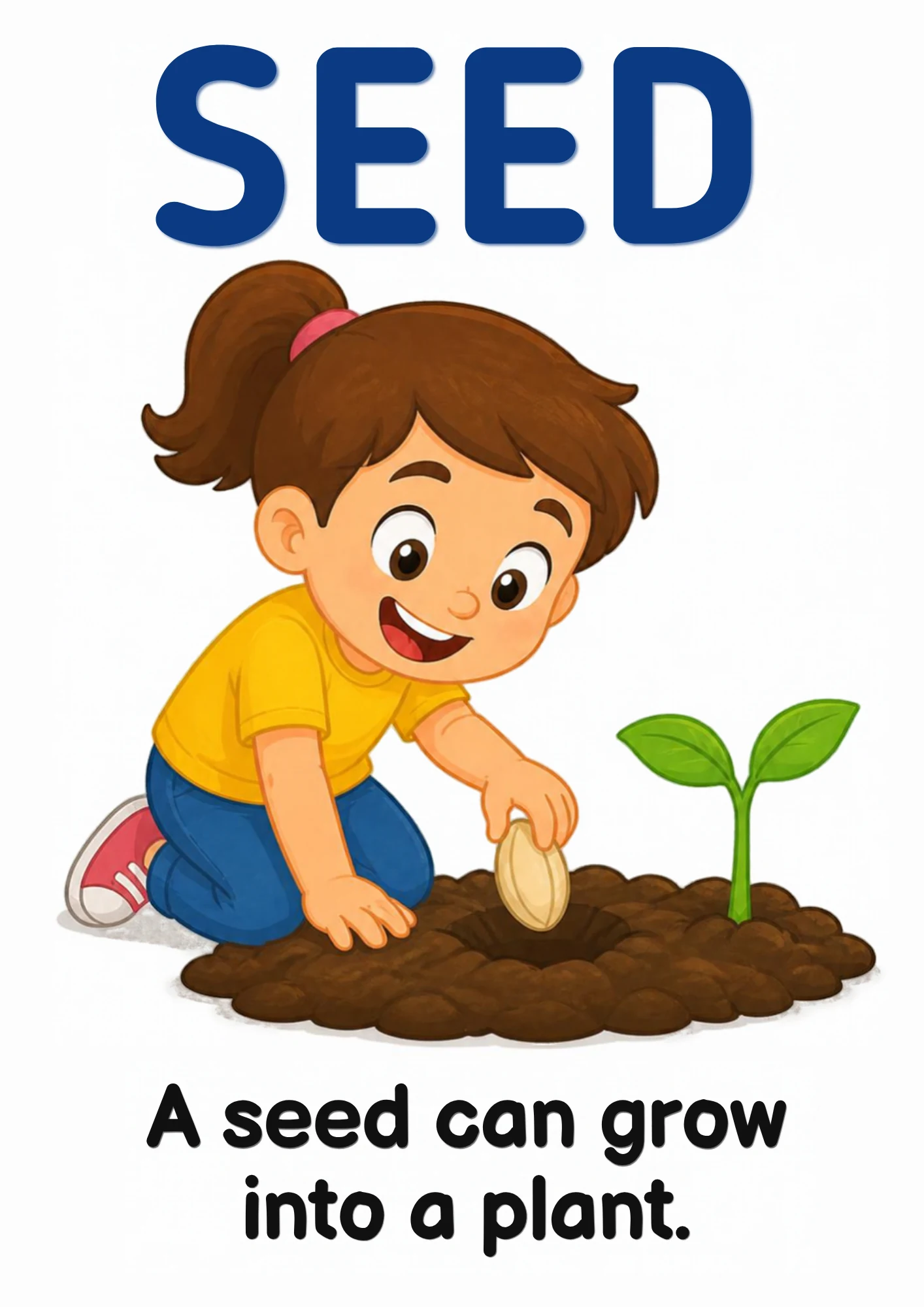
What is this?
A seed carries a tiny folded-up plant and a packed lunch of stored food, all inside one shell. When water soaks in and the weather warms, the shell splits, a root pushes down, a shoot pushes up, and the lunch feeds the journey until leaves take over.
What does it mean?
The seed is patient on purpose: sprouting into a cold snap would be the end, so it waits for warmth and damp — the go signal. Everything the sprout needs for its first days is already inside, which is why a seed can wake up in a jar with nothing but wet cotton.
What does the child need to know?
Soaking a seed overnight swells it and starts the wake-up. Some seeds ride the wind or hitch on animal fur before they land; others wait years underground for their moment. Beans are honest performers — big seeds, fast sprouting, visible roots.
Why this matters
Seeds make growth visible from day zero: your child plants it, marks the date, and witnesses the root before any leaf exists. The waiting is the skill — checking daily, drawing changes, learning that living things start small and unfold on their own schedule.
What it teaches
Patience and delayed observation (a real wait with daily checks), sequencing (root first, then shoot), early recording through date marks and drawings, and the wonder fact that a whole plant folds inside something palm-sized.
Words to learn
seedsproutrootshootsoilgrow
Say this to your child
“"Inside this little seed there is a baby plant, curled up tiny, with its first meals packed around it. Give it a long drink and some warmth, and it wakes: first a root to anchor and sip, then a shoot to find the sun. We do not make it grow — we just give it the go signal and watch."”
Step by step
- Show the card: what is the child planting, and what is the green thing beside them? Name seed and sprout — before and after.
- Open the idea: a seed is a lunchbox with a baby plant folded inside, waiting for water and warmth to say go.
- Soak a bean overnight and compare: swollen versus dry. That puffing is the seed drinking its wake-up drink.
- Press the bean against the glass inside a clear jar, packed round with damp cotton, date-mark the jar, and guess what comes first — root or shoot?
- Check every day and draw what appears: root down, shoot up, then leaves. The lunch is eaten, the plant cooks for itself now.
Look closer at the picture
Ask your child: what is the child planting? Can you find the seed in the picture? What is growing beside the child — is it green? Is the soil dark or pale?
Ask your child
"What is hiding inside a seed?" "What tells a seed it is time to wake up?" "Which comes out first, a root or a shoot?" "Why did our bean get fat overnight?"
What your child can say or do
"The seed drank and got fat!" "The root came first — I was right!" Your child may soak everything in sight "to see if it wakes", plant a jar garden on every windowsill, or explain that a seed is "a lunchbox with a plant inside".
Out in the real world
Seeds are everywhere once you look: apple cores, sunflower packets, the dandelion clock your child blows, grass seeds under the mower. A packet of dried beans from the kitchen shelf is a full experiment kit — and sprouted beans can go straight into a pot of soil.
Try it together
Seed-sort kitchen botany: tip out a spoonful from the cupboard — beans, lentils, sunflower seeds, rice — and sort by size and colour, guessing which are seeds with plants inside. Then plant the biggest ones in a damp-cotton jar and race two kinds to a first root.
Understanding check
Ask: "What is inside a seed? What wakes it up? What grows first?" A baby plant and its lunch, water and warmth, the root = landed.
Parent tips
Clear jars pressed against the glass show the root weeks before any pot would — always plant one "for watching". Keep cotton damp, not swimming; mould is the jar garden’s only real enemy. If a seed fails, plant another: failures are data too.
This lesson pairs with the Seed flashcard in the library — print it, show it, keep it on the fridge. Back to Science, Nature & Discovery (Class 31).