
Sound — a step-by-step lesson for grown-up and child
This lesson makes sound touchable from both ends: the shaking that makes it — visible as rice dancing on a drum skin — and the shaking that hears it, felt as a buzz in your own throat. Quiet and loud, deep and squeaky, all come down to one wobbling idea.
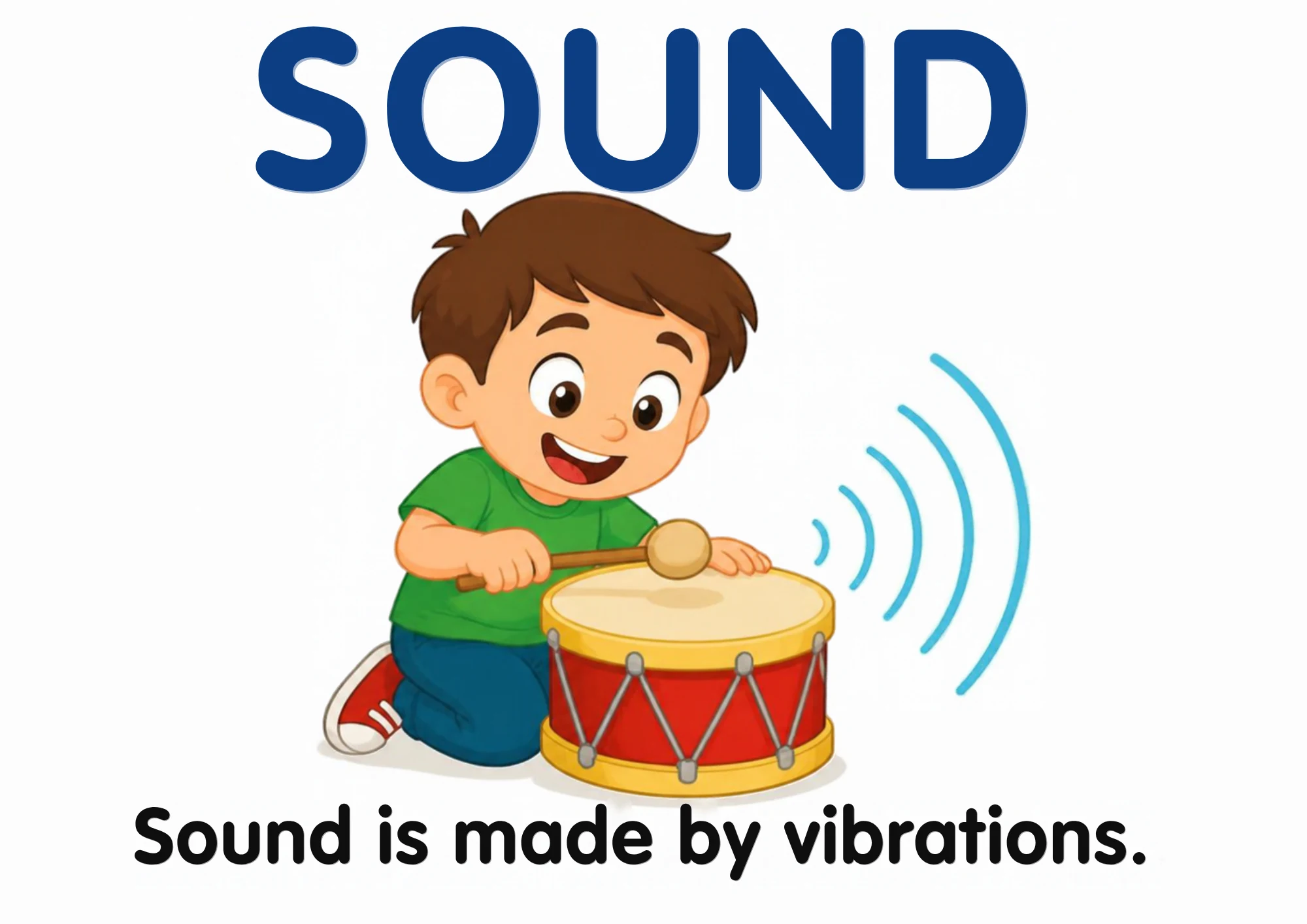
What is this?
Every sound starts with a shake: a drum skin wobbles, the shake rides waves through the air to your ear, and the last wobble lands on your eardrum — which wobbles too. That final wobble is hearing. No shaking, no sound.
What does it mean?
Sound is movement you can see and feel, not just hear: rice jumps on a drum, your throat buzzes when you hum, a big slow wobble sounds deep and a fast one sounds squeaky. Quiet means small shakes; loud means big ones — volume is shaking size.
What does the child need to know?
Bigger things wobble slower, and slow wobbles sound deep — that is why a big drum booms while a small one taps. Sound can travel through your bones too: tuck your fingertips lightly over your ears and say something, and your own voice arrives loud and clear from the inside.
Why this matters
Sound turns an invisible everyday thing into a testable one: your child can see the rice jump, feel the throat buzz, and hear the difference a size makes. It also explains the volume knob, the quiet game, and why libraries whisper — all one wobbling idea.
What it teaches
Multisensory evidence (seeing, feeling, hearing the same shake), cause-and-effect with size and pitch, impulse control through quiet-loud games, and the body knowledge that your own throat and ears are vibration equipment.
Words to learn
soundvibrationdrumloudquietwobble
Say this to your child
“"Every sound starts as a wobble — a shake! The drum skin shakes, the shake rides the air all the way to your ear, and your eardrum shakes back: that is hearing. Put your fingers on your throat and hum — feel it? You are making a wobble right now. Big slow wobbles boom, tiny fast ones squeak."”
Step by step
- Show the card: what is the child playing, and what is rippling out from the drum? Name it — sound waves, made by shaking.
- Feel it first: fingers on the throat, hum like a bee. That buzz is the vibration — you ARE the sound machine.
- Make it visible: stretch a balloon skin tight over a bowl, dust it with dry rice, and tap a metal pot loudly next to it. Every boom, the rice jumps — the shake, made seeable.
- Sort the sizes: big drum, slow deep wobble — boom. Small drum, fast tiny wobble — tap. Loud is a big shake, quiet is a small one.
- Travel the sound: tuck fingertips over your ears and talk — the sound sneaks through your own bones. Then whisper: how small can a wobble get?
Look closer at the picture
Ask your child: what is the child playing? What is rippling out from the drum? Can you pretend to tap a drum? Does the sound look like it is going far away or staying close?
Ask your child
"What is every sound made of?" "What did the rice do when the drum boomed?" "Why does a big drum sound deep?" "How can you hear a sound with your fingers over your ears?"
What your child can say or do
"Sound is a wobble that your ear catches!" "The rice is jumping — I can SEE the sound!" Your child may hum with fingers on throat to prove the buzz, tap pots gently near the rice drum to make it dance, or whisper "small wobble" instead of quiet.
Out in the real world
Sound shakes are everywhere: a speaker’s cone you can feel humming, a window buzzing when a lorry passes, the purr of a cat against your hand. The volume game works in every room — big shakes for the playground, small shakes for the library, and now your child knows why.
Try it together
Rice-drum rock band: one bowl with a balloon-skin or cling-film top, rice sprinkled, and a pot-and-spoon kit for drums. Play loud beside it and watch the rice mosh, then tiptoe the taps — barely a grain moves. Chart it: boom, jump; whisper, still. Sound, sized.
Understanding check
Ask: "What makes every sound? What does loud mean for the shaking? What did the rice show us?" Wobbling, big shakes, the vibration = landed.
Parent tips
Balloon skins beat cling film for bounce — stretch tight and tape well. Keep the rice on the drum, not the floor, with a tray underneath. The ears-and-speak trick is a reliable wow: your child’s own voice, arriving through bone. Follow with a quiet walk and a hunt for the smallest wobbles they can hear.
This lesson pairs with the Sound flashcard in the library — print it, show it, keep it on the fridge. Back to Science, Nature & Discovery (Class 31).