
But — a step-by-step lesson for grown-up and child
Five minutes, one card: say “but” clearly, use it in a real sentence (“I like it, but I cannot.”) and finish with one small game.
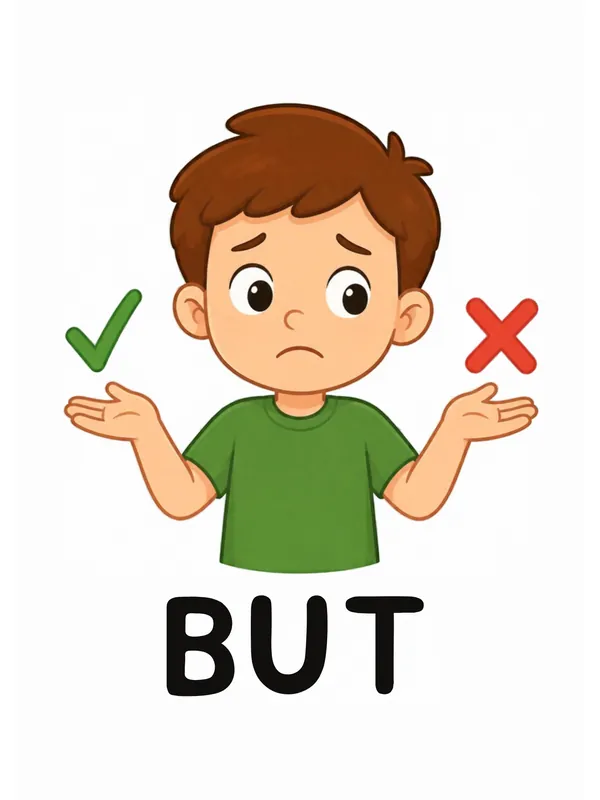
What it means
It joins two ideas that go the other way.
How to teach it
- Hold up the card and read “but” slowly, sliding a finger under it. Point out its shape: a b, a u and a t.
- Ask your child to find the first letter on the canvas and draw a ring around it, then say the whole word.
- Play the game below, say “but” one last time and stop while it is still fun.
How to say it
Say a short u: but, like cut and nut.
Where to use it
Say it in a real sentence: “I like it, but I cannot.” Then try “It is small but strong.” Where to spot it: stories with a twist, such as but then.
Try this game
Say I want to play, but it is raining. Let your child finish a but sentence.
Understanding check
Tomorrow, show the card and say nothing. If your child reads “but” at once, it has arrived; if not, play the game again the day after.
Parent tips
Do not drill “but” on its own for long. Slip it into the books you read today and let the story do the practicing.
This lesson pairs with the But flashcard in the library — print it, show it, keep it on the fridge. Back to Sight Words (Class 29).