
Climbing — a step-by-step lesson for grown-up and child
This lesson teaches climbing as the thinking sport: the next hold is a question, the body answers with grip and reach, and the best climbers plan three moves before the first one.
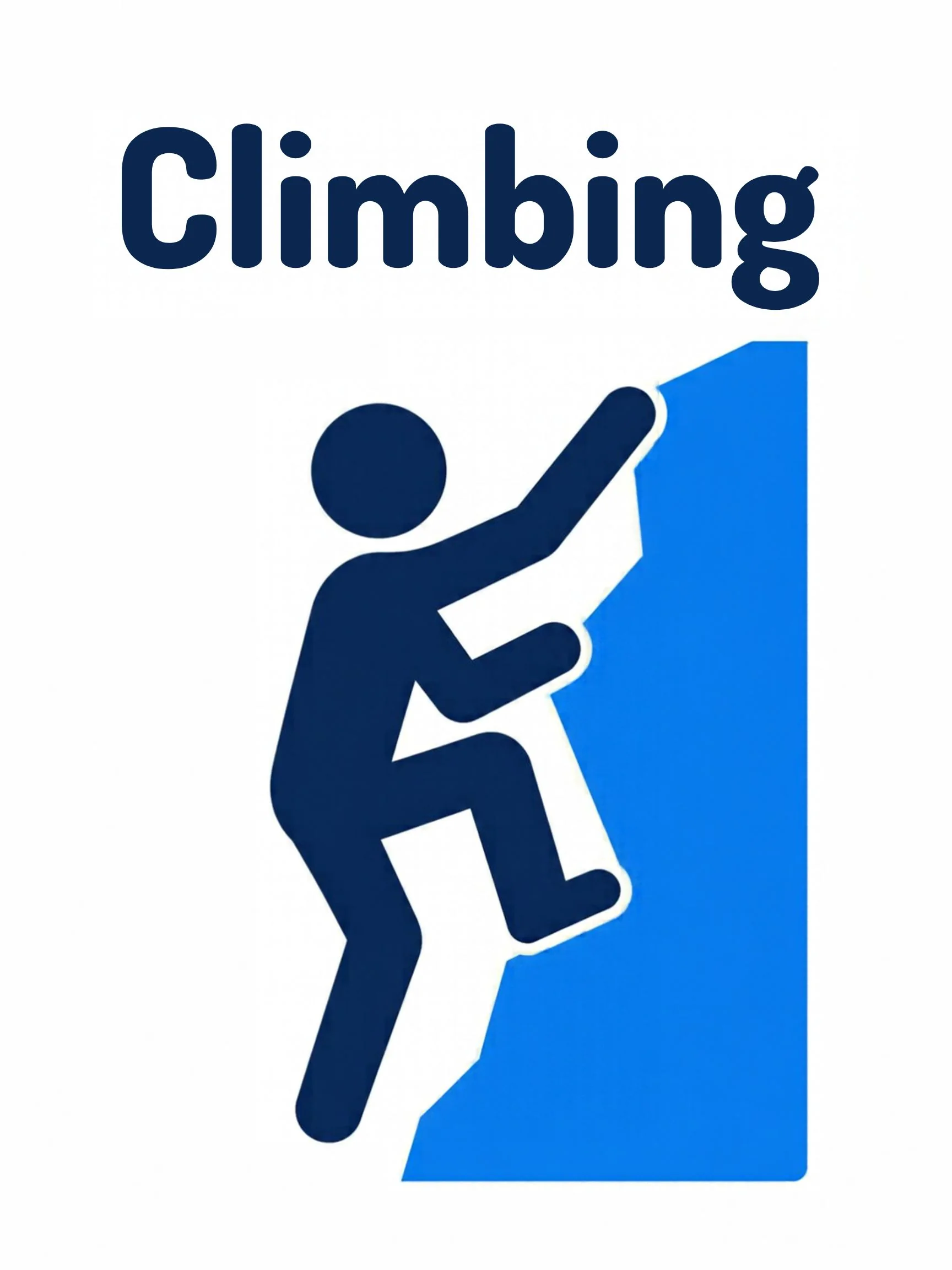
What is this?
Climbing is going UP a wall using hands and feet: grip the holds, push with the legs, reach for the next one — and always climb down as carefully as up. On playground ladders or real gym walls, the rules are the same.
What does it mean?
Climbing is cross-body thinking: right hand with left foot, reach across the middle, plan before moving. It builds grip strength, sequencing and the calm kind of bravery — and the descent is trained as hard as the climb.
What does the child need to know?
Your child needs three climbing ideas: the legs PUSH more than the arms pull — tired climbers find legs again; the reach crosses the body — right hand to a left-ish hold makes an X; and the rule of every wall: come down SLOW, three points touching when you can.
Why this matters
Grip strength and cross-lateral planning are two of the most borrowable skills on this wall — climbers grow into every racquet, bat and bar. And a child who plans three moves ahead has learned thinking-as-sport.
What it teaches
Grip strength and endurance, cross-lateral reaching, move sequencing (plan, then do), and the calm-down-skill — descending carefully is the deepest bravery in the lesson.
Words to learn
climbinggripreachholdplandownbrave
Say this to your child
“"Climbing is the thinking sport! Grip the hold like a jar lid, push with your strong legs, and reach ACROSS your body — right hand to the left-ish hold, an X! And before we climb, we PLAN: point at three holds, say their names, then go. And the rule that makes climbers brave: up slow, down SLOWER. Coming down is part of the climb."”
Step by step
- Show the card: "This is climbing — going up the wall with hands and feet planning together."
- The grip: fingers and thumbs wrap the hold like holding a big jar lid — whole hand, not just fingertips. Squeeze-test a doorway.
- The X-reach: practise on the floor first — right hand reaches up-LEFT, left foot steps — the body makes a letter X. Climbers are crossed.
- The plan: point at three holds and say them — red, blue, high one — THEN climb. Planning before moving is the sport’s brain.
- Play the tape-wall game below, and say the down rule: "up slow, down slower."
Look closer at the picture
On this card the word "climbing" leads at the top in big letters with the wall’s scene below — the climber on the colourful holds exactly as a gym wall looks from the mats.
Ask your child
"What pushes more — arms or legs?" "Which way does a climbing reach go — straight up or across in an X?" "What do we plan before we climb?"
What your child can say or do
Your child might say: "Legs are the strong ones!" "I planned three holds!" or the climber’s rule: "Up slow, down slower!"
Out in the real world
Climbing lives at every gym wall, playground ladder and climbing frame — and kids’ climbing courses teach exactly this: grip, X-reach, plan, down slow. On the playground, watch a climber’s feet: the strong ones push, they never dangle.
Try it together
Tape-Wall Climbing: paper "holds" taped at reaching heights on a smooth wall — feet stay on the floor. Touch the holds in planned order: call three, climb the pattern, hands only. Then the playground version: the ladder or frame with the three-point rule and the down-slower rule. Grip grows, the X grows, and the plan comes before every move.
Understanding check
Ask: "What pushes more? What letter does the reach make? What do we plan? And how do we come down?" The legs, an X, three holds, slower — four answers and the wall is friendly.
Parent tips
Feet-on-floor tape climbing is a real climbing workout — grip and reach grow without any height at all. And praise the careful DESCENT louder than the top-out: children who are celebrated for down-climbing stay safe on every wall they will ever meet.
This lesson pairs with the Climbing flashcard in the library — print it, show it, keep it on the fridge. Back to Sports & Movement (Class 37).