
Cricket — a step-by-step lesson for grown-up and child
This lesson teaches cricket around one shape: the bat swings straight through the line like a door with a hinge — and the bowling arrives slow enough to love.
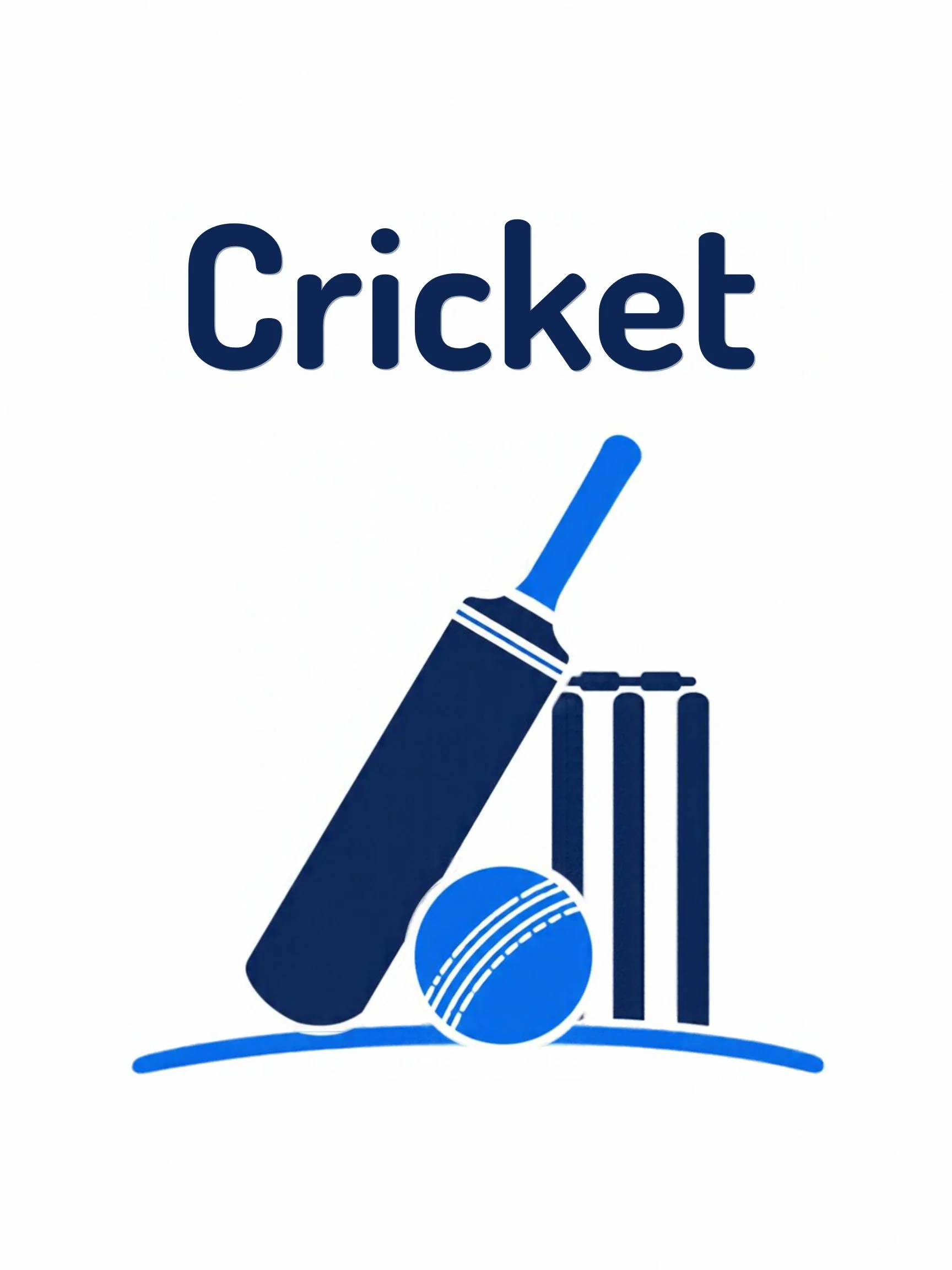
What is this?
Cricket is a bat-and-ball game between two teams: the bowler bowls at three stumps, the batter defends them and hits away, then the pair run. The fielders fetch — a lot.
What does it mean?
Cricket is the patient sport: turn after turn, over after over, the game breathes slowly. For a four-year-old it teaches the longest duel in sport — one bowler, one batter, and the three little sticks that matter to both.
What does the child need to know?
Your child needs three cricket ideas: the bat hangs flat like a door waiting to swing; the straight drive goes through the line of the ball; and bowling is an underarm ROLL first — big, slow and friendly.
Why this matters
Cricket owns half this wall’s map: India, Australia, England, New Zealand, Pakistan, the Caribbean. A four-year-old who can swing straight has joined the biggest after-school club on Earth.
What it teaches
Straight-line striking, the side-on stance with hands together, underarm rolling (the gentler sibling of throwing), and fetching — the fielding half of every bat game.
Words to learn
cricketbatstumpswicketsbowlstraightrun
Say this to your child
“"Cricket is the three-sticks game! The stumps stand behind you like a little castle. Hold the bat flat with both hands, stand side-on, and swing STRAIGHT through the ball — whack! Then you run, and the other team fetches. And when it is your turn to bowl: big gentle underarm, right at the castle."”
Step by step
- Show the card: "This is cricket — the game with the three little sticks."
- Meet the stumps: three tubes standing in a row — the batter’s castle. The bowler’s job is to knock it; the batter’s job is the wall.
- Grip and stance: both hands together on the flat bat, side-on, bat hanging down like a door on its hinge.
- The straight drive: swing the door straight through the ball’s line — through the gate, not across it. Ten slow swings.
- Play backyard wickets below and close: "straight bat, big swing, run the runs."
Look closer at the picture
On this card the word "cricket" is printed large at the top with the game’s scene underneath — the flat bat, the stumps and the red ball exactly as the game looks on the green.
Ask your child
"What stands behind the batter?" "Which way does the bat swing — across or straight through?" "How does a gentle bowler deliver the ball?"
What your child can say or do
Your child might say: "I protected the castle!" "Whack — straight through the gate!" or the bowler’s line: "Big slow underarm, watch this!"
Out in the real world
Cricket is everywhere from Auckland to Adelaide to Ahmedabad — the beach, the street, the park at dusk. Watch ten balls of a real match and call the shape together: straight door, straight swing.
Try it together
Backyard Wickets: three tubes as stumps, a bucket six paces away. Underarm bowl at the castle (one point), then batter swings the straight drive and the pair run one lap of the bucket (two points). Bowling earns, batting earns — the two jobs trade every over, which is cricket’s whole rhythm at knee height.
Understanding check
Ask: "What do we defend? Straight swing or cross swing? How does a kind bowler bowl?" The stumps, straight, underarm — three answers and the long game has begun.
Parent tips
A big soft ball and a wide bat keep early swings honest. And teach the bowler first: children who can deliver a friendly ball become the batter everyone wants — and the patience of bowling is the patience of the whole game.
This lesson pairs with the Cricket flashcard in the library — print it, show it, keep it on the fridge. Back to Sports & Movement (Class 37).