
Lacrosse — a step-by-step lesson for grown-up and child
This lesson teaches lacrosse from the ground up — literally: the first skill is scooping the ball off the floor into a net, and for many children it is the first catch they ever make easily.
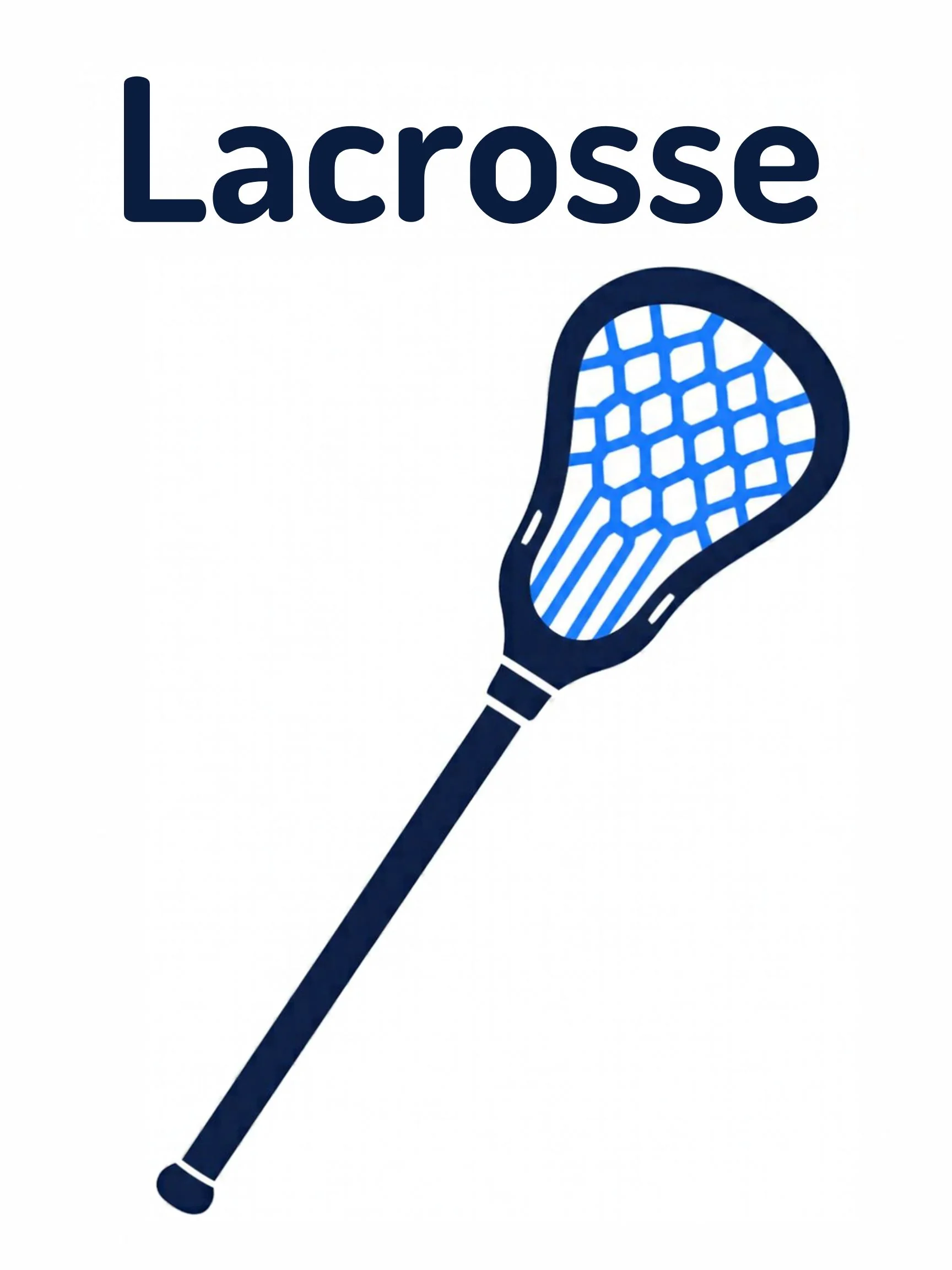
What is this?
Lacrosse is a team game with a netted pocket on the end of a stick: scoop the ball up, cradle it while you run, pass or shoot with a flick of the stick. It is the oldest sport on this wall — played first by the Haudenosaunee.
What does it mean?
Every catching skill on this wall catches from the front or above. Lacrosse catches from BELOW — the ball drops into the nest. Children whose hands struggle with mid-air catches often shine the moment the stick does the catching.
What does the child need to know?
Your child needs three lacrosse ideas: the scoop is a shovel motion — stick low, through the ball, up; the cradle is a gentle rocking that keeps the ball nestling while running; and the pass is a flick, like tossing from a salad bowl.
Why this matters
Lacrosse carries two gifts: a catching skill for children who need the ball to slow down, and a story worth telling — the game grew up on this continent long before any of the others arrived.
What it teaches
Scooping from the floor (ground-level tracking), carrying while moving (the cradle is balance plus focus), under-flick accuracy, and the respect-first history of the Creator’s game.
Words to learn
lacrossesticknetscoopcradleflickcarry
Say this to your child
“"Lacrosse sticks have a little net basket! Scoop the ball up off the floor — shloop! — nestle it in the net, and rock it gently while you walk. Cradle, cradle. Then flick it soft as tossing salad to a friend. The stick catches for you — your job is just to keep it rocking."”
Step by step
- Show the card: "This is lacrosse — the game with the net basket on a stick."
- The scoop: stick low like a shovel, push it through the ball along the floor, lift — the ball nests. Five scoops, celebrate each.
- The cradle: ball in the pocket, rock the stick gently in and out as you walk — in-out, in-out. It is a lullaby for a ball.
- The flick: tip the stick forward softly and toss the ball to a partner’s pocket or a bucket.
- Play the scoop relay below and close: "scoop, cradle, flick."
Look closer at the picture
On this card the word "lacrosse" is printed large at the top with the game’s scene below — the netted stick and the small ball exactly as the game looks on the field.
Ask your child
"What is in the net at the end of the stick?" "How do we pick the ball up?" "What do our arms do while we run with the ball?"
What your child can say or do
Your child might say: "The net caught it!" "I cradled it all the way across!" or the scoop cheer: "Shloop — got it!"
Out in the real world
Lacrosse lives in schools and clubs across Canada and the US — and its scoop lives in every kitchen: a spoon lifting cereal is a scoop, a net bag gathering toys is a cradle. The oldest sport is hiding in the chores.
Try it together
Scoop Relay: bucket at one end of the room, five scattered soft balls, stick (or large spoon) in hand. Scoop each ball, cradle it to the bucket, flick it in — five trips, timed by cheering not by clock. Then swap and race a partner gently. The floor is emptied by the nest, and every scoop is a catch.
Understanding check
Ask: "How do we lift the ball from the floor? What keeps it in the pocket while we run? What does the pass look like?" Scoop, the cradle, a flick — three answers and the nest is open.
Parent tips
If no stick exists, a milk jug cut into a scoop or a large serving spoon carries the whole lesson. And teach the cradle BEFORE the running — rocking still, then walking, then jogging: the lullaby has three speeds.
This lesson pairs with the Lacrosse flashcard in the library — print it, show it, keep it on the fridge. Back to Sports & Movement (Class 37).