
Triathlon — a step-by-step lesson for grown-up and child
This lesson teaches the triathlon’s wonderful idea — three sports stacked into one race — and practises the strangest skill in it: changing from one kind of moving to another without stopping.
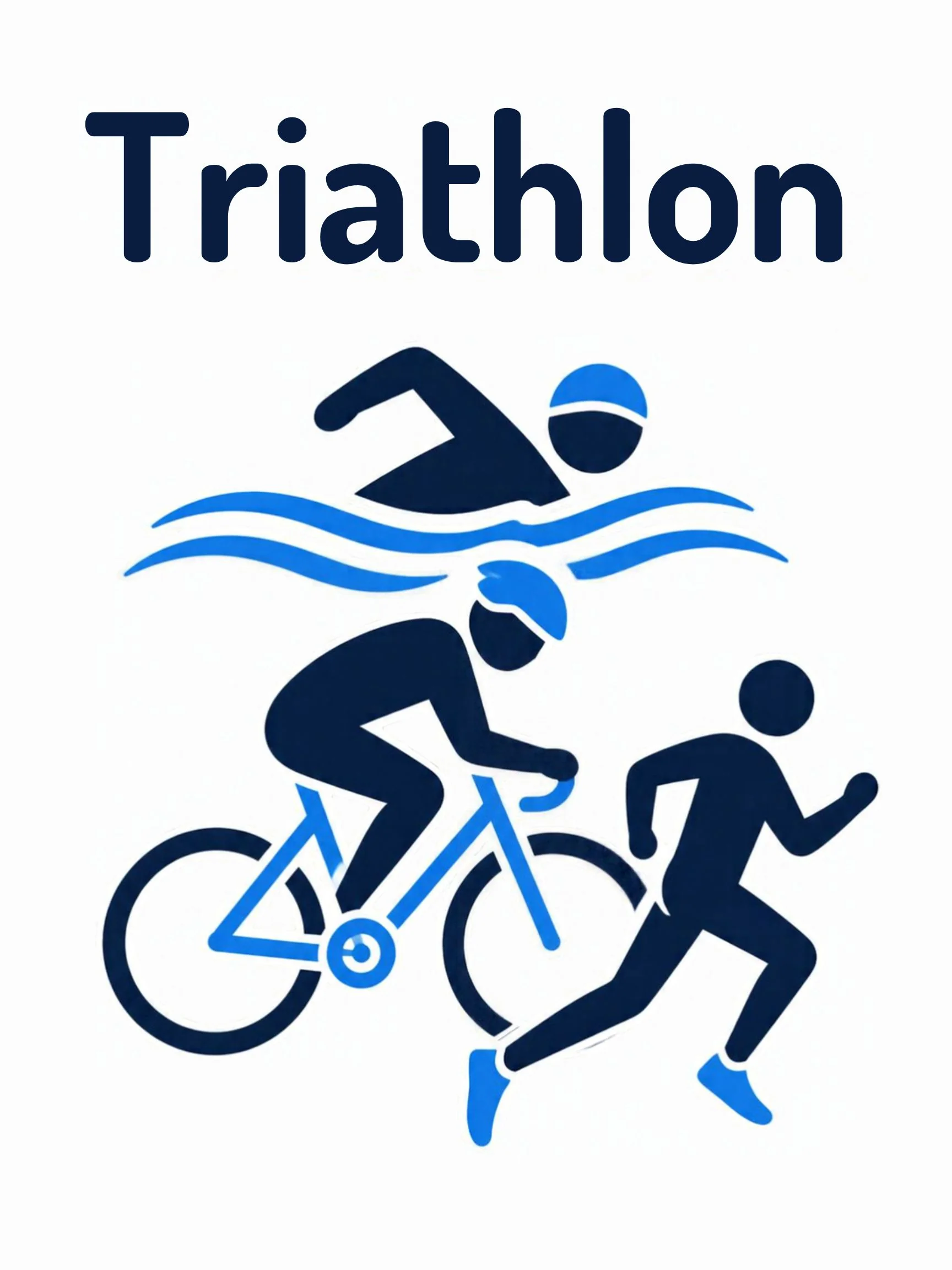
What is this?
A triathlon is one race with three legs: swim first, then cycle, then run to the finish. In between are the transitions — where athletes swap goggles for helmets for shoes as fast as they can.
What does it mean?
The triathlon’s hidden skill is the switch: arms doing crawl one minute, then steering handlebars, then pumping as legs. Switching movement styles mid-game is real coordination training — the brain rebuilds its plan at speed.
What does the child need to know?
Your child needs three triathlon ideas: the order never changes — swim, bike, run; the transition is part of the race (no sitting around in the middle!); and tri means three — the word itself is a lesson.
Why this matters
Of all the cards on the wall, this one mixes the most skills into one game — crawl arms, pedalling legs, sprinting feet — which makes it the perfect grand finale for a morning of movement play.
What it teaches
Skill-switching (the real star), sequencing a multi-part plan, transition speed, and the endurance of doing three things before asking for a snack.
Words to learn
triathlonthreeswimbikeruntransitionfinish
Say this to your child
“"The triathlon is three races glued together! First SWIM — windmill arms through the sofa-sea. Then BIKE — pedalling legs round and round. Then RUN — light feet to the finish! And the funniest part is the swap in the middle, the transition: goggles off, helmet on, GO GO GO!"”
Step by step
- Show the card: "This is the triathlon — three races in one."
- Decode the word: TRI means three — triangle, tricycle, triathlon. What comes in threes?
- The three legs: swim arms (big windmills), bike legs (round and round), run feet (fast and light). Practise each for ten seconds.
- The transition: the magic moment — arms stop swimming, hands grab handlebars. Announce it like a race commentator: "AND SHE’S ON THE BIKE!"
- Play the living-room triathlon below and close: "swim, bike, run — nothing stops in between."
Look closer at the picture
On this card the word "triathlon" is printed large at the top with the race’s scene below — the swim, the bike and the run exactly as the three-leg race looks.
Ask your child
"What does TRI mean?" "What are the three legs, in order?" "What is the swap in the middle called?"
What your child can say or do
Your child might say: "Swim, then bike, then run!" "I did all three!" or the commentator’s cry: "AND SHE’S ON THE BIKE!"
Out in the real world
Triathlons happen in every city with a lake and a road — and kids’ versions (splash, pedal, dash) exist in most towns each summer. Watch one transition zone together: shoes, helmets, chaos — the funniest minute in sport.
Try it together
Living-Room Triathlon: sofa cushions are the sea (crawl on tummies), a hobby-horse or trike loop is the bike leg, and the corridor is the run to the finish tape. Commentate every leg, time the transitions, medal the finisher. Add a second competitor for a real race — the toys may enter.
Understanding check
Ask: "Name the three legs in order. What do we call the swap? What does tri mean?" Swim-bike-run, the transition, three — three answers and the race is on.
Parent tips
Keep each leg SHORT — the joy is in the switching, not the distance. And let the child be the commentator once: shouting "AND SHE’S ON THE BIKE" teaches the sequence better than any diagram.
This lesson pairs with the Triathlon flashcard in the library — print it, show it, keep it on the fridge. Back to Sports & Movement (Class 37).