Shadow detectives.
Make a shadow. Change it. Trap it on paper.
A torch and a couple of toys are all a shadow detective needs. Children make shadows appear, move the light to see them change, invent shadow creatures, guess before they test and trace outlines like evidence. The five Shadow Detective Kit pages below turn each step into a draw-and-save activity.
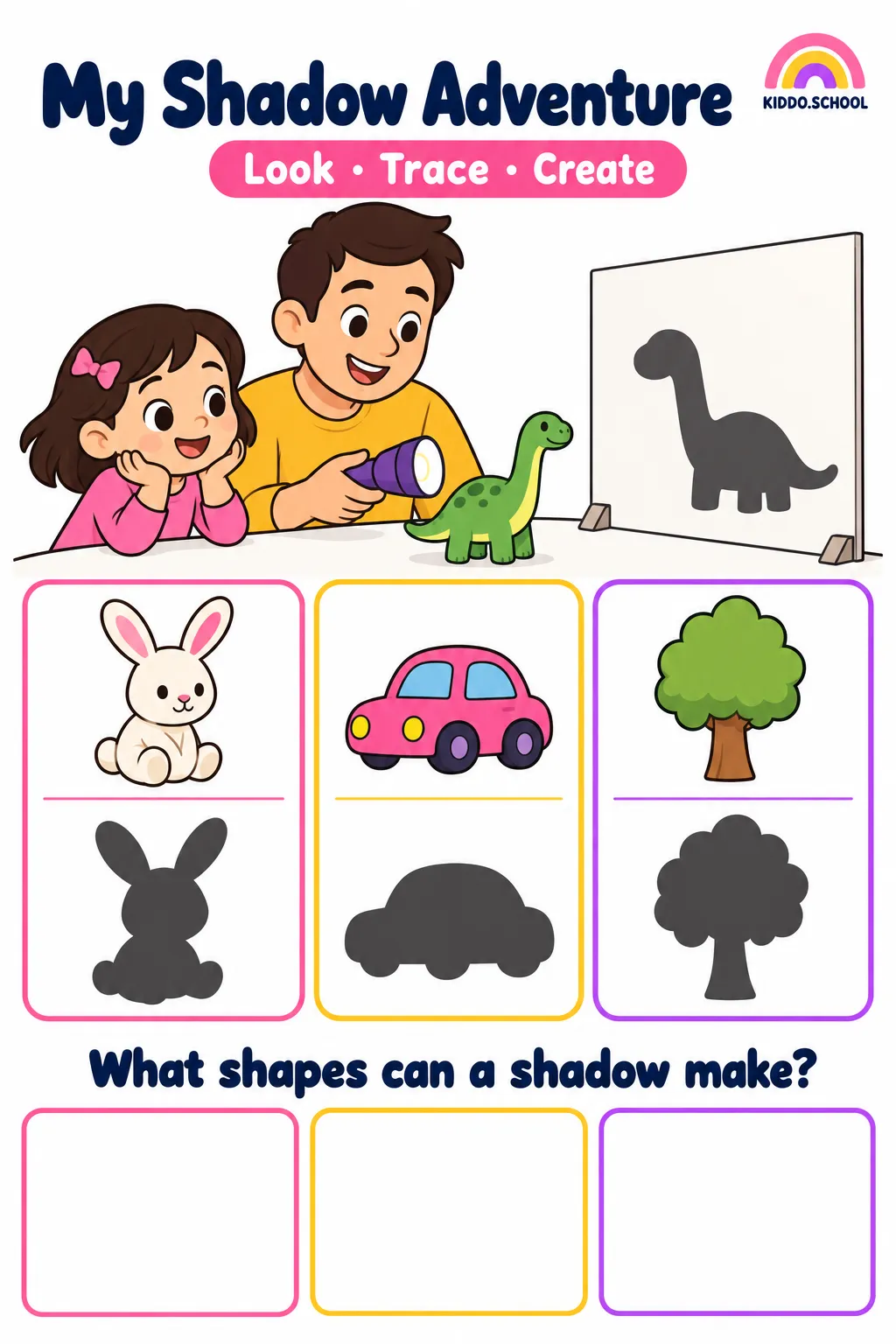
Five little shadow activities.
Draw, type and save your work on separate activity pages.
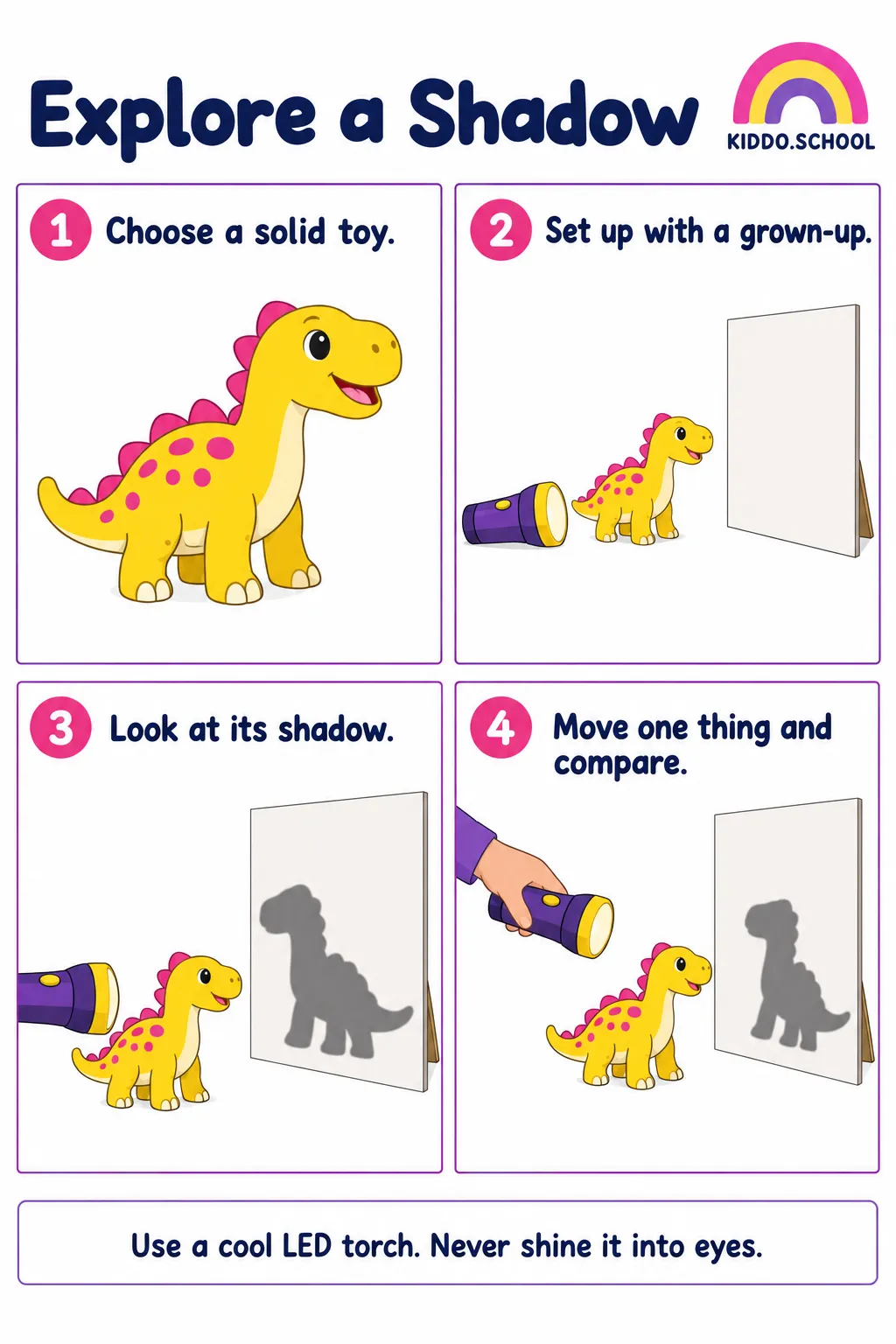 How to Explore Shadows
Find a light, find a toy and make a shadow appear.
Draw · Type · Save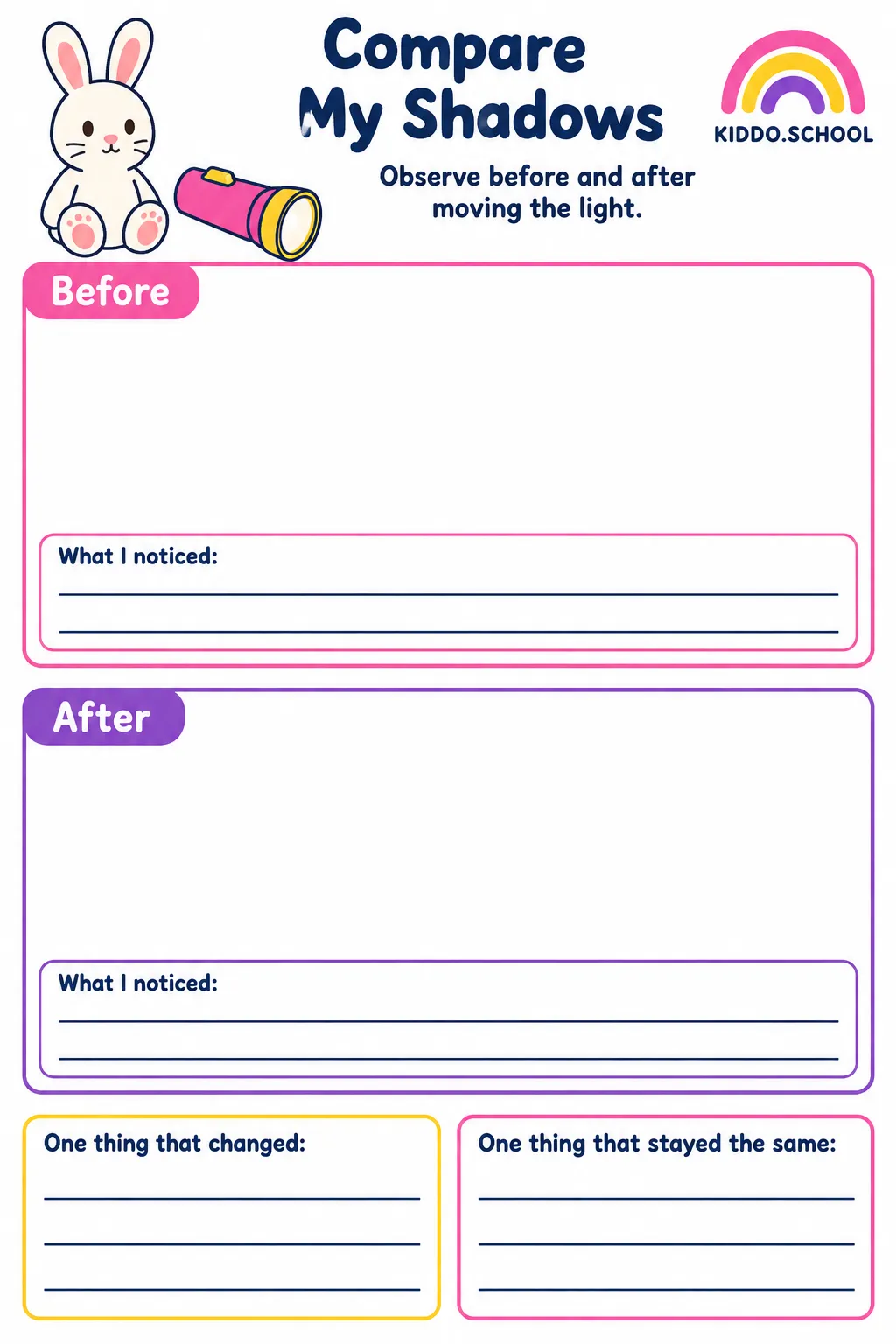 Compare My Shadows
Two toys, one light: what is the same and what is different?
Draw · Type · Save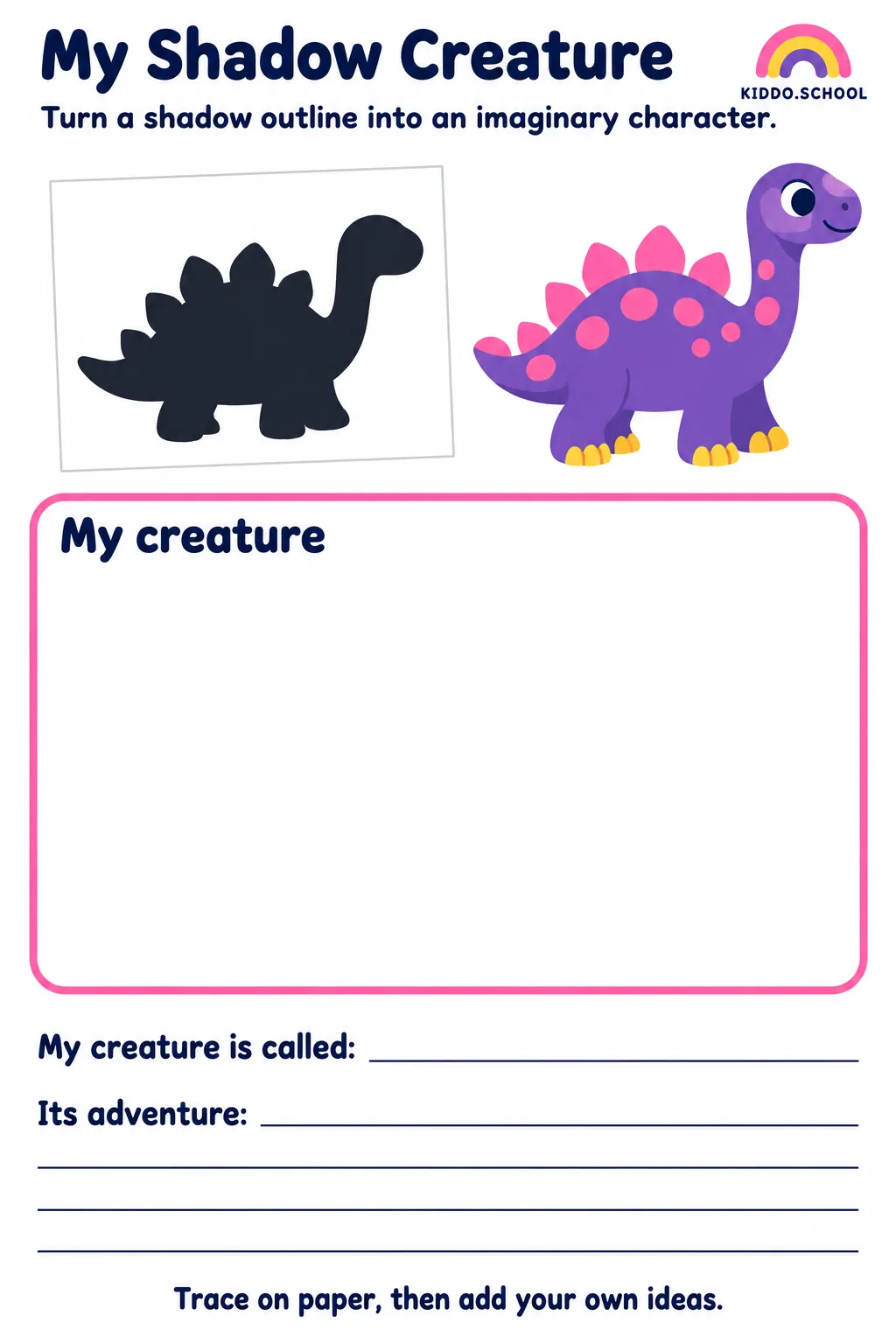 My Shadow Creature
Bend your fingers, add a toy: turn a shadow into a character.
Draw · Type · Save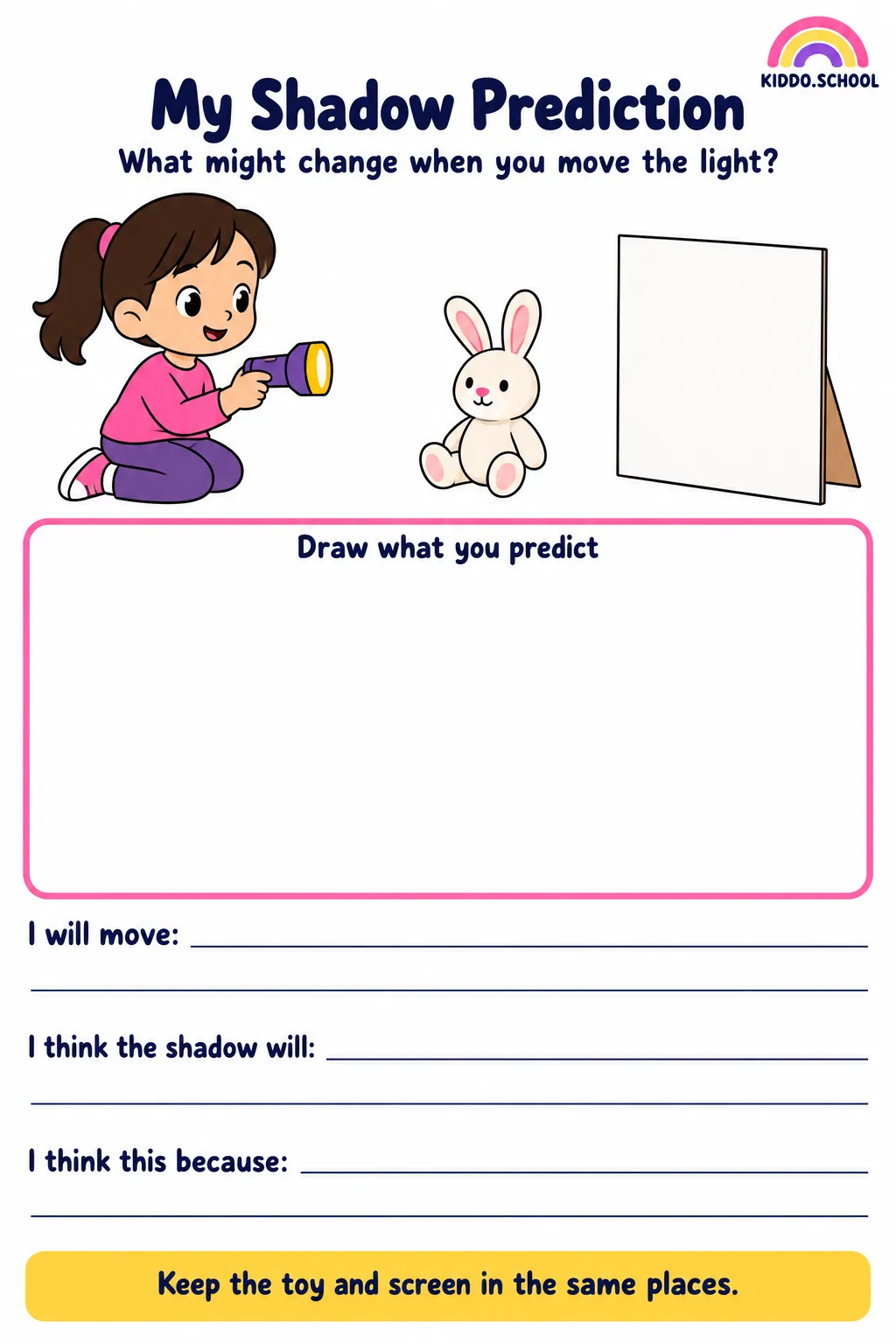 My Shadow Prediction
Guess first, then check: will the shadow be long or short?
Draw · Type · Save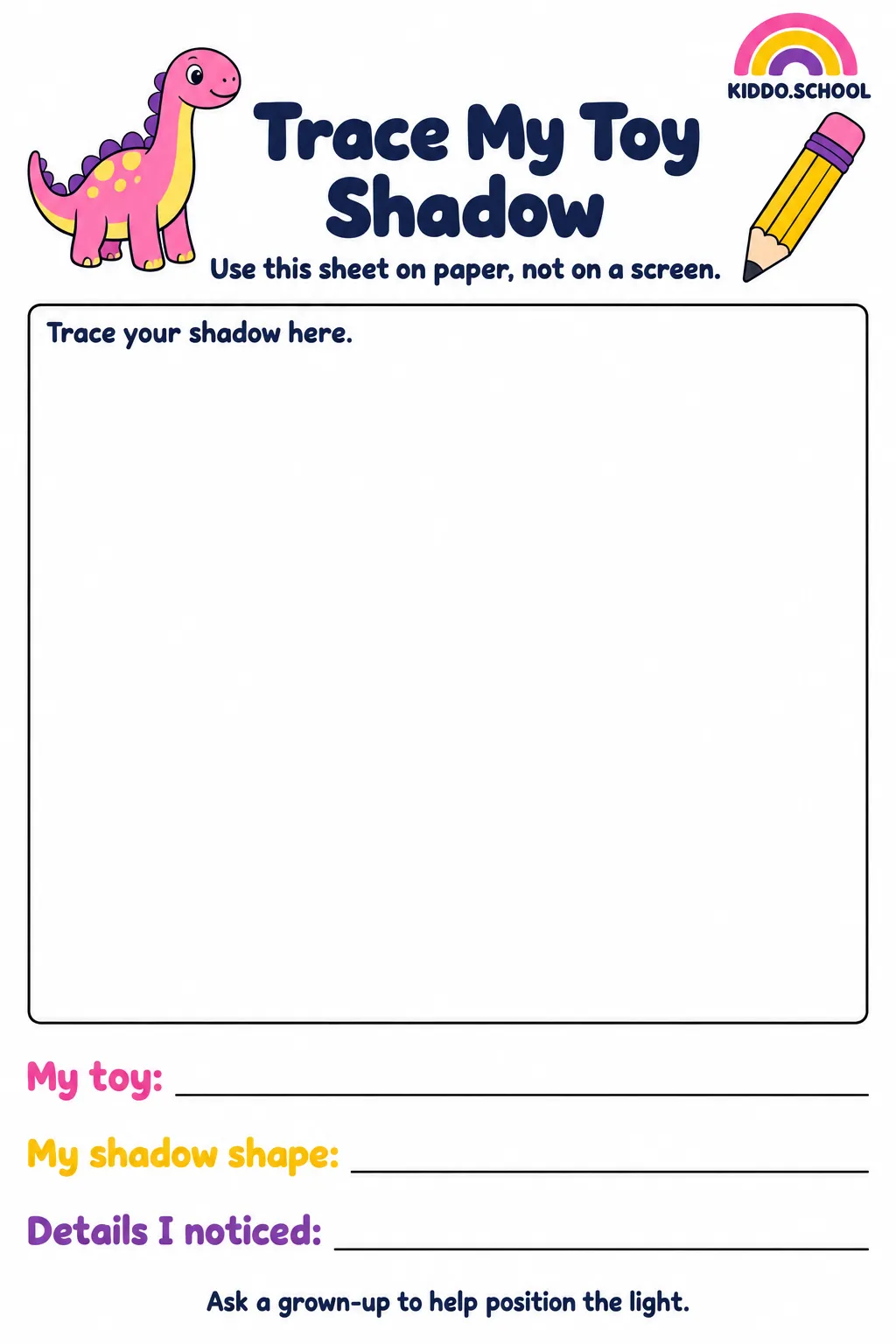 Trace My Toy Shadow
Draw around a shadow to trap a toy's shape on paper.
Draw · Type · SaveLet's make it happen.
Make a shadow appear
Dim the lights with a grown-up. Shine a torch at a wall, stand a toy in the beam and watch a dark shape appear behind it.
Change your shadow
Move the light closer, then further away, then to the side. Watch the shadow grow, shrink and stretch. Say what changed each time.
Compare two shadows
Stand two toys in the same light. Look at both shadows: which is rounder, longer, fuzzier? What is the same and what is different?
Invent a creature
Wiggle your fingers in the beam or lay a toy on its side. Turn the shadow into a bird, a wolf or a monster and give it a name.
Predict, then check
Before each move, guess what the shadow will do: long, short, or gone? Say your prediction out loud, then test it and compare.
Trace the evidence
Keep a toy and paper perfectly still and draw around the shadow's edge. Trace a few toys, then match shadows back to their owners.
What's happening here?
A shadow is the shape where something blocks the light. Moving the light and watching the shadow respond teaches children that light travels in straight lines and that predictions can be tested: guess, check and compare is exactly how scientists work.
Keep the wondering going.
- What happens to your shadow when the light moves closer?
- Can you make a shadow that is taller than you?
- Why does the same toy make different shadows in the morning and the afternoon?
Make it work for you.
Keep it simple
Hold the torch while your child moves the toys, and trace their hand shadow together. Name what you see out loud: long, short, big, small, wiggly.
Take it further
Trace the same outdoor shadow in the morning and after lunch with two colours of chalk, then explain why it moved. Try a shadow puppet show with a beginning, a middle and an end.
Not quite going to plan?
If the shadow looks faint, the room is probably too bright: dim the lights or move closer to the wall. If the shadow blurs, the light is very close; move it back a little for a crisper edge.
My shadow detective kit
Draw your first shadow, predict another, then trace a toy shadow like evidence.
Image · prints on A4 or Letter using “fit to page”. Plain paper works just as well.
Download the sheet Open image to print ↗You may print and use this original activity sheet at home or in your classroom. Please link to the activity page when sharing it online.