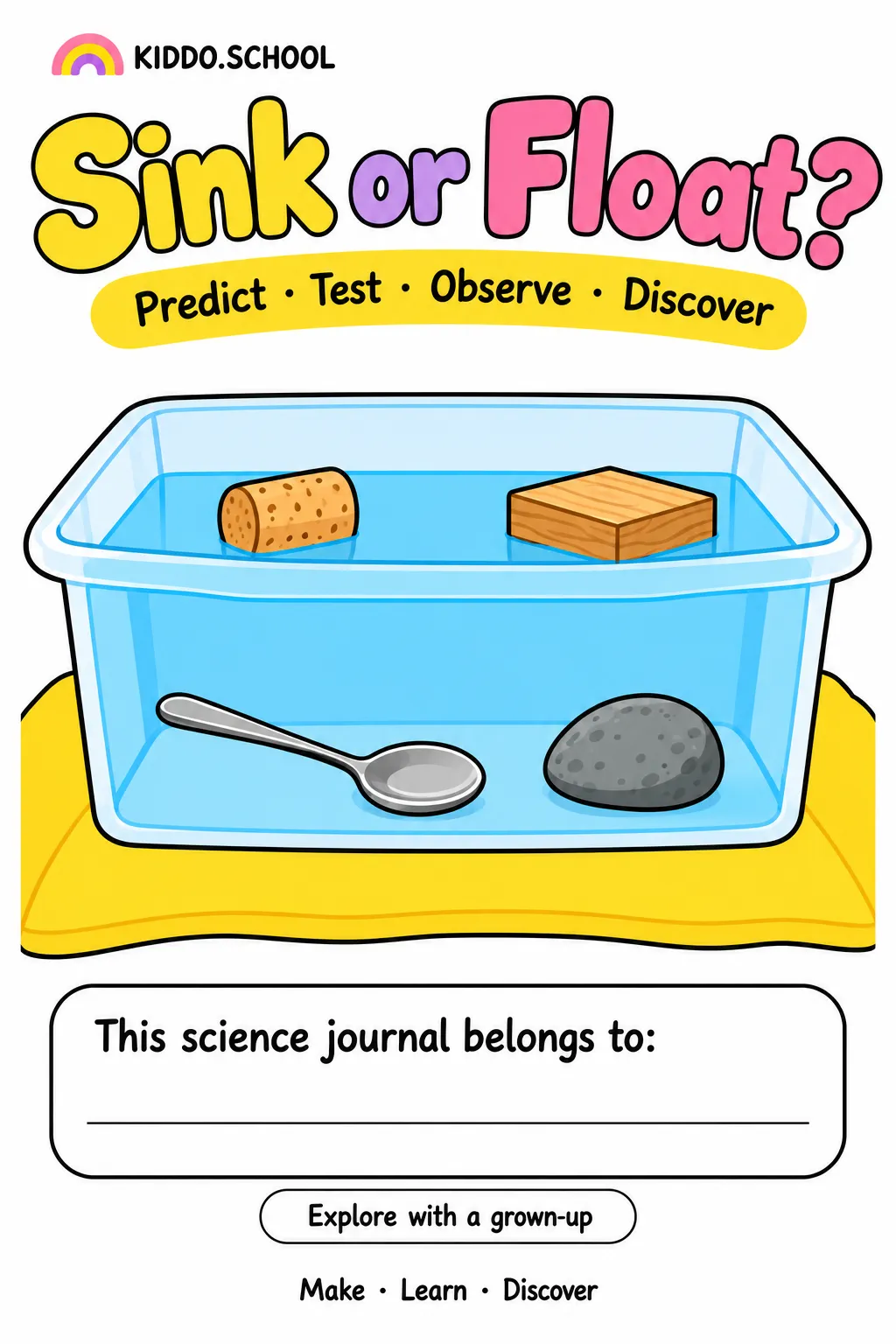
Sink or Float?.
Make a prediction. Put it to the test.
Will a cork stay at the surface? What about a spoon? Choose four safe objects with a grown-up, make predictions and compare them with real observations. Then explore whether changing the shape of foil changes how it behaves.
Choose your next experiment activity.
 Plan Your Sink or Float Experiment
Choose your materials, plan a fair test and draw your setup before you begin.
Draw · Type · Save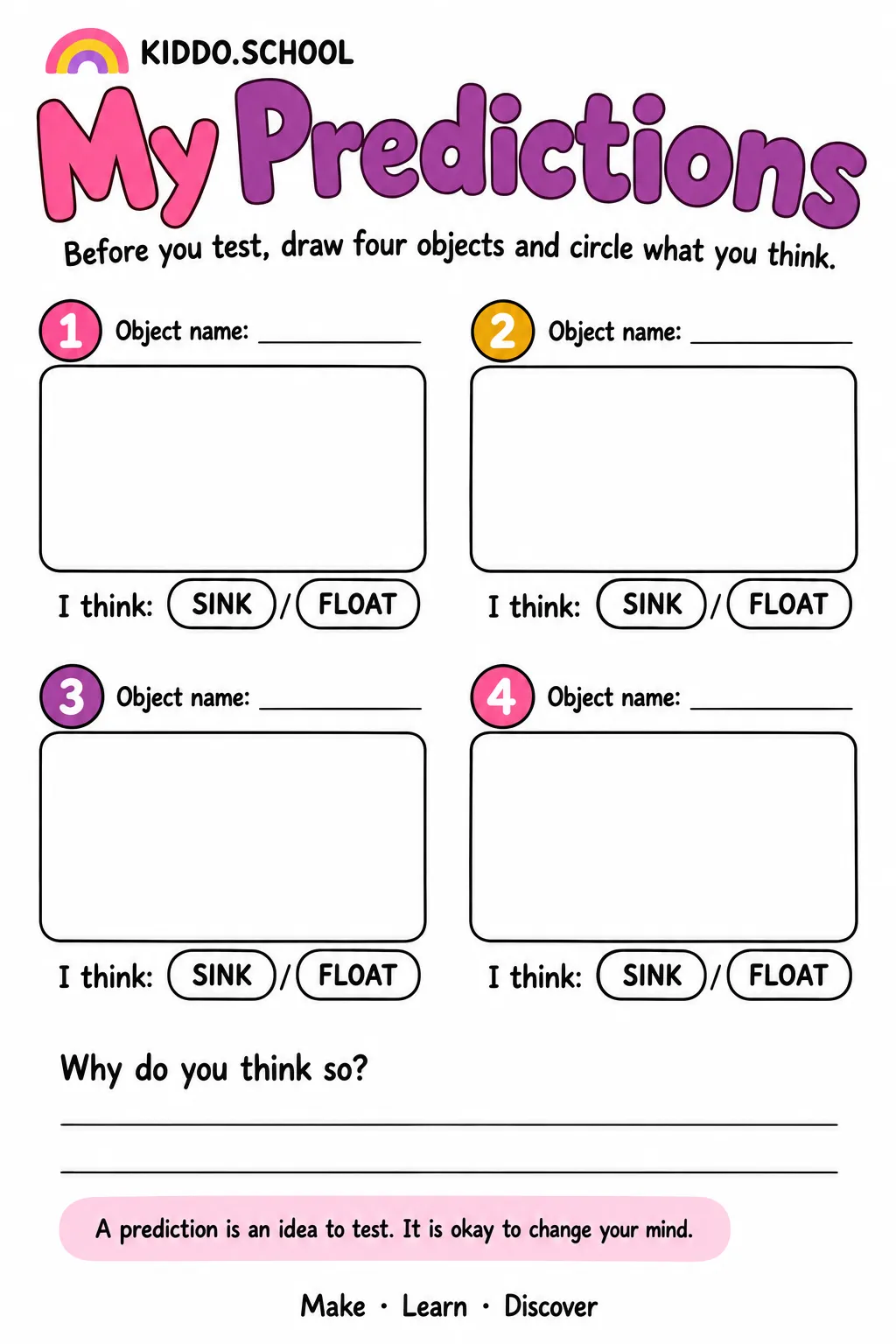 My Sink or Float Predictions
Look closely at four objects. Make your predictions before testing them in water.
Draw · Type · Save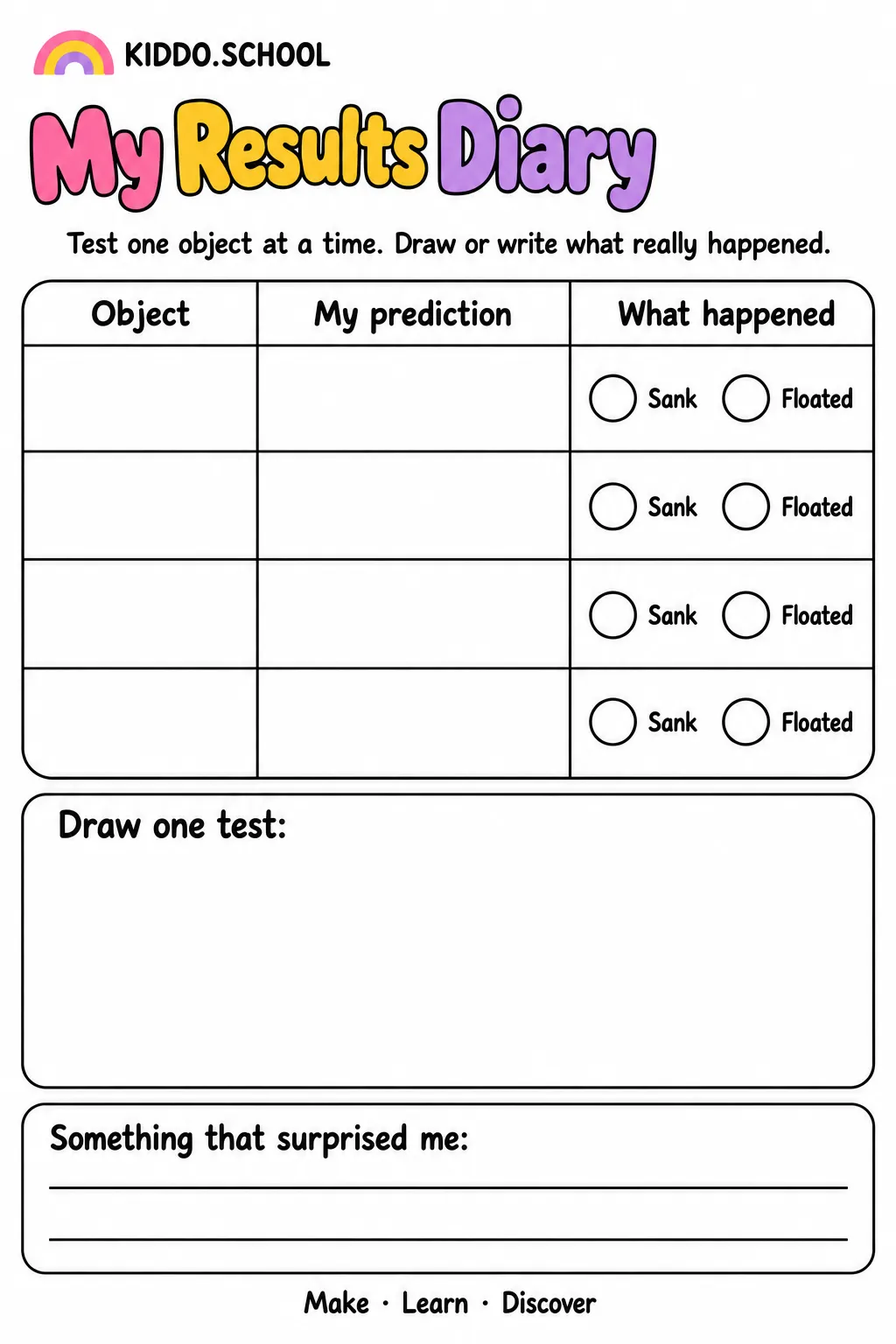 My Sink or Float Results Diary
Record the evidence from four tests. Compare what you expected with what actually happened.
Draw · Type · Save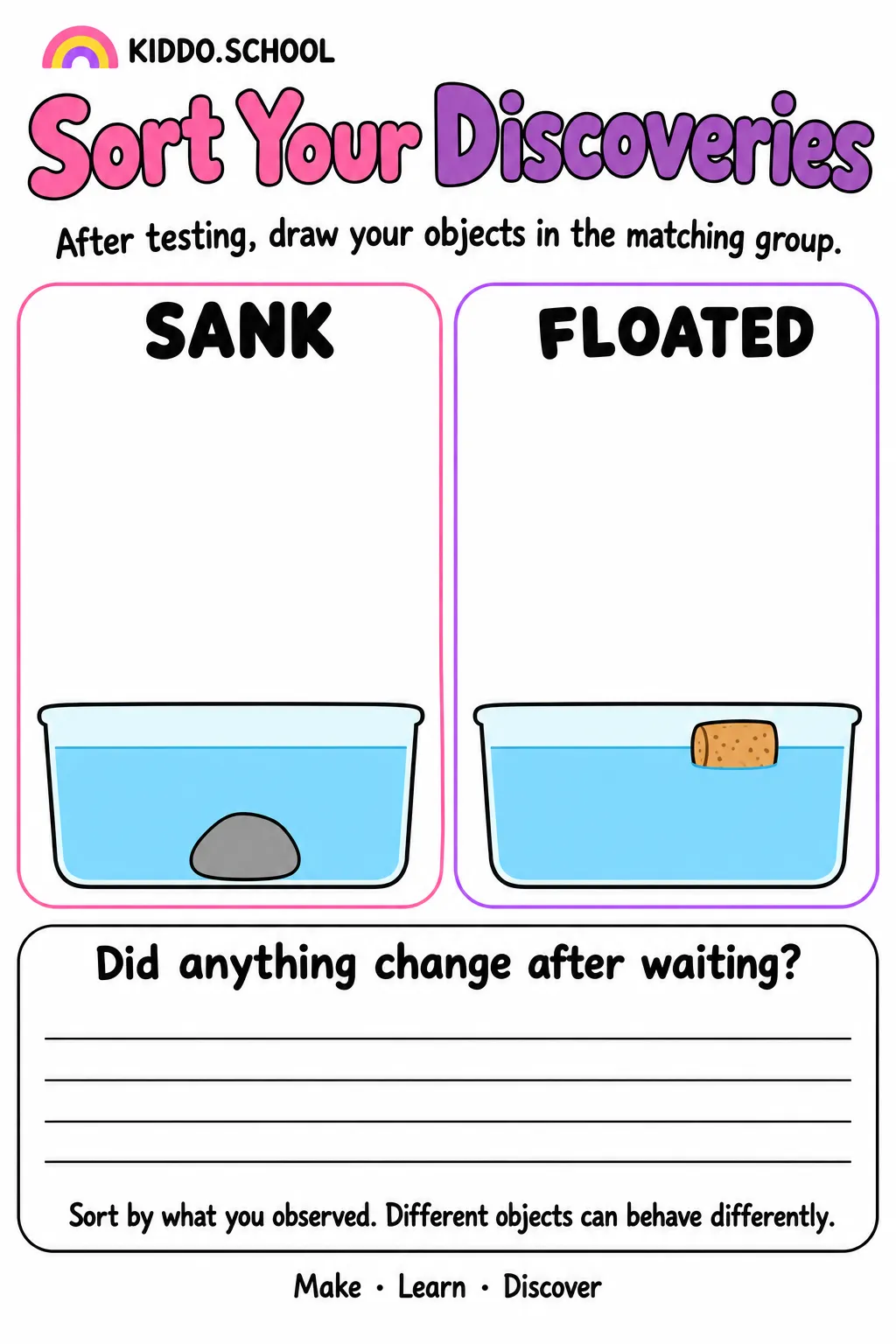 Sort Your Sink or Float Discoveries
Use your real results to group objects that sank and objects that floated.
Draw · Type · Save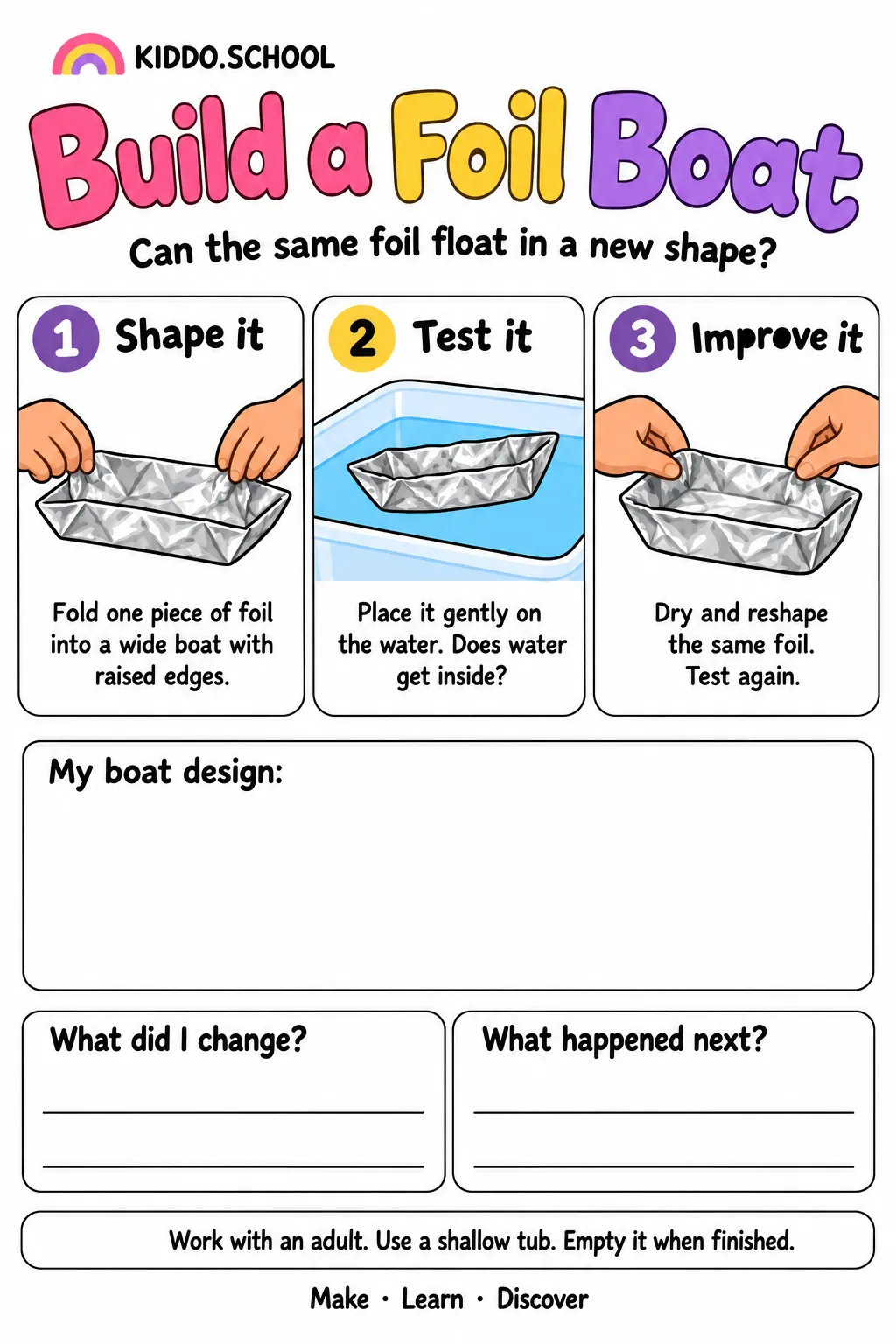 Build a Foil Boat
Shape, test and improve a boat made from one piece of foil. Can you keep its inside dry?
Draw · Type · SaveLet's make it happen.
Set up together
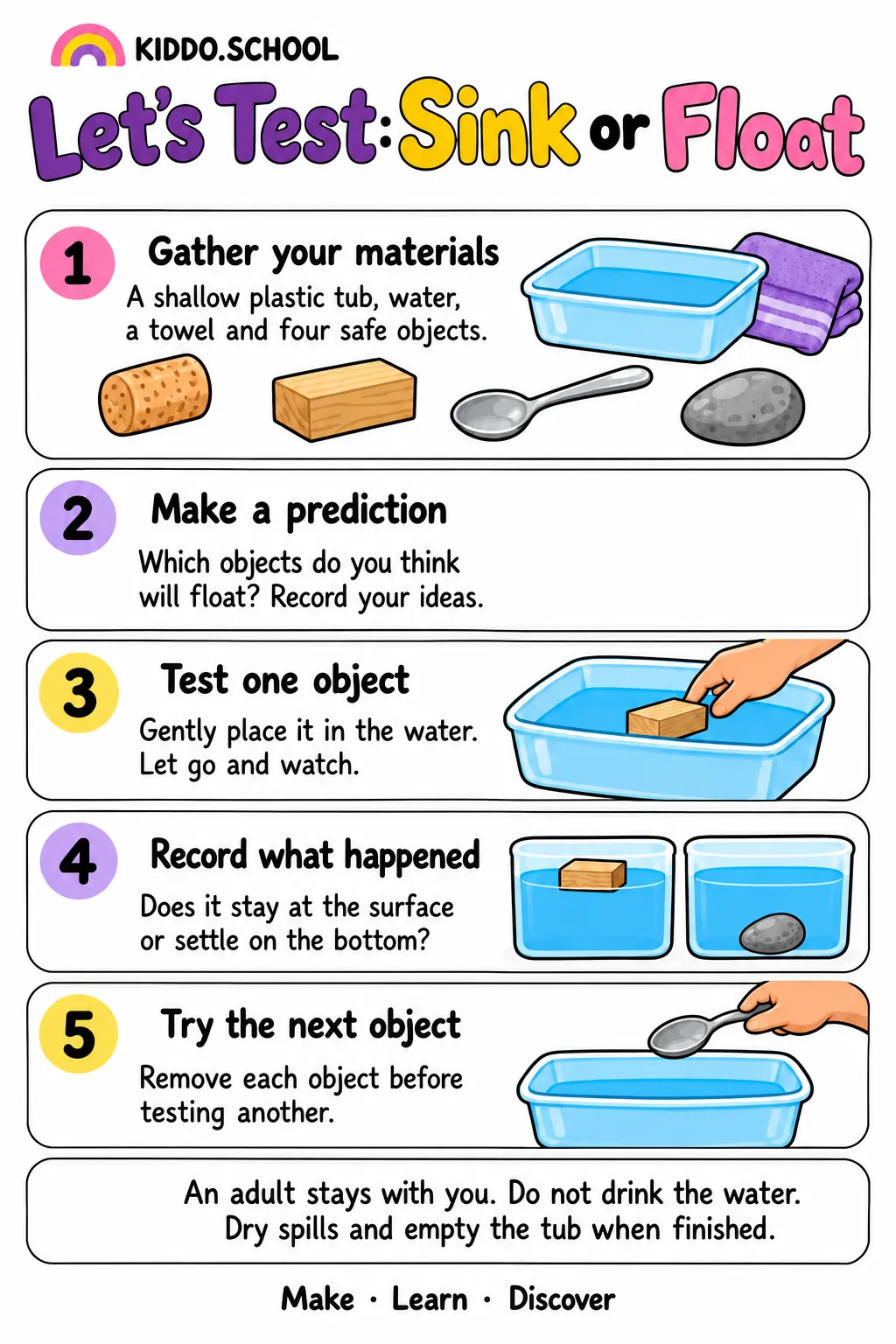
Place a towel beneath a shallow plastic tub. An adult adds enough water for the objects to move freely without touching the bottom when floating. Keep electrical devices away from the tub.
Predict first
Look at each object before putting it in the water. Draw it, name it and predict sink or float. Explain your idea; it does not need to be right.
Test gently
Place one object in the water and let go. Do not push it down or drop it from a height. Watch whether it stays at the surface or settles on the bottom.
Record the evidence
Write or draw what happened. If an object changes after waiting, record both observations. Remove it before testing the next one.
Sort and compare
Group objects by what you observed. Which predictions matched the results? Discuss anything that surprised you.
Try a foil boat
Fold one piece of foil into a wide open boat with raised edges. Test it, dry it and reshape the same foil. Compare the two designs. An adult empties the tub afterward.
What's happening here?
Water pushes upward on objects. An object floats when it displaces enough water for that upward push to balance its weight. Material, shape and trapped air can all matter, so weight alone does not tell us whether something floats. A wide foil boat can displace water while keeping its inside dry; if water enters, it may sink.
Keep the wondering going.
- Which result surprised you?
- Did anything change after waiting?
- What changed when you reshaped the foil?
Make it work for you.
Keep it simple
Use two large objects. Invite the child to point to sink or float, and let an adult write their observations. Keep the session short.
Take it further
Test two shapes made from the same foil without adding material. Keep the tub and placing method the same. Explain which shape stayed dry for longer.
Not quite going to plan?
If an object rests on the bottom but extends above the water, the water may be too shallow to judge floating. Ask an adult to choose a suitable object and safe setup. Check foil for holes and folded edges; redesign rather than expecting every boat to work.
Sink or Float experiment guide
Use the illustrated instructions, then choose a prediction sheet, results diary, sorting page or boat challenge below.
Image · prints on A4 or Letter using “fit to page”. Plain paper works just as well.
Download the sheet Open image to print ↗You may print and use this original activity sheet at home or in your classroom. Please link to the activity page when sharing it online.