
Teddy Bear — a step-by-step lesson for grown-up and child
This lesson teaches "teddy bear" as the class pet: the teddy eats first, brushes first, sits first and sleeps first — rehearsing every routine in this set before the toddler’s turn.
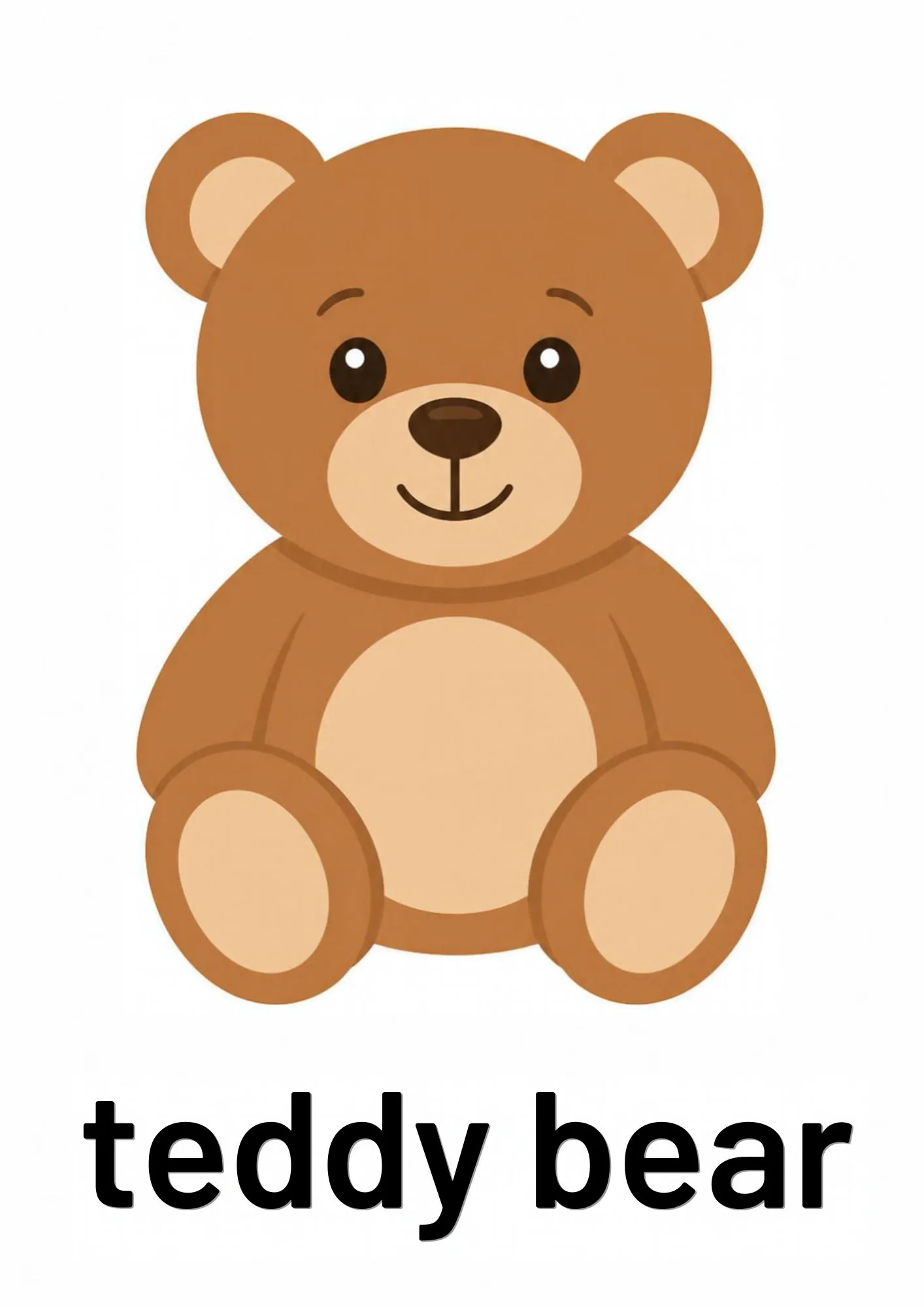
What is this?
The teddy bear is the brown plush bear with the round tummy — the classic first friend, dragged by one arm through every meal, nap and adventure.
What does it mean?
The teddy is both comfort and curriculum: whatever the child does to the bear, the child is rehearsing. A teddy who eats, brushes and sleeps on schedule makes those routines normal, expected, done.
What does the child need to know?
You need the bear and the rehearsal plan: today teddy joins one routine FIRST — feeding, or teeth, or bed. The child plays parent; you narrate. Never force the teddy on the child; invite.
Why this matters
Big feelings talk to bears more easily than to grown-ups, and new routines rehearse better on bears than on tired toddlers. The bear is the safest practice ground in the house.
What it teaches
Empathy and care-taking (the parenting instinct, born), routine sequencing, gentle-hand control, and the comfort-object bond that travels to bed and back.
Words to learn
teddy bearhugfeedgentlesleepynight-night
Say this to your child
“"Teddy bear! A soft brown bear. Hug him — gentle squeeze! Teddy is hungry… feed him… yummy, teddy! Now teddy’s teeth — brush brush. And NOW teddy is sleepy… into the crib! Night-night, teddy. You take such good care of him."”
Step by step
- Hello the bear: "teddy bear! Give him a gentle hug — squeeze!"
- Pick ONE routine for rehearsal: "teddy is hungry! Feed teddy his spoon."
- The child feeds; you narrate: "one bite for teddy… yummy! Now a drink."
- Extend gently: teddy’s teeth get brushed, teddy sits on the potty, teddy gets his blanket — one per sitting, never all at once.
- Close with the goodnight: "teddy is sleepy — night-night, teddy." The whole routine chain, run by the smallest parent in the house.
Look closer at the picture
On this card the words "teddy bear" sit under a brown plush bear with a round tummy — arms open for the hug that starts every lesson.
Ask your child
"Where is teddy?" "Can teddy have a hug?" "What does teddy need now — food? Brush? Bed?"
What your child can say or do
Your child might feed teddy bite by bite, demand his toothbrush, or tuck him with a kiss — the smallest parent on the block, fully qualified.
Out in the real world
Bears ride in baskets, sit at cafés, visit clinics. Every outing with the bear is a rehearsal tour — "teddy is watching the doctor too!" Comfort travels; routines follow.
Try it together
Teddy’s Full Day: a picture schedule for the bear — eat, play, wash, bed — and the child runs the whole day on schedule. A day parenting a teddy is a week of cooperation in the real routine.
Understanding check
Ask: "Where is teddy?" "Give him a gentle hug!" "What does teddy do first at night?" (brush teeth / pajamas — any step named wins) — hug, care, rehearse: the friend is on the team.
This lesson pairs with the Teddy Bear flashcard in the library — print it, show it, keep it on the fridge. Back to Toddler Room.