
Apple — a step-by-step lesson for grown-up and child
The food cards begin with the most familiar fruit in the house. This lesson pairs the card with the real apple — taste plus word — and shows how to answer the attempts that come back.
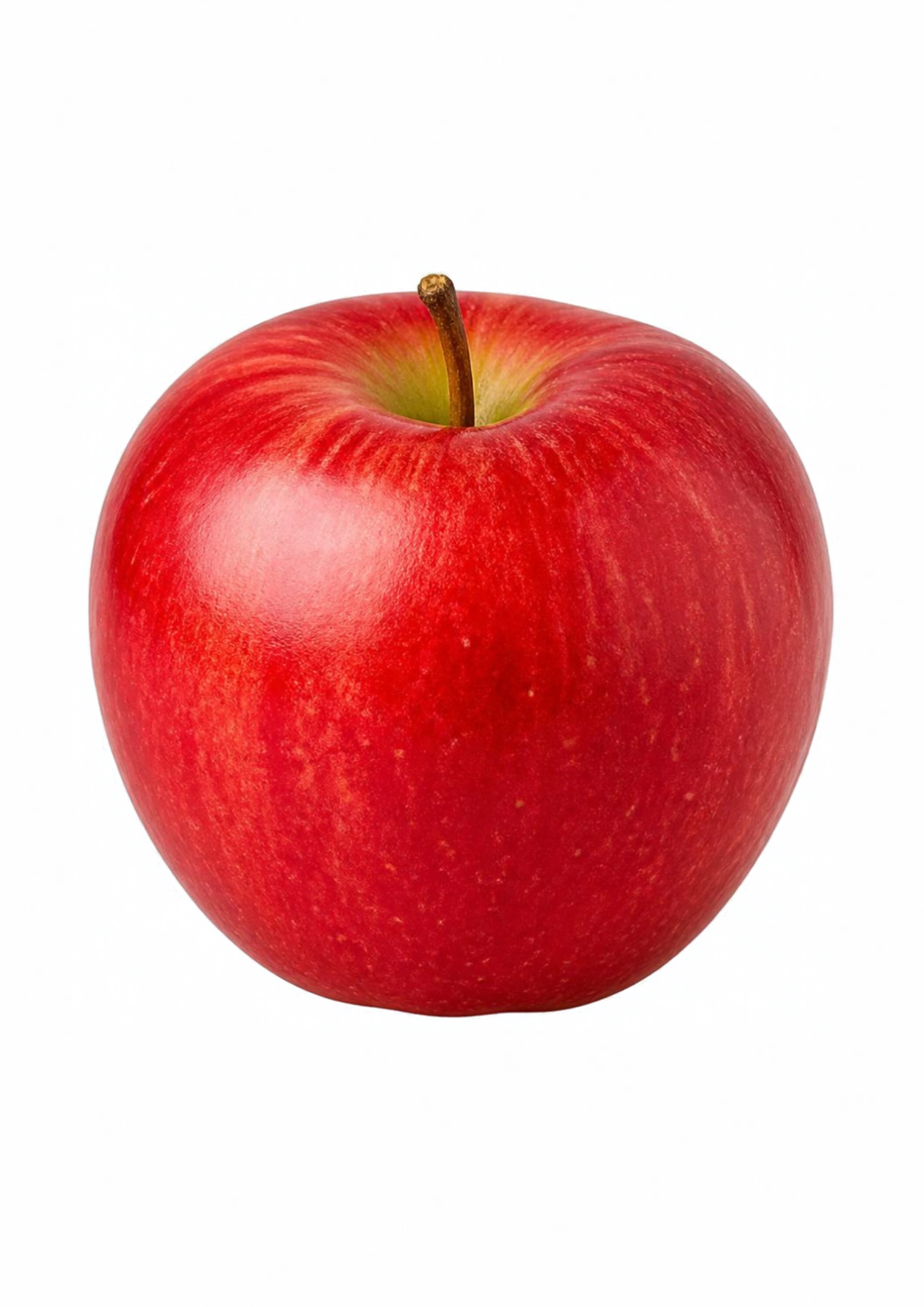
What is this?
An apple is a round fruit your toddler has likely already held, gummed and hurled off the high chair — the word arrives with history. The card shows a red apple; the fruit bowl supplies the moving, edible version.
What does it mean?
First words attach best to things a child can hold, taste and demand. The apple has all three: snack-sized, familiar and genuinely wanted, which makes it one of the highest-probability first food words in any kitchen.
What does the child need to know?
Show the card at real snack time and pair it with a real slice — word, taste, word. When an attempt comes back ("ah!", "pah!"), answer as if the word were perfect: "Yes! Apple!" Attempts that get answered become words; attempts that get ignored become silence.
Why this matters
Food words are daily words: they carry real wants, which gives your toddler a reason to say them. Every rehearsed "apple" at the fruit bowl is language doing actual work — and work is what makes words stick.
What it teaches
First food vocabulary, word attempts and pronunciation shaping, matching picture to object, and the wanting-asking-getting loop that powers early speech.
Words to learn
appleredbiteyumfruitmore
Say this to your child
“"Apple! A big red apple. Here is the picture apple, and here is your apple, waiting. Bite, bite — yum, yum. Red and round and sweet. All gone, apple — more tomorrow."”
Step by step
- Set the card beside your toddler’s snack, not across the table: "Apple. This is an apple."
- Hand over a slice of real apple while repeating the word, so the taste and the name land together.
- Point at the card’s apple, then the real one, then back: same word, two apples. Matching play is the game this age plays best.
- Wait three full seconds after each naming — the pause is where attempts live. Whatever sound returns, answer it warmly: "Yes! Apple!"
- Finish with the last bite: "All gone apple!" Endings are words too, and this one gets a smile every time.
Look closer at the picture
The artwork is a red apple, drawn large and plain — the opener of the food cards. Say exactly that much; the richer show is at the table, where the card apple sits beside the real one and a small hand decides which is for eating.
Ask your child
Watch the attempts across the week: does "ah" become "bah", does the word arrive at the fruit bowl unprompted? Wonder aloud: "I wonder which consonant you are cooking up in there."
What your child can say or do
A first "ba" or "ah-poo" aimed at the fruit, the card apple matched to the real one with a proud tap, both arms wrapping a whole apple and walking off with it, or the word "apple" delivered at breakfast out of nowhere — spontaneous naming is the milestone of this whole stage.
Out in the real world
Apples fill the week: the fruit bowl, the slices at snack, the sauce at dinner, the pile at the shop. Every one is a replay — one clear word, one real apple, and the vocabulary grows where the appetite is.
Try it together
Apple hunt: hide the card and one real apple in easy spots and let your toddler find and match them. Finding, carrying, matching and naming is a full circuit — and the pride at the end is the best part.
Understanding check
Parent self-check: did you answer every attempt as if it were the word, and did the card meet the real apple at least once? Warm replies and matching are the two halves; both are yours to give.
Parent tips
Offer, never demand — no "say apple" drills. The word is yours to provide and theirs to take. If your toddler says the word and then throws the apple, fine: naming and physics are separate subjects, and both are being studied.
Staying safe
Apple is a chewing challenge at this age: serve thin slices or soft-cooked pieces, seat your toddler upright and stay close through the snack — whole apples and big rounds belong to older teeth. Keep whole grapes and nuts off the menu entirely.
This lesson pairs with the Apple flashcard in the library — print it, show it, keep it on the fridge. Back to First Words: Food & Home (Toddler 1).