
Banana — a step-by-step lesson for grown-up and child
Banana arrives with a ritual attached: the peel. This lesson turns that ceremony into the lesson itself — word at the peel, word at the bite, and a warm answer for whatever version comes back.
What is this?
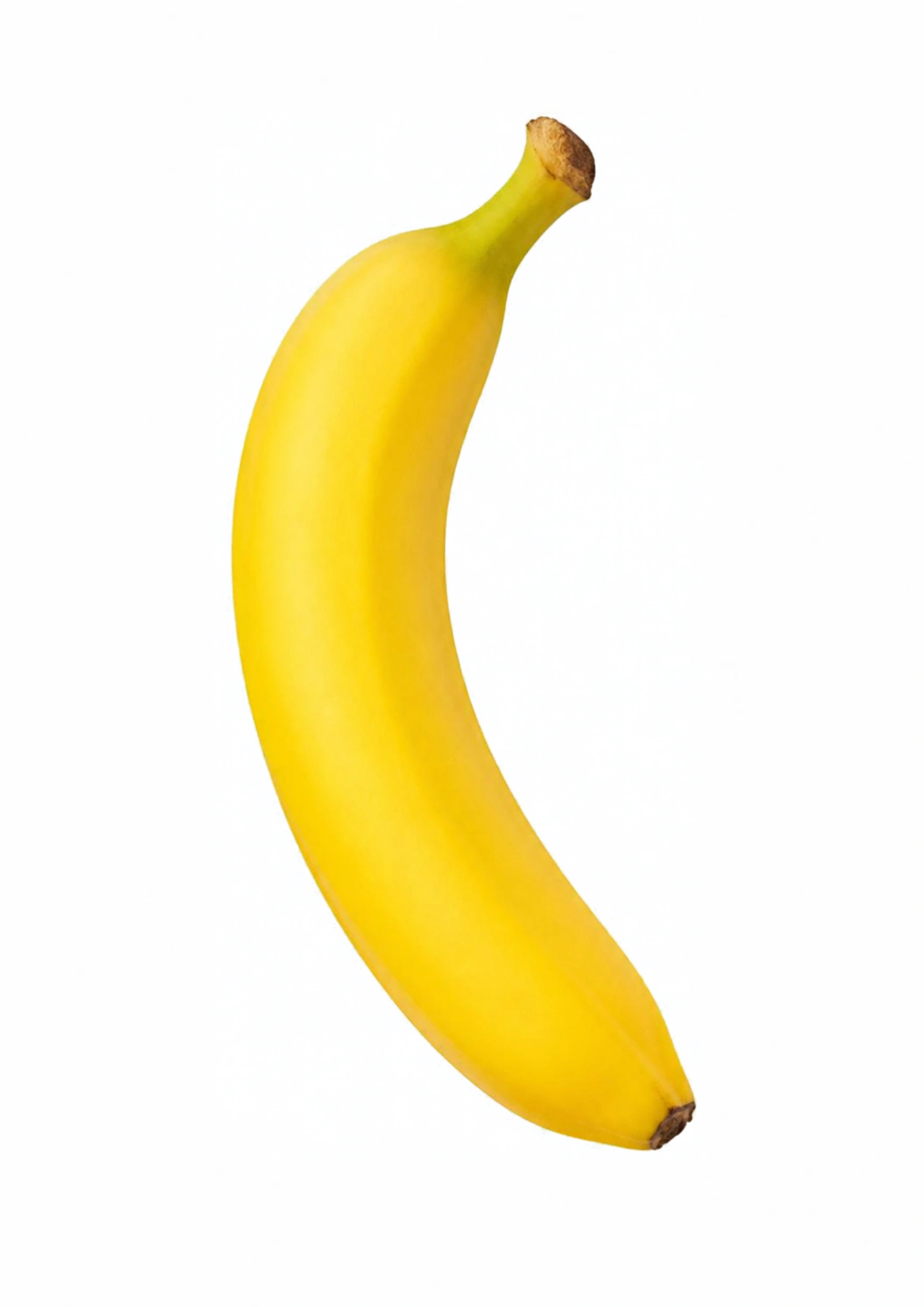
A banana is a soft yellow fruit that opens in strips — one of the few foods with a built-in unveiling. The card shows a yellow banana; the real one provides the slow reveal that keeps your toddler watching.
What does it mean?
The peel is the magic trick: your toddler watches the banana open, wants what is inside, and suddenly has a reason to say the word. Words tied to wanting and watching outperform words tied to mere showing — the banana is engineering in your favour.
What does the child need to know?
Say the word at the moment of peak interest — mid-peel: "banana". Then again at the bite. Whatever comes back — "nana", "ba", a shout — answer warmly and hand over the goods. The word is the ticket; the banana is the ride.
Why this matters
Banana attempts often arrive early because the word is fun to shape and the reward is instant. Early attempts deserve the same reply as clear words: every answered try keeps the talking pipeline open, and the pipeline matters more than the pronunciation.
What it teaches
Word attempts and shaping, the peeling sequence as vocabulary context, self-feeding, and the anticipation-reply loop that keeps first words coming.
Words to learn
bananapeelyellowsoftnanayum
Say this to your child
“"Banana! A yellow banana, soft and sweet. Watch — the peel comes down, strip by strip. Here is your piece, nana. Bite, bite, yum. All gone — the banana is finished, only the peel is left, bye-bye banana."”
Step by step
- Bring the card and the banana together: "Banana. A yellow banana — here is the picture, here is the fruit."
- Start the peel slowly and say the word at the first strip: "Banana." Let the opening do the teaching.
- Offer a piece as you name it again, and let your toddler hold their own piece — holding and naming belong together now.
- Wait through the silence after each naming; answer every attempt — "nana!" — with the full word back, warmly: "Yes! Banana!"
- Close with the empty skin: "All gone!" — and let your toddler wave the peel goodbye if they wish. Ceremonies end; that is what makes them ceremonies.
Look closer at the picture
The artwork is a yellow banana, plain and clear on the card. Name it, then run the real unveiling at the table — the card shows the fruit, and the peel supplies the drama the picture cannot.
Ask your child
Watch the peel: do the eyes lock at the first strip, does the word or its baby version arrive mid-ceremony? Wonder aloud: "I wonder if the peel is the reason this word is coming early."
What your child can say or do
A proud "nana" at the counter, the whole word attempted and landing as "ba-ba", both fists on the peel helping it open, or the banana carried to the card for a matching tap — first words, naming and matching play, all in one snack.
Out in the real world
Bananas hang around: the fruit bowl, the shop, the lunchbox, the mash in the porridge. Each appearance takes one word — and this word, said constantly by toddlers everywhere, tends to stick like few others.
Try it together
Peel-it-myself: start the tear with a thumbnail, then give the banana to your toddler to open. The triumph of the first self-peeled banana is enormous, and the word rides on the triumph.
Understanding check
Parent self-check: did the word land at the peel and at the bite, and did every attempt get a warm answer within a second or two? Fast, warm replies are the fuel this stage runs on.
Parent tips
Accept every version — "nana" is the word wearing training wheels, and correcting it only slows the wheels. If your toddler goes off bananas for a week, park the card; appetite returns, and the word waits patiently.
Staying safe
Mash or slice for new chewers and stay within reach at snack time — soft round pieces still need watching. Banana is among the gentler first fruits, but every food at this age is eaten sitting down, with a grown-up nearby.
This lesson pairs with the Banana flashcard in the library — print it, show it, keep it on the fridge. Back to First Words: Food & Home (Toddler 1).