
Closed — a step-by-step lesson for grown-up and child
This lesson completes the open pair: closed, taught with fists folding back into buds and a real lid clicking shut. Back to back with open, the two words teach each other.
What is this?
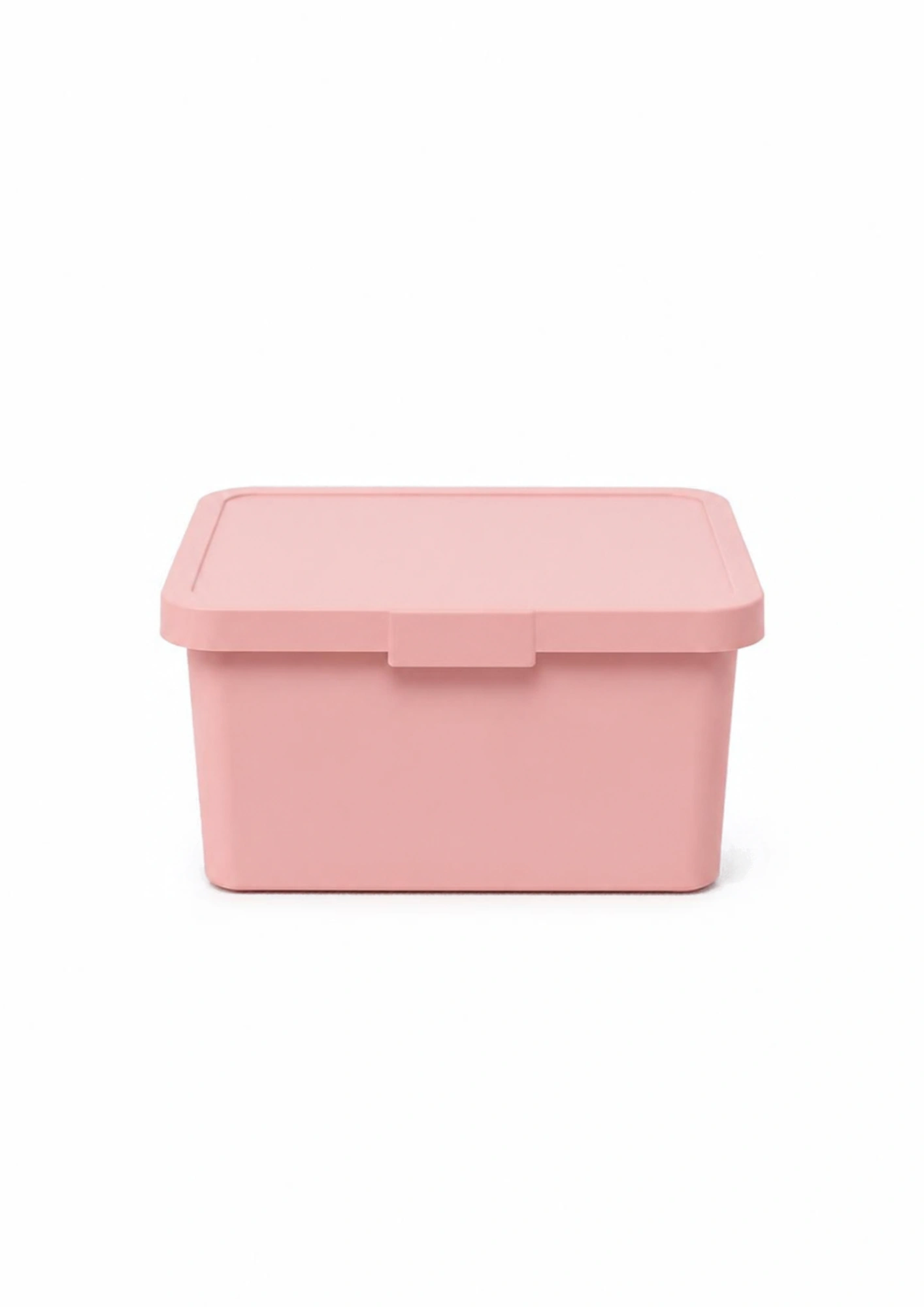
Closed is an action word — the state of shut doors, clicked lids and folded hands. The card shows a closed object, and your fists already know how to demonstrate it.
What does it mean?
Closed finishes what open starts: neither word is fully clear without the other beside it. The click of a lid is the concept’s sound effect — toddlers remember states best when they change them.
What does the child need to know?
Expect closing fists, a click-sound made by mouth, or a lid pushed shut with ceremony — all are answers. The switch game (open… closed… open) is where the two words weld together.
Why this matters
Closed is the more lawful half of the pair: it ends games, closes books at bedtime, shuts the biscuit tin. Toddlers enjoy the power of both directions equally.
What it teaches
State vocabulary in both directions, hand coordination on the fold, and the idea that things have states that change — early physics with sound effects.
Words to learn
closedshutlidfistsclicktight
Say this to your child
“"Closed! Hands open like a flower… and closed, tight as a bud. Can you do it? Open… closed! Now the box — push the lid… click! Closed. Open, closed, open, closed — you know both!"”
Step by step
- Show the open card with blooming hands — then the closed card, and fold the bloom back into a bud: closed. Tight fists, quiet voice.
- Invite the copy: open your hands… now close them! The switch is the game; run it three times, slowly.
- Bring the real box and close it together: push the lid until it clicks — closed! The click is the word made audible.
- Swap fast: open! … closed! … open! — hands, then box, then book. The faster the switch, the harder both brains work, and the louder the laughs.
- Name the real closes all week: the book at bedtime, the fridge door, the tap. Closed is the word for endings, and endings deserve their vocabulary too.
Look closer at the picture
The card shows a closed object demonstrating the concept closed for toddlers — one thing with its opening shut. Ask your toddler to point at it, then to close their own hands into tight fists just like it.
Ask your child
"Can you close your hands?" "Is the box open or closed?" "Can you make the click?" "What did we close today?"
What your child can say or do
A fist snap, a click voiced with the mouth, or a lid hammered shut with real purpose — all are the word arriving. Expect door-swinging experiments for a day or two; redirect them to the box and the game survives.
Out in the real world
Closes punctuate the day: the biscuit tin sealed, the story finished, the house door shut at night. Name the endings and closed becomes a word with a satisfying sound and a real job.
Try it together
Click-the-lid: a small box with a hinged lid, opened and closed on alternating words — your toddler works the lid, you call the states. The click marks every correct change of state like a tiny drum hit.
Understanding check
Hold both cards and ask for closed. A fist, a point at the shut card, or a voiced click all pass. Then ask for open… closed… open in a row — three correct switches mean the pair is fully installed.
Parent tips
The switch is the lesson: never drill one half of a pair alone. Let your toddler work the lid — the hand does the learning while the mouth files the word, and the click is the reward both directions.
Staying safe
Finger pinch is the honest hazard here: hinges, lids and doors bite small fingers, and the click game uses a light-lidded box with grown-up eyes on every close. Doors stay in the slow-motion game only.
This lesson pairs with the Closed flashcard in the library — print it, show it, keep it on the fridge. Back to First Concepts (Toddler 2).