
In — a step-by-step lesson for grown-up and child
This lesson closes the deck with the most requested position word: in. Taught with a shoebox slot and a pile of blocks, it is the posting game — the concept your toddler can play for twenty minutes without help.
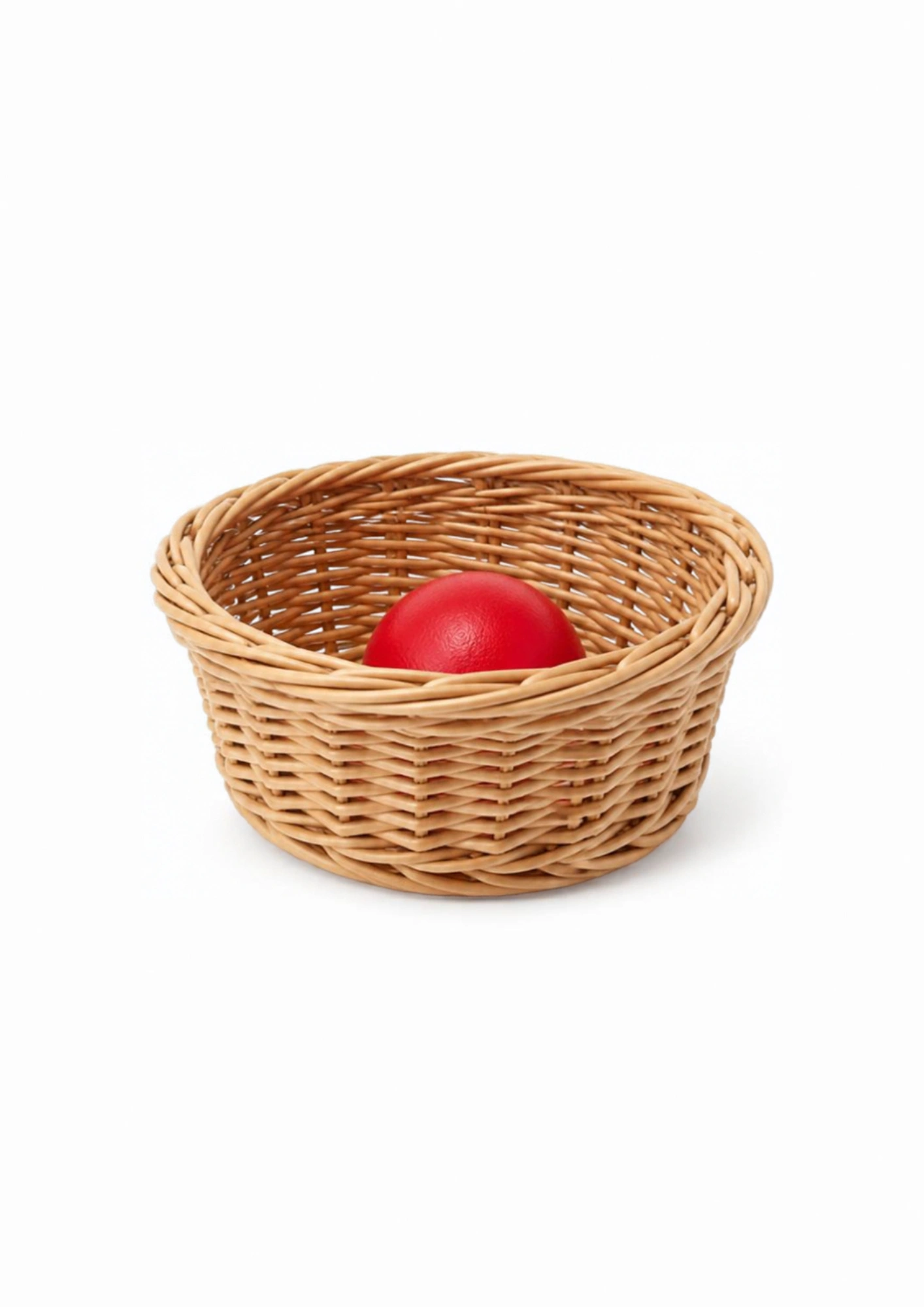
What is this?
In is a position word — the state of being inside something. The card shows an object inside a container, and the shoebox with a slot in the lid is that card, made playable.
What does it mean?
In earns its keep early: toddlers master it while posting things through slots with ferocious concentration. The mouth collects its word, the fingers collect their workout, and both gains arrive in the same game.
What does the child need to know?
Expect a drop, a posted block, or in! said at the exact moment of disappearance — all are answers. The return trip matters just as much: everything that goes in must come out again.
Why this matters
In is happening all day at toddler height: the spoon in the bowl, the teddy in the cot, the whole self in the bath. A word this busy needs only to be attached to the game they already play.
What it teaches
Position vocabulary, posting precision (the classic toddler obsession), and in-out reversibility — spatial language and fine motor control sharing one shoebox.
Words to learn
ininsideboxpostdropout
Say this to your child
“"In! Put the block in the box… in! It went in — did you hear it? Shake the box… they are all in there! Now tip it out — out! — and do it again. In, out, in, out — the best game in the house."”
Step by step
- Show the card and demonstrate with your own hands: one fist closes over the other — the block is in my hand! In.
- Cut a slot in a shoebox lid (grown-up scissors) and hand your toddler a block: can you put it in? Guide the drop and say in! at the moment it disappears.
- Let the posting run: block after block, one word each time — in! in! in! The repetition is the point, and the concentration is a bonus nobody has to ask for.
- Shake the box and listen together: where did they go? In the box! The word survives even when the blocks are out of sight.
- Finish the arc: tip the box and let everything come out — out! — then post it all back in. In and out, the whole cycle, named at both ends.
Look closer at the picture
The card shows an object inside a container demonstrating the concept in for toddlers — one thing sitting inside something else. Ask your toddler to point at what went in, then at what holds it.
Ask your child
"Where is the block?" "Can you put it in?" "Is it in or out?" "What else can we put in the box?"
What your child can say or do
A posted block with a pointed look, in! said as ihh! at the disappearance, or the whole fist plunged into the box to check — all are the word arriving. Expect the game to continue long after the lesson ends; that is the plan working.
Out in the real world
Ins run through every day: the spoon in the bowl, the teddy in the cot, the toddler in the car seat. Name the landings and the daily insertions all join the same vocabulary.
Try it together
The posting game, at full scale: a shoebox with a slot, a pile of large caps and blocks — post, retrieve, repeat. Twenty minutes of quiet concentration is normal; interrupt only for snacks and applause.
Understanding check
Ask from across the room: put the block in the box! A correct post — or a correct point at the in card — passes. Then ask where the blocks are: in the box! said or gestured means the word describes reality now.
Parent tips
Say in at the moment of disappearance, not before or after — timing is the whole weld. Keep the posted items large and the slot smooth; the game runs on repetition, and repetition needs safe pieces.
Staying safe
Posting pieces obey the toilet-roll rule — too big to swallow, since everything posted eventually gets mouth-checked. Grown-up scissors cut the slot, the edges get taped smooth, and the tipping-out happens away from toes.
This lesson pairs with the In flashcard in the library — print it, show it, keep it on the fridge. Back to First Concepts (Toddler 2).