
Elephant — a step-by-step lesson for grown-up and child
This lesson makes the elephant out of your own arm: trunk up, trumpet on, giant slow stomps — with big versus little riding along for free.
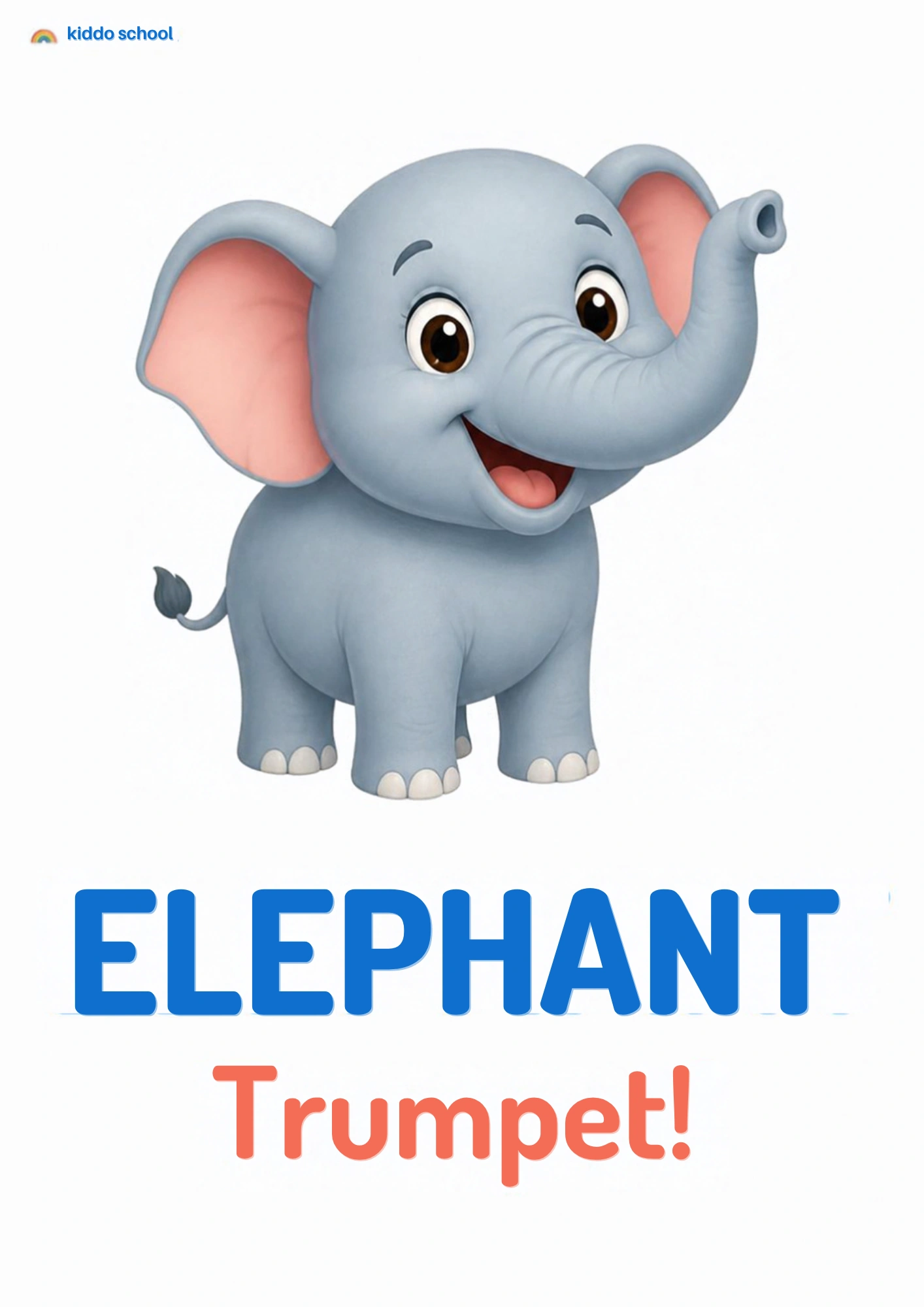
What is this?
An elephant is the biggest land animal, with big ears and a long trunk, and it trumpets — a strange, wonderful blast toddlers love to attempt.
What does it mean?
Big animal, big steps, big sound: the elephant is where size language gets physical. Bigger, biggest and slow are all taught by the stomp itself.
What does the child need to know?
The trumpet sound is genuinely odd — nobody says it right the first time, which is the joke. Pair this card with the mouse card later: biggest and smallest are best learned side by side.
Why this matters
One card delivers the week’s biggest movement game and the week’s funniest sound. On a rainy day, the elephant is the entire exercise plan.
What it teaches
Gross-motor imitation with slow heavy stomps, size vocabulary, and pretend-play with a body part as a prop — the arm becomes a trunk, and imagination flexes.
Words to learn
elephanttrunkstompbigearspawoo
Say this to your child
“"Elephant! Huge ears and a swooshy trunk. The elephant trumpets — pawoo! Can you swing your trunk? Stomp, stomp, slow and heavy. Nobody is bigger than the elephant!"”
Step by step
- Show the card and say elephant, then trumpet — pawoo! — with one arm curved down from your nose: instant trunk.
- Stomp slowly around the room together: big animal, big steps, one trumpet per corner.
- Hunt elephants in books and toys; fill a basin if you have one, because elephants love water and so does bath night.
- When the trumpet comes out as a raspberry or a honk, take it happily and make one yourself — the worse your impression, the more your toddler will correct you, and correcting is thinking.
- Stomp once a day this week, and stash the mouse card nearby for the big-little showdown at the end of it.
Look closer at the picture
The card shows an elephant trumpeting. Find the elephant, find the trunk, then ask which part swings — the trunk is the feature this card is built to teach.
Ask your child
"Where is the elephant?" "What does the elephant do with its trunk?" "Can you stomp like an elephant?" "Who is bigger, you or the elephant?"
What your child can say or do
An arm welded to the nose, a pawoo-ish blast, and stomps that shake the floorboards. Some toddlers will water their toys with the arm-trunk — that is pretend play blooming on schedule.
Out in the real world
Elephants appear at the zoo, on documentaries and in every animal anthology. Bath time is the daily slot: washcloth trunk, water spray, one triumphant pawoo.
Try it together
Elephant water hole: carry scoopfuls of water (or dry pasta) across the room with the arm-trunk curled, and pour them into a bowl. Heavy work, trumpet included, tidies itself up.
Understanding check
Ask what the elephant does. A trumpet, an arm-swing or a stomp — any one passes; all three is a parade. Then ask who is the biggest animal they know and listen for the trunk.
Parent tips
Let your toddler judge your elephant impression and correct you — being hilariously wrong invites the kind of feedback that builds confident speech. Keep stomps slow; slow stomps are quieter and funnier.
Staying safe
Zoo elephants are behind big barriers — admire from the viewing rail. At home, clear the stomp route of toys first: elephant feet and scattered bricks have exactly one outcome.
This lesson pairs with the Elephant flashcard in the library — print it, show it, keep it on the fridge. Back to Animals & Sounds (Toddler 5).