
Monkey — a step-by-step lesson for grown-up and child
This lesson gives your toddler the animal they most wish they were: the climber, the swinger, the ooh-ooh-er — with mirror faces as the practice stage.
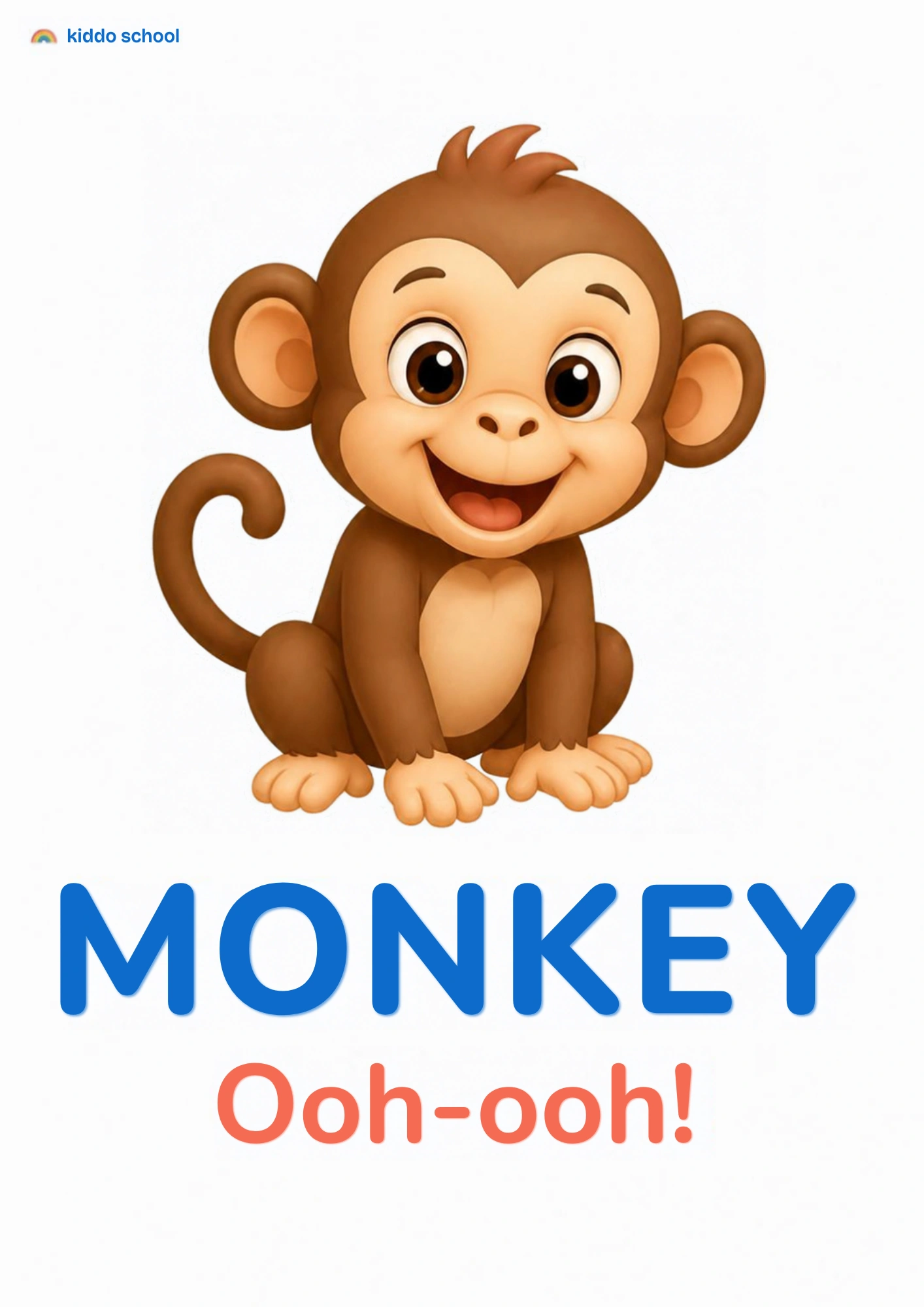
What is this?
A monkey is a climbing animal with quick hands that says ooh-ooh-ah-ah — the simplest sound in the set and the most fun to perform.
What does it mean?
Ooh and ah are pure vowels, the easiest noises a mouth makes, so this card is the confidence win in the deck. Easy wins keep toddlers playing the harder cards.
What does the child need to know?
Monkeys do what toddlers dream of: climb everything. The copy-me game channels that — monkey faces in the mirror give the energy a stage without a single piece of furniture scaled.
Why this matters
A guaranteed-success sound earns its slot in any bad-mood toolkit. When the day wobbles, the monkey card restarts it in three syllables.
What it teaches
Vowel play and facial imitation, expressive performance, and turn-taking in sound games — you go, then I go, which is conversation in embryo.
Words to learn
monkeyooh-oohclimbswingsillycopy
Say this to your child
“"A monkey! Ooh-ooh-ah-ah — give it a go! Scratch, scratch — beat your chest! Look at my monkey face… now make yours. Monkeys swing and climb all day long."”
Step by step
- Show the card and say monkey, then ooh-ooh-ah-ah with a scratch under each arm.
- Beat your chest gently and make your best monkey face — lips out, eyebrows up. Let the mirror in on the game.
- Hunt monkeys in books and toy baskets; sock puppets and teddies can be honorary monkeys today.
- When your toddler answers with any ooh-shaped noise, ooh back in their rhythm — matching their beat is the strongest yes there is.
- Keep the card for daytime play this week and end every session with monkeys going to sleep; the exit ritual saves your bedtime.
Look closer at the picture
The card shows a monkey saying ooh-ooh. Find the monkey, find the ooh-ooh, and ask what the monkey is doing with its arms — climbing is the answer this card points at.
Ask your child
"Where is the monkey?" "What does the monkey say?" "Can you make a monkey face?" "Can you beat your chest like the monkey?"
What your child can say or do
"Ooh-ooh-ah-ah!" delivered at speed, plus a face you never suspected lived in there. Mirror monkeys often turn into twenty seconds of pure performance — applaud the show.
Out in the real world
Monkeys live at the zoo, in story books and in every game of copy-me. Playground climbing frames become monkey territory with one sentence: "climb like a monkey — ooh-ooh!"
Try it together
Copy-monkey: you make a monkey move, your toddler copies it, then they lead and you copy. Leader-swapping is the whole game, and being copied makes toddlers shine.
Understanding check
Ask what the monkey says. Any ooh-ah chain passes instantly. Then check the mirror game — a made-up monkey face on request means imitation has clicked at full strength.
Parent tips
End monkey play with the sleep ritual every time — it teaches the ending of games, which is a skill in itself. Keep chest-beats gentle; the gesture is the joke, not the force.
Staying safe
Zoo monkeys are quick-fingered grabbers — hold bags, snacks and sunglasses close at the enclosure. At home, monkey climbing stays on the floor cushions, not the bookshelf.
This lesson pairs with the Monkey flashcard in the library — print it, show it, keep it on the fridge. Back to Animals & Sounds (Toddler 5).