
Green — a step-by-step lesson for grown-up and child
This lesson takes green outside where it lives: a card in one hand, a leaf in the other, and a walk that becomes a hunt with no preparation at all.
What is this?
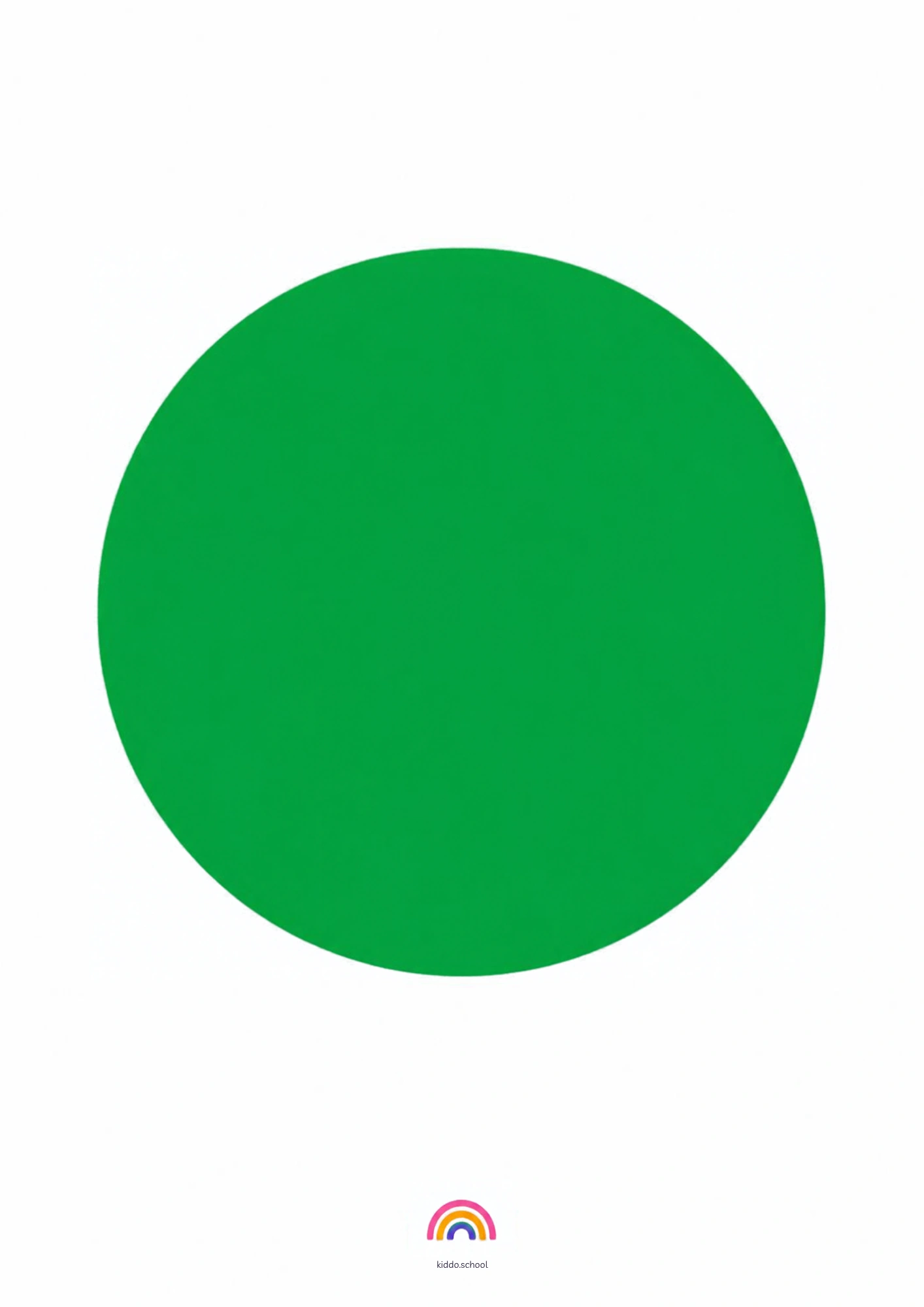
Green is a color — the color of grass and leaves — and this card is green throughout, ready to be matched to the first plant you meet.
What does it mean?
Green is the color toddlers over-use first, calling every plant green including the brown ones. Over-use is a sign the word is being tested — keep it warm and let the sorting come.
What does the child need to know?
A hand resting on the grass while the word is spoken teaches more than any picture can. Palm memory is real memory at two.
Why this matters
Green has the biggest outdoor territory of any color, so the walk to the shop becomes ten free lessons. No card travels better than this one.
What it teaches
Color naming with a touch anchor, nature vocabulary growing alongside (grass, leaf, tree), and over-generalisation — the healthy middle step of all category learning.
Words to learn
greengrassleaftreeoutsidegrow
Say this to your child
“"Green! Green like grass. Can you touch the grass? Soft — and green. Say green while your hand is on it. Look, a leaf! Green too. How many greens did we find?"”
Step by step
- Show the card and say green, then press your palm flat on the card and lift it: we are taking this color outside.
- On the walk, stop at the first grass or leaf, put your toddler’s hand on it, and say green while the hand is touching.
- Collect the walk’s greens on your fingers — one green for grass, one for a leaf, one for a hedge — and count them on the way home.
- When green gets applied to every plant and a few fences, agree warmly and move on: the over-use phase is doing its job.
- Bring one green find home — a leaf — and lay it on the card for the match.
Look closer at the picture
Green covers this card completely, and the word green sits printed on it. Match it to the first green thing your toddler touches today.
Ask your child
"What color is the grass?" "What color is this card?" "Can you find a green leaf?" "How many green things did we see on our walk?"
What your child can say or do
"Green!" delivered from the shoulder-height of a pointing arm at grass, trees, hedges and one suspicious bin. Over-use is the sound of a word being tested in the field.
Out in the real world
Parks, gardens, weeds in pavement cracks — green is the most available color in any neighbourhood. The walk home is the lesson; the card just names what the fingers find.
Try it together
Green gathering walk: collect only green treasures — leaves, fallen needles, one dandelion — into a small bag, then sort the haul onto the green card when you get home.
Understanding check
Ask what color the card is and what color the grass is. Two greens passes. The stronger pass is the walk itself: a hand reaching for a leaf while saying the word unprompted.
Parent tips
Take the card outdoors at least once — the match between card and leaf is the click. Keep counting the finds; green hunts are the gentlest counting practice in the deck.
Staying safe
Outdoor color hunting has one rule worth rehearsing: look with eyes, touch with one gentle hand, and never put leaves, berries or soil anywhere near a mouth.
This lesson pairs with the Green flashcard in the library — print it, show it, keep it on the fridge. Back to Colors & Shapes (Toddler 3).