
Pink — a step-by-step lesson for grown-up and child
This lesson makes pink in front of your toddler: a drop of red into something white — and the mix becomes the memory that separates pink from red for good.
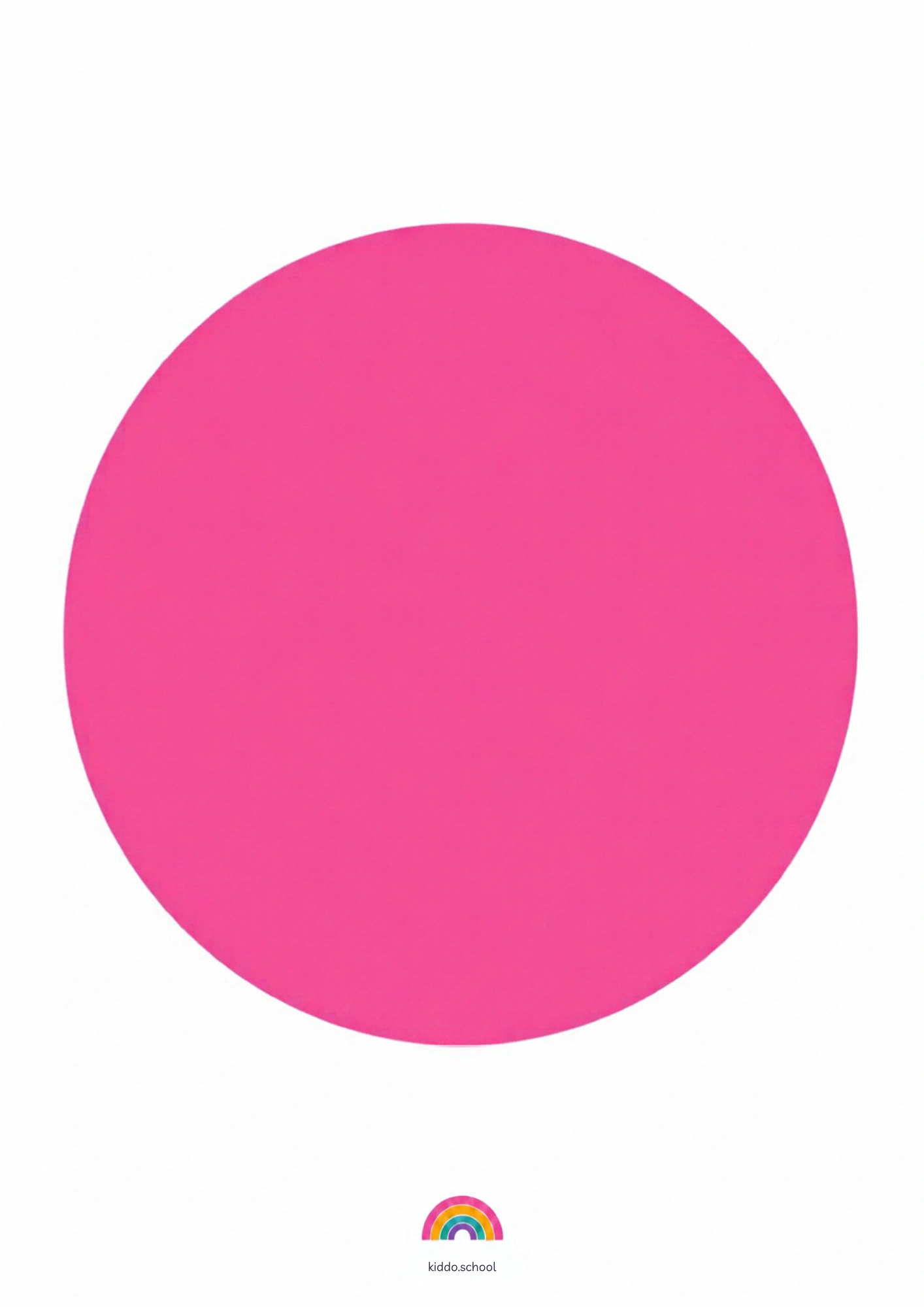
What is this?
Pink is a color — the light one, close to red but paler — and this card is pink from edge to edge, with the word printed for toddlers.
What does it mean?
Calling pink red is genuinely clever, not wrong: pink is a kind of light red. Agree with the idea, then add the second word — that is how two colors grow from one.
What does the child need to know?
The real mix teaches it best: a drop of red juice or paint into something white turns pink before your toddler’s eyes. Watching the color be born beats any explanation.
Why this matters
Pink and red live side by side in the deck for a reason — close pairs taught together are what build sharp color vision and sharper sorting talk.
What it teaches
Contrast learning inside a color family, cause-and-effect watching (the mix), and the first experience of colours having relatives.
Words to learn
pinklightmixredwhitesoft
Say this to your child
“"Pink! Soft pink, like the piglet. Watch — a drop of red into the white… stir, stir… PINK! It turned pink! Can you say pink? Pink, red’s gentle sister."”
Step by step
- Show the card and say pink, then hold it next to the red card: sisters — one loud, one soft.
- Do the real mix: one drop of red — paint or juice — into something white, stirred by your toddler, watched closely. Pink appears — name it the second it does.
- Hunt pink around the house: a blanket, a bottle, a biscuit at snack time. Two finds is a full round.
- When pink gets called red, agree and extend: "red like the fire truck — and this one is pink, red’s little sister."
- Keep the pair visible all week — both cards on the shelf together — and let the soft one catch up.
Look closer at the picture
This card holds one pale color and the word pink. Hold it next to the red card and let your child study the difference out loud.
Ask your child
"What color is this card?" "Is pink dark or light?" "What happened when we mixed the colors?" "Can you find something pink in the room?"
What your child can say or do
"Pink!" with the mixing spoon still in hand, or a thoughtful pause and then red — followed by your gentle upgrade. The pause-and-correct moment is the lesson happening live.
Out in the real world
Piglets at the farm, strawberry ice cream, blossom in spring and one useful biscuit — pink visits often enough. The mix experiment is the anchor memory to revisit.
Try it together
Color kitchen: two cups of water, a drop of red in one, and a stir with your toddler commanding the spoon. Add white paint for the full transformation and repeat on demand.
Understanding check
Ask what the card is and what the mix made. Two pinks passes. The deeper pass: next time pink is called red, your toddler waits — and self-corrects to pink before you speak.
Parent tips
Never overrule red with a no — agree, then add: red’s little sister, pink. Children accept additions far more easily than corrections, and the family metaphor does real work.
Staying safe
Paint-and-juice mixing means smocks and wiped surfaces — and anything involving real paint stays taste-safe and out of the mouth, which at two is the actual experiment everyone runs.
This lesson pairs with the Pink flashcard in the library — print it, show it, keep it on the fridge. Back to Colors & Shapes (Toddler 3).