
Bored — a step-by-step lesson for grown-up and child
This lesson names the feeling that arrives on quiet afternoons: bored. The card gives the floppiness a face, and the lesson plants one small idea and stands back.
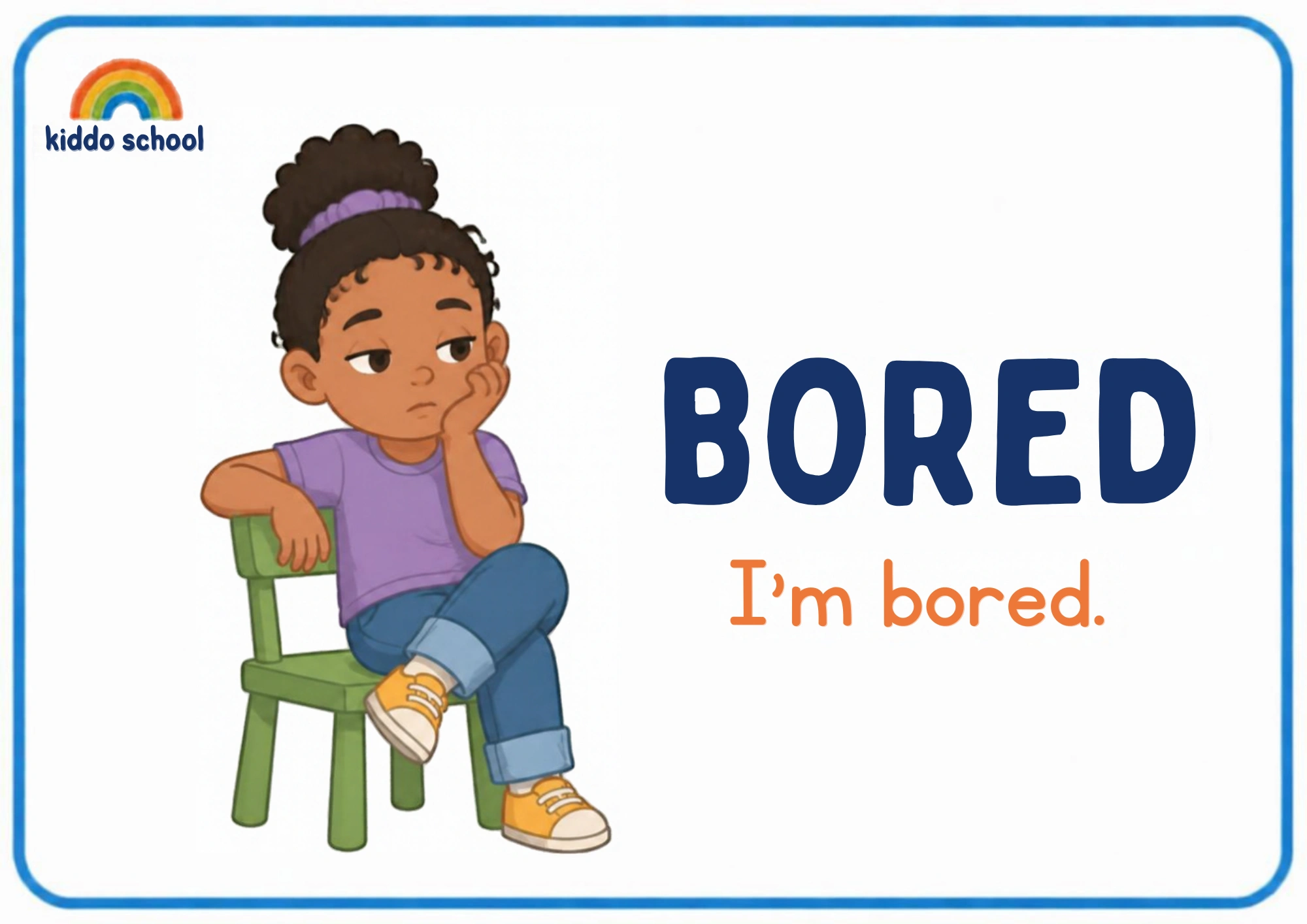
What is this?
Bored is the nothing-feels-interesting feeling — flopped body, distant stare, toys that were fine yesterday and are suddenly wrong. The card shows it honestly, as a feeling everyone gets.
What does it mean?
Boredom is the doorway to invented play: a toddler given one tiny idea at the bored moment usually spins it into twenty minutes. The feeling is uncomfortable on purpose — it is the mind asking for a job.
What does the child need to know?
Expect a flop, a whine, or bored said like a complaint — all answers, and the complaint is the invitation. Name the feeling, offer one seed, not a schedule, and let the growing be theirs.
Why this matters
Quiet hours arrive daily, and a toddler who owns the word for the lull can move through it faster. You are not the entertainment department — you are the seed merchant.
What it teaches
Imagination, self-directed play, and feeling vocabulary for the flat moods — the earliest independence training there is.
Words to learn
boredideaplaynewtoyshmm
Say this to your child
“"Bored. This face feels bored — nothing feels fun. Hmm! When you feel bored, tell me, and we will find one little idea. Look — two blocks… I wonder what they could be. Now it is your game."”
Step by step
- Show the card on a suitably floppy afternoon: bored — this face cannot find anything fun. Sympathise first; the feeling is real.
- Make the face together: droopy shoulders, hollow sigh, a bored ahh. The drama gets a laugh, which is already half a cure.
- Teach the move: when you feel bored, tell me — and we will find one new idea together. One idea, not ten.
- Plant the seed small: set two toys side by side, say one sentence — the dolly is hungry, I wonder — and walk a step away. The distance is deliberate.
- When the play catches, leave it alone. Come back later and name what grew: you were bored, and look what you invented! The arc is the lesson.
Look closer at the picture
The card shows an illustrated child having a bored feeling — one flat, floppy face. Ask your toddler to find the bored face, then to do their very best bored slouch beside it.
Ask your child
"Where is the bored face?" "Can you make a bored face?" "What could we do first?" "What did you invent?"
What your child can say or do
A floppy slump, a whined bored, or a shrug with eyebrows — the feeling arrives in body language first. A toddler who answers the seed with their own twist has already left the lesson behind, which is the goal.
Out in the real world
Flat afternoons come every week. Name the feeling, plant one idea, resist the rescue — and the empty stretch slowly turns into the birthplace of the best games.
Try it together
Two-toy spark: choose any two toys that rarely meet, set them side by side, and wonder out loud for exactly one sentence. Then be busy elsewhere; the spark catches best unwatched.
Understanding check
After the next floppy patch, ask how you felt before the game. Bored, a shrug, or a finger landing on the floppy face all pass. The longer pass mark: stretches of invented play growing quietly longer, week on week.
Parent tips
Name the feeling, plant the seed, then genuinely step back — boredom plus one idea is the recipe, boredom plus a show is the trap. You do not have to fill every flat minute; nobody could.
Staying safe
Bored toddlers go hunting, and their hunting grounds include stairs, cupboards and the bin: keep the floppy zones safe and doors latched. The honest note — a bored two-year-old left entirely alone finds trouble; nearby-but-busy is the sweet spot.
This lesson pairs with the Bored flashcard in the library — print it, show it, keep it on the fridge. Back to Emotions & Feelings (Toddler 7).