
Confused — a step-by-step lesson for grown-up and child
This lesson names the face your toddler makes when routines bend: confused. The card gives the puzzlement a word, and slowing down gives it a way out.
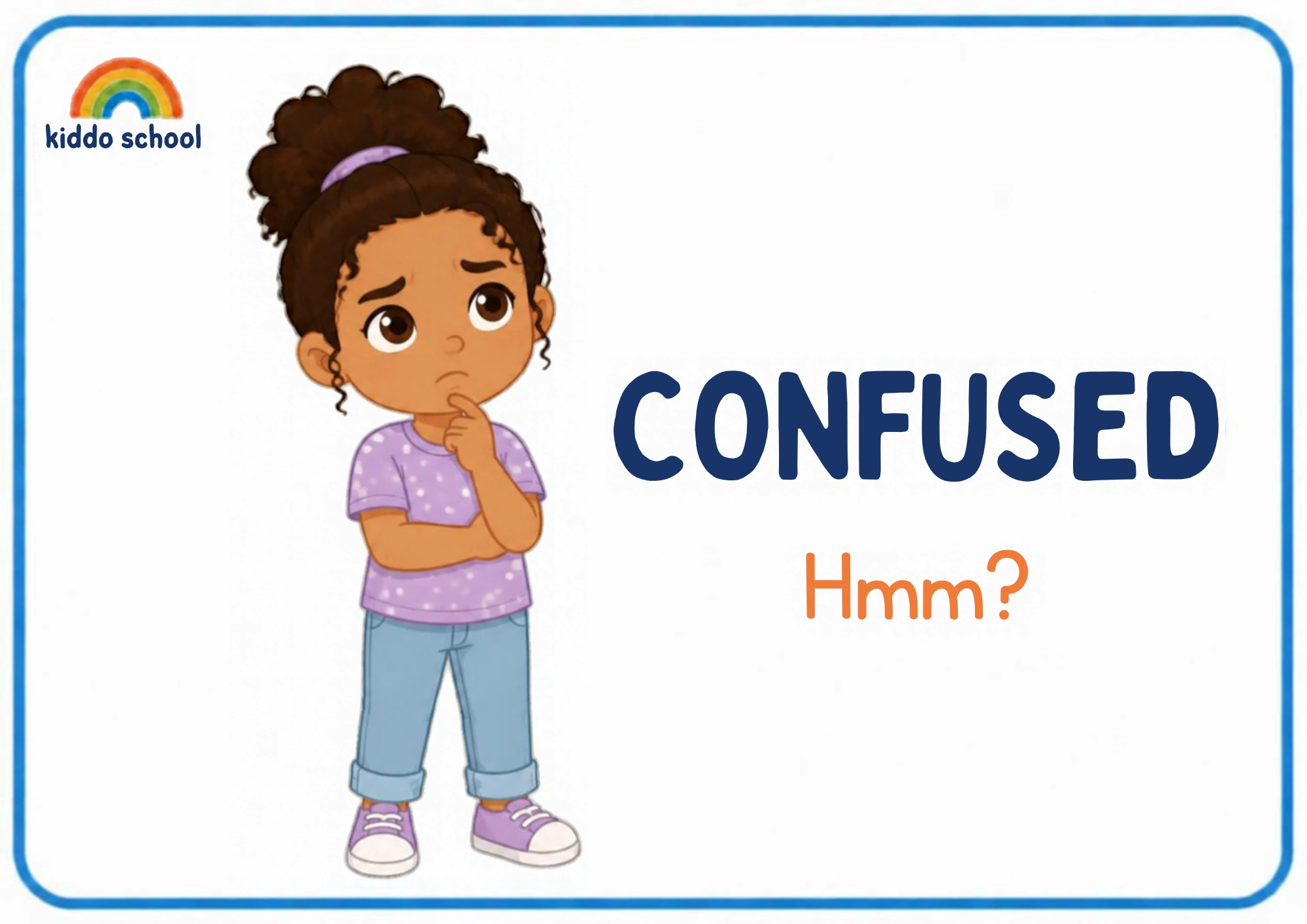
What is this?
Confused is the what-is-happening feeling — tilted head, searching eyes, a pause mid-action. It arrives when the usual stops being usual: a different cup, a changed plan, a rule with edges nobody explained.
What does it mean?
Confusion is what learning looks like from the inside: the mind holds two versions of the world and hunts for the edit. Named calmly, it becomes interesting instead of alarming — what instead of wail.
What does the child need to know?
Expect a head-tilt copy, a puzzled hmm, or a point between two options — all answers. When it happens live, drop to slow motion and give the moment words; the fog clears at walking pace, never at a run.
Why this matters
The world changes its mind daily at two — the shop is shut, the cup is a new cup, Daddy wears a hat. A word for the in-between feeling keeps those moments curious instead of frightening.
What it teaches
Feeling vocabulary for the puzzlement-zone, flexibility when routines bend, and thinking out loud with a grown-up — cognitive skills with an emotional handle.
Words to learn
confusedhmmwhylooktogetherslow
Say this to your child
“"Confused. This face is thinking — hmm? What is happening? Everyone feels confused sometimes. When you do, we slow down and look together. Hmm… now we know! Confused always has an ending."”
Step by step
- Show the card and name it with a raised eyebrow: confused — this face is thinking, hmm, what is happening here?
- Make the face together: tilted head, small frown, a questioning hmm. The copy is easy and funny — let the mirror judge.
- Teach the exit: when you feel confused, we slow down and look together. Say the sequence twice so it settles.
- When a real puzzler arrives — the cup is different, the plan has changed — narrate slowly: hmm, this is confusing! Come and look with me. Then actually look, at toddler pace.
- Close every puzzling moment with the resolution: now we know! The arc from confused to understood is the lesson, repeated in miniature all week.
Look closer at the picture
The card shows an illustrated child having a confused feeling — one tilted, puzzled face. Ask your toddler to find the confused face, then to make their own wondering hmm-face beside it.
Ask your child
"Where is the confused face?" "Can you make a hmm face?" "What do we do when we feel confused?" "What happened here?"
What your child can say or do
A tilted head, an honest hmm, or a finger pointing between two things — all are the feeling on display. Some toddlers hand you the confusing object directly; delegation is a perfectly good strategy.
Out in the real world
Puzzling moments appear without warning: the new cup, the closed park, the haircut. Name the feeling, slow the moment, look together — and the day’s surprises become problems the two of you solve.
Try it together
Mystery object: pop a household thing in a sock and let your toddler feel, frown and guess. The confused face is the point of the game — celebrate the hmm as loudly as the answer.
Understanding check
At the next puzzling change, watch for the tilt or listen for the hmm — either passes. Then ask later where the confused face is: a quick find plus a remembered hmm means the word and the feeling have met.
Parent tips
Slow is the whole trick — narrate what is happening in short steps and let your toddler watch you figure it out too. Confusion shared and solved teaches that not-knowing is a stop on the way, not a wall.
Staying safe
All feelings welcome — confusion included, no matter how small the trigger looks from up here. The honest note: confusion during big changes (moves, new siblings, new beds) deserves extra slowness and extra cuddles, not just a word.
This lesson pairs with the Confused flashcard in the library — print it, show it, keep it on the fridge. Back to Emotions & Feelings (Toddler 7).