
Frustrated — a step-by-step lesson for grown-up and child
This lesson names the feeling behind the block tower that fell again and the zip that will not budge: frustrated. The card hands the everyday tussle a face and a respectable name.
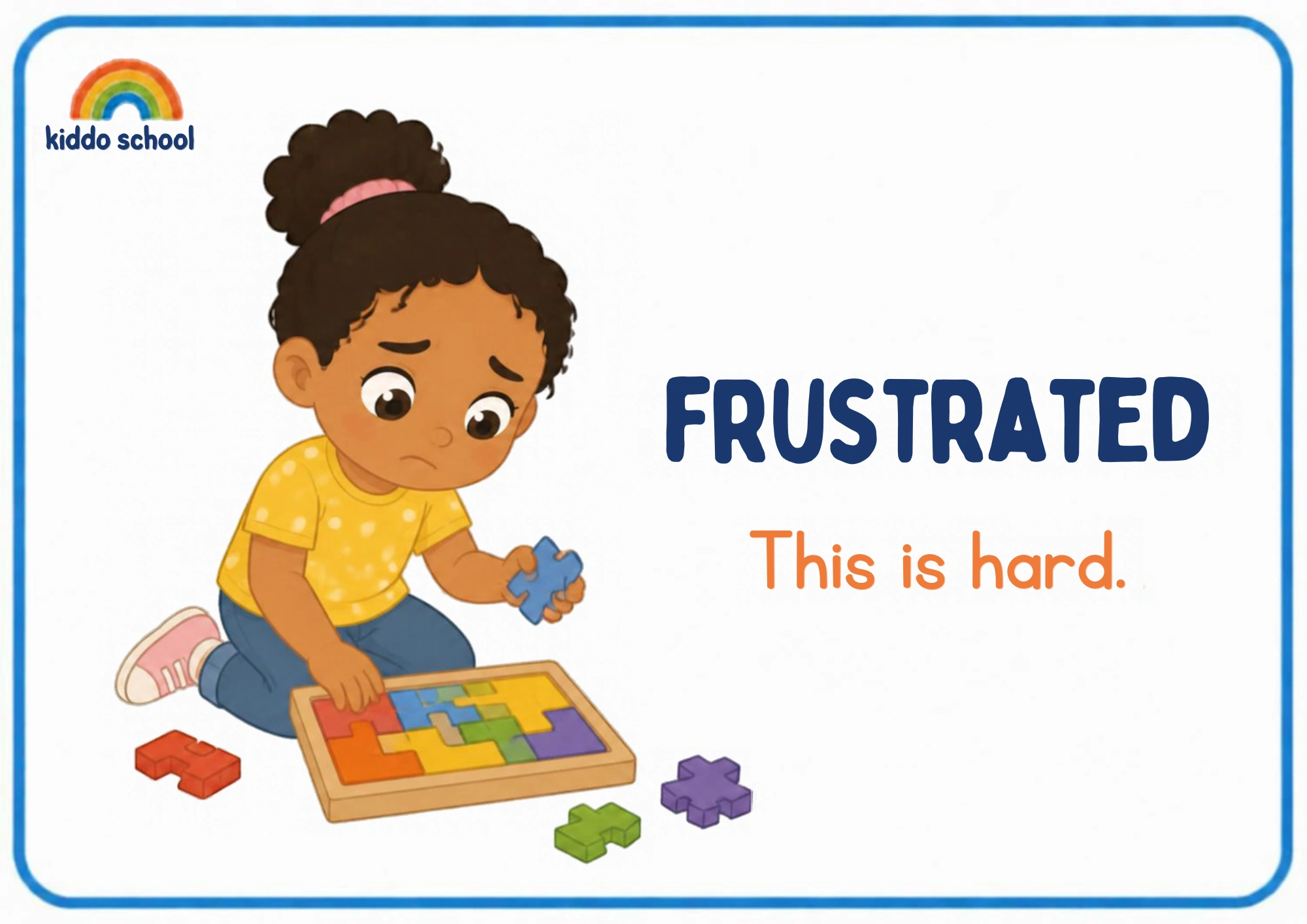
What is this?
Frustrated is the stuck feeling — gritted teeth, hot face, hands that want to throw. It visits when trying hard is not yet working, which at two is approximately hourly.
What does it mean?
The word works like a small reservoir of patience: naming the feeling gives the storm a shape, and a shaped feeling is easier to sit inside. Frustration survived is where persistence is actually built.
What does the child need to know?
Offer two exits when it strikes: asking for help, or one more go. Either exit begins with the feeling named — that is frustrating — and the throwing of toys gets its gentle limit.
Why this matters
Frustration is constant at two: cups that spill, lids that stick, towers that fall. A word this busy pays for itself before the week is out.
What it teaches
Persistence, feeling vocabulary for the struggle-zone, and choice-making — plus the deep lesson that hard feelings have words and exits.
Words to learn
frustratedhardhelptrystuckagain
Say this to your child
“"Frustrated! This face is trying so hard — and it still will not work. Grrr! That is frustrating. You can say help, or you can try again. I am here either way. Hard things get easier with trying."”
Step by step
- Show the card and name it clearly: frustrated — this face is trying and trying and it will not work! Gritted teeth and all.
- Make the face together: clenched jaw, squeezed fists, a small grrr. The pretending gives the feeling a dress rehearsal.
- Teach the two doors: when you feel frustrated, you can say help please — or try again. Both doors are always open.
- At the next real struggle, lead with the word — so frustrating! The tower fell again. Then offer the two doors and wait one beat longer than feels comfortable.
- Afterward, retell the survival: it was frustrating, you tried again, and look — it worked. Or: I helped, and together we did it. Both endings count.
Look closer at the picture
The card shows an illustrated child having a frustrated feeling — one gritted, working-hard face. Ask your toddler to find the frustrated face, then to make their own grrr face, fists and all.
Ask your child
"Where is the frustrated face?" "Can you make a grrr face?" "What are our two choices when we feel frustrated?" "Do you want help or try again?"
What your child can say or do
A grrr with real feeling, help said as hep, or a determined second attempt with no words at all — all are the lesson working. A thrown cup means the feeling outran the word; name it, reset gently, keep the doors open.
Out in the real world
Struggles arrive all day: socks, lids, zips, puzzles. Name the feeling at the first grrr, offer the doors, and let the surviving do the teaching — frustration endured with company is persistence under construction.
Try it together
Stuck-point play: give your toddler a puzzle one step past easy, and stay close without fixing. When the grrr comes, offer the two doors and watch which one gets picked — then pick the other one yourself next time.
Understanding check
At the next struggle, listen for the word: frustrated, hep, or a look at the card mid-grrr all pass. Then watch the second attempt — a toddler who tries once more is building the muscle this card exists for.
Parent tips
Put the word in ahead of the solutions — the vocabulary is the bucket, the doors come second. Hold back one beat longer than instinct suggests; the gap between stuck and helped is where persistence grows.
Staying safe
All feelings welcome, and frustration is the most frequent guest. The limit stands beside it: throwing and hitting are not on the menu — stomping, squeezing and the two doors are. Move breakables; keep the toddler.
This lesson pairs with the Frustrated flashcard in the library — print it, show it, keep it on the fridge. Back to Emotions & Feelings (Toddler 7).