
Earthworm — a step-by-step lesson for grown-up and child
This lesson honours the garden’s hidden hero: your toddler wiggles like the pink earthworm on the card, rolls worms out of playdough, and learns why the busiest hands in the soil are the ones we never touch.
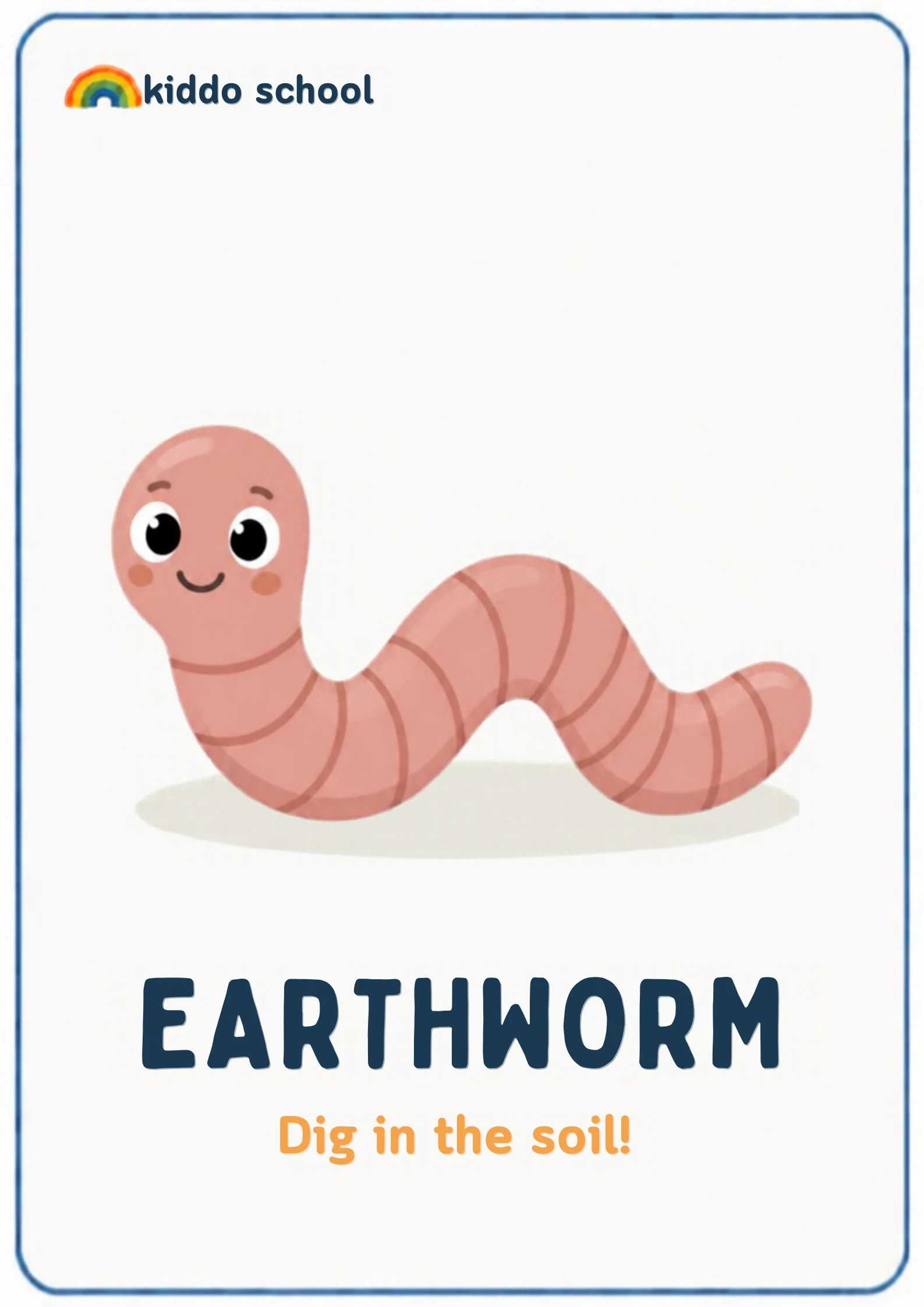
What is this?
An earthworm is a long, soft, pink creature that lives in the soil, wiggling through it all day and turning old leaves into food for plants. No worm, no garden — they are the quiet workers beneath every bloom your toddler has ever sniffed.
What does it mean?
The earthworm is the set’s least glamorous card and its deepest lesson: the most important worker is the one nobody sees. For a two-year-old, the worm is also the perfect wiggle — long, slow, and impossible to do standing up.
What does the child need to know?
Worms wiggle underground and come up after rain, and they are never-touch friends: their skin does their breathing, and dry hands would hurt it. We watch with kind eyes, and if one is stranded on the path, a grown-up moves it with a leaf.
Why this matters
Caring for a creature too small and soft to defend itself is kindness at its purest — and the reason is touchable: worm skin breathes, so our dry hands are the danger. Rules with real reasons stick for life.
What it teaches
Long, slow body wiggles (surprisingly hard, endlessly funny), the underground-world idea, gentleness practised at its most delicate, and rain-day observation habits.
Words to learn
earthwormwigglesoilrainsoftkind
Say this to your child
“"An earthworm! Pink and wiggly — it lives under the ground and helps the flowers grow. Wiggle, wiggle! After rain it comes up to breathe. We watch with our kind eyes and never touch — our hands are too dry, and the worm is very soft."”
Step by step
- Show the card and say earthworm — then wiggle: arms loose, shoulders loose, everything wiggling like something with no bones at all.
- Lie on the rug and do the worm: stretch long, pull in short, stretch long again — travelling by wiggles only.
- Roll playdough worms together — long, longer, the longest worm in the garden — and line them up for a wiggle parade.
- After rain, look for a real worm on a path or lawn and watch how it reaches and bunches, stretch by stretch: it came up for air, like a little swimmer.
- End with the rule, softly: a worm’s skin does its breathing, so our dry hands stay far away — we watch, we wiggle like them, and we leave them to their rain.
Look closer at the picture
Say earthworm together and look for the pink wiggler on the card. Ask your toddler to wiggle like the worm, then trace its long body with one finger from end to end and back again.
Ask your child
"Where does the worm live?" "When does it come up — after what?" "Can you wiggle like a worm?" "Do our hands touch the worm, or stay dry and far away?" — answered with wiggles, the word rain and a gentle head-shake.
What your child can say or do
"Wiggle worm!" announced at bathtime and every rainy window, playdough worms coiled all over the kitchen table, and worms rescued-in-story after every shower of rain — the underground hero has a spokesman.
Out in the real world
Rainy days bring worms up onto paths and lawns, and every one is a rerun: crouch, whisper earthworm, watch it stretch, and leave it to its air. Dry-weather digging turns up another — admired, then left to its tunnel.
Try it together
Playdough worm families: roll a mummy worm, a baby worm and the longest worm of all, then measure them against each other and against a real finger. Quiet hands, soft dough, and the worm’s whole shape lesson in one sitting.
Understanding check
Next rainy day, watch the crouch: if your toddler leans in to look with hands clasped behind their back, the rule grew roots — kindness and knowing, exactly as planted.
Parent tips
The never-touch rule needs its reason said out loud at least once: worm skin breathes, and our dry hands would hurt it. Reasons turn rules into values — and this one is true.
Staying safe
Worms are watched, never handled — even gently, dry fingers damage their skin. After rain or soil play, hands get washed before anything touches a face or snack, and nothing from the garden goes in mouths, ever.
This lesson pairs with the Earthworm flashcard in the library — print it, show it, keep it on the fridge. Back to Garden Bugs & Friends (Toddler 8).