
Bird — a step-by-step lesson for grown-up and child
This lesson looks up: your toddler learns the word bird, makes the tweet, and meets the garden’s fastest visitor — the friend that only comes close when everyone gets very quiet and very still.
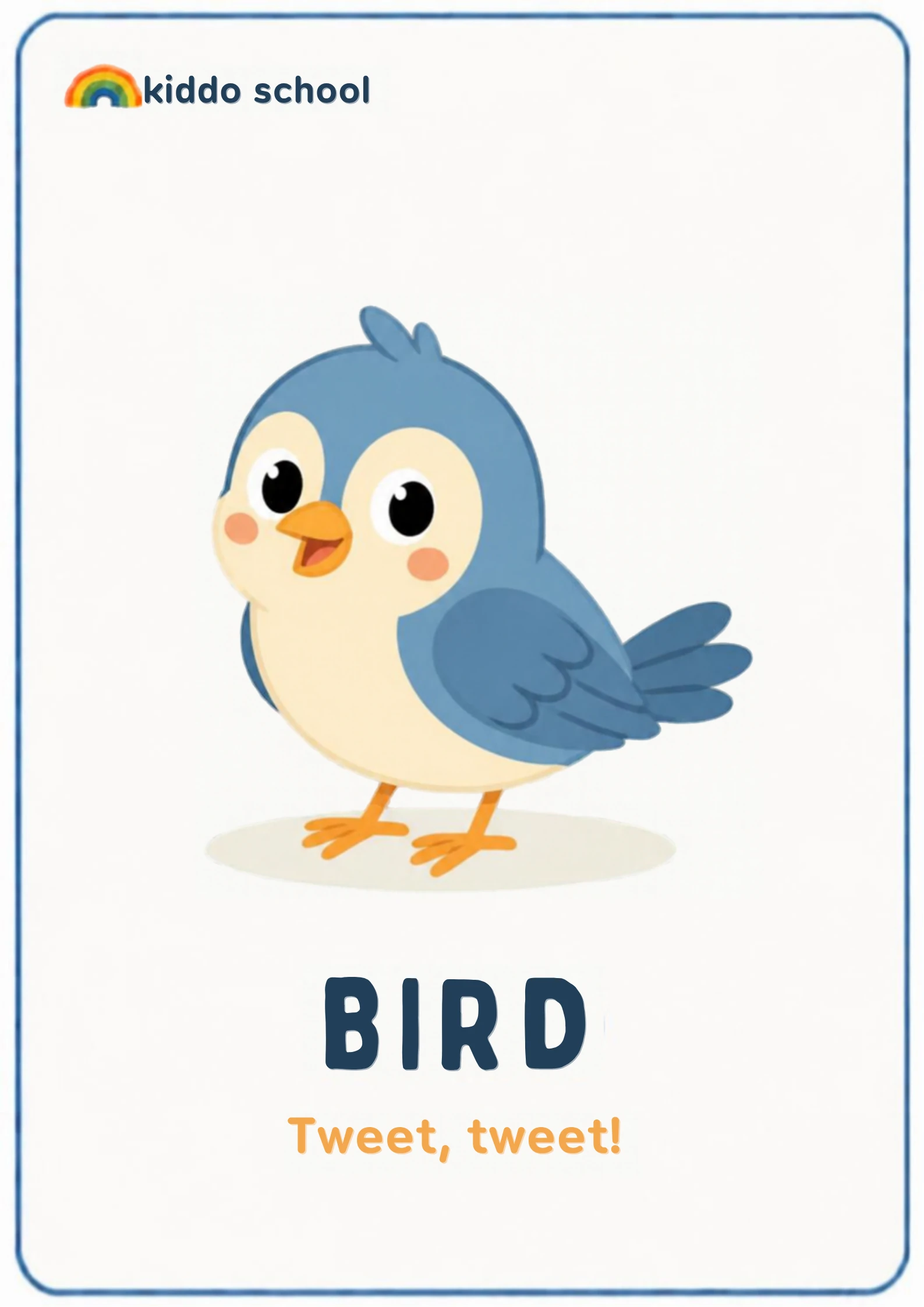
What is this?
A bird is an animal with feathers and wings that flies, hops and sings. This one is a bluebird perched on a branch — and birds like it visit gardens, hedges and windowsills every single morning, hunting seeds and crumbs.
What does it mean?
Birds are the only wild animals most toddlers see every day, doing exactly what toddlers love: appearing, moving, disappearing. Naming the bird turns the window into a daily show with a returning cast.
What does the child need to know?
Birds tweet, fly and hop, and they come to stillness: running feet send them off, quiet feet bring them near. We watch birds and never chase — the stiller the watcher, the longer the show.
Why this matters
Bird-watching is patience with a payoff — the child sees, in minutes, that quiet bodies are rewarded. That cause and effect is learned in the body, and it transfers to every library, queue and waiting room to come.
What it teaches
Stillness as a real skill, sound imitation, visual tracking of the quickest thing in the garden, and the gentle beginnings of caring about wild things that need nothing from us.
Words to learn
birdtweetwingsseedsquietfly
Say this to your child
“"Listen — tweet tweet! A bird! Birds have wings and they fly, and they hop along the fence. Let’s be quiet as mice and watch the window... still feet, soft voices... maybe a bird will come and say hello. Birds are our look-at friends!"”
Step by step
- Show the card and say bird — then tweet together, two little songs, so the word arrives with its sound.
- Find the bird’s parts on the card: the wing, the beak, the tail, the branch it sits on — pointing is how two-year-olds read a picture.
- Take the card to the window and whisper: is a bird out there right now? Look quietly. A pigeon counts, a crow counts, everything with wings counts.
- Sprinkle a few seeds on a sill or step, step back, and hold the stillness together — count the quiet seconds out loud, softly.
- End with the rule: birds are watch-friends — quiet feet, down-held hands, and they come close all by themselves.
Look closer at the picture
Say bird together and point out the bluebird — on this card it sits on a branch. Point to the branch, then the wing, then tweet twice, softly, so the card stays a window game and not a shout.
Ask your child
"What does the bird say?" "Where is the bird sitting?" "Can you make your feet go still?" "Do we chase the bird, or watch it?" — answered with a tweet, a point and feet that stop on request.
What your child can say or do
"Bird!" shouted at full outdoor volume and whispered at indoor windows, tweets exchanged over breakfast, and every pigeon, crow and duck promoted to the same beloved word — the sky is officially inhabited now.
Out in the real world
Birds are the most reliable show in any street: fences, hedges, car parks, washing lines. Each visit is a rerun — point, whisper, watch, wave goodbye — and the seeds keep the cast coming back.
Try it together
Seed sprinkle and freeze: shake a tiny cup of seeds onto a step or sill, then hold hands and play freeze — crouch, breathe loud enough to hear, wait. The prize for winning is usually a bird.
Understanding check
At the next window, watch the feet and the voice: still feet and a whisper mean the lesson landed — your toddler has traded chasing for watching, which is the whole trade this card offers.
Parent tips
Keep a card and a seed cup by the window permanently; the ritual runs itself within a week. Two minutes is a full sitting at this age — stop while the pointing is still happy.
Staying safe
Windows and doors stay shut during bird-watching, and sills are for seeds, not elbows. Feed birds outside where they stay wild, wash little hands after touching seed, and let the chasing happen only in games.
This lesson pairs with the Bird flashcard in the library — print it, show it, keep it on the fridge. Back to Garden Bugs & Friends (Toddler 8).