
Frog — a step-by-step lesson for grown-up and child
This lesson turns your rug into a pond: your toddler learns the frog’s crouch and leap, ribbits between landings, and absorbs the set’s water rule — real frogs live at ponds, and ponds are grown-up-hand places.
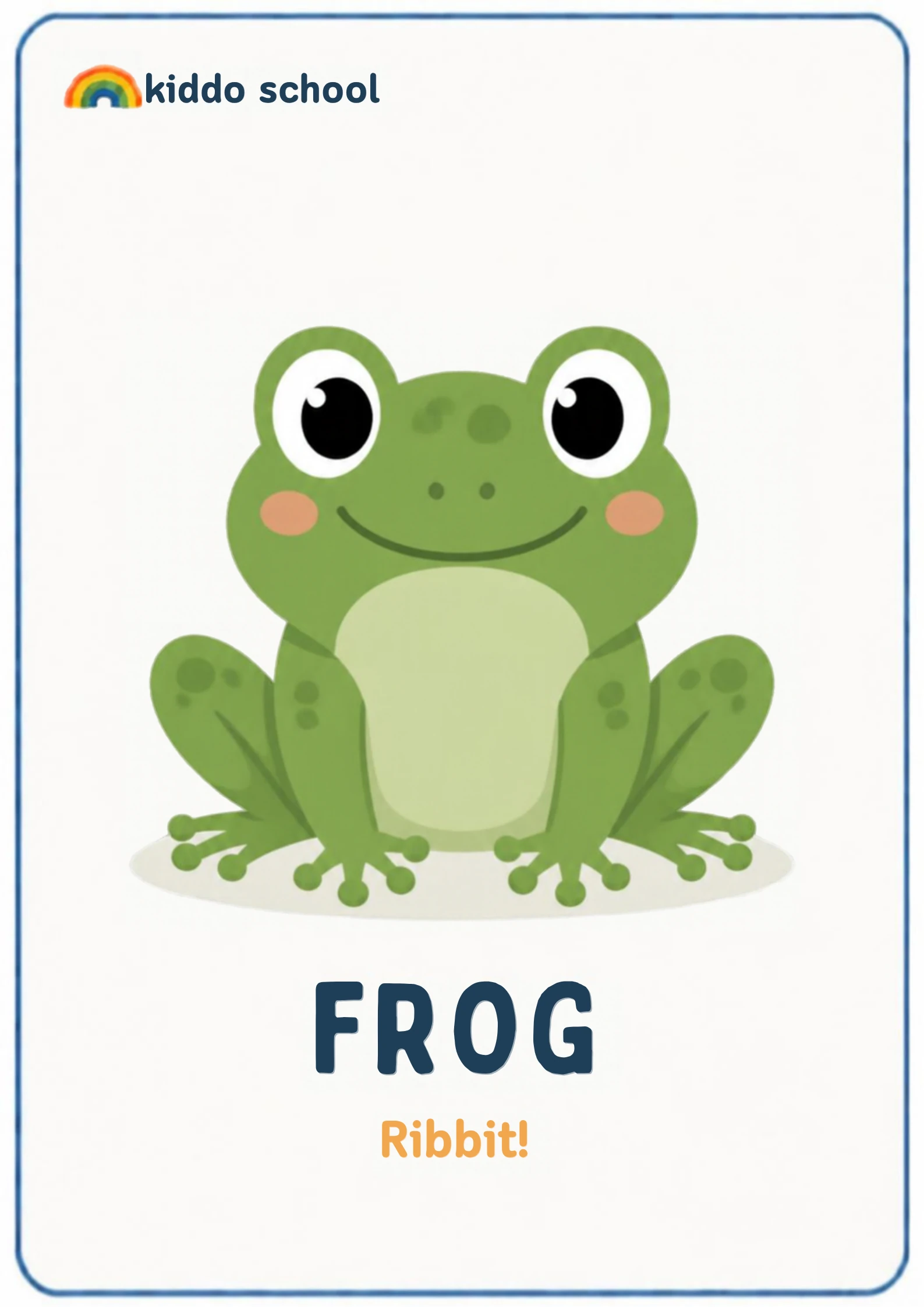
What is this?
A frog is a small, green, long-legged animal that sits still by the water and then disappears in a single huge leap. It catches bugs with a quick flick of its tongue and says — everyone together — ribbit.
What does it mean?
The frog is the set’s movement finale: crouch, launch, land, repeat. And because real frogs live at the water’s edge, the card doubles as the gentlest water-safety lesson in the garden.
What does the child need to know?
Frogs crouch and leap and say ribbit, and they live by ponds. We look at frogs from the bank — their damp skin is far too delicate for warm, dry hands — and any real pond means a grown-up holds on.
Why this matters
Jumping builds the big power skills — crouch depth, launch, controlled landing — while the pond rule rehearses respect for wild skin and water. One card, two lessons, both learned in the legs.
What it teaches
Explosive jumping and quiet landing, listening-freeze control, amphibian vocabulary, and water-safety habits rehearsed long before any real pond is in sight.
Words to learn
frogjumpribbitpondlily padgentle
Say this to your child
“"A frog! Ribbit, ribbit! Frogs crouch down low... and JUMP! Can you leap to the lily pad? Frogs live by the pond — when we visit, we hold hands and watch from the bank. We never pick frogs up; their skin is soft and ours is too dry. Ribbit!"”
Step by step
- Show the card and say frog — then crouch low yourself, hands between your knees: the shape teaches before the word lands.
- Do one enormous jump together and land with a soft plop, then say ribbit! Word, jump and sound in one event.
- Scatter cushions as lily pads and leap from pad to pad, ribbiting on every landing — the quieter the landing, the better the frog.
- Tell the pond story simply: real frogs sit by the water, and we visit ponds holding a grown-up’s hand — we look from the bank, and our hands stay in ours.
- Finish with the still frog: crouch very small and freeze — then one last giant leap to end the session on a laugh.
Look closer at the picture
Say frog together and spot the green one waiting on the card. Crouch like the frog, hold for one breath, then leap once on the spot and give your biggest ribbit as you land.
Ask your child
"What does the frog say?" "Can you leap like a frog?" "Where do frogs live?" "Do we touch the frog at the pond, or watch from the bank?" — answered with a ribbit, a leap and a solemn linked-hands gesture.
What your child can say or do
"Ribbit!" punctuating bath time, cushion ponds rebuilt daily across the living room, and frogs announced at every puddle and pond on every walk — with feet stopping at the bank, which is the rule arriving.
Out in the real world
Frogs appear at pond edges, damp gardens and after-rain paths — mostly as a flash of green and a splash. Each flash is a rerun: freeze, whisper frog, watch the jump, and keep feet on dry land.
Try it together
Lily-pad hop course: cushions spaced across the rug, frog crouch between each leap, silent-landing points awarded generously. End as every good frog does — one enormous final jump into your arms.
Understanding check
Say ribbit out of nowhere tomorrow: if a crouch-jump arrives before the laugh does, the word lives in the legs — the pond rule usually arrives in the same package, so listen for the bank part too.
Parent tips
Join every leap; your landing quality sets the standard. Keep pond talk warm and frequent — baths, paddling pools, puddles — because water rules work best when they are rehearsed everywhere, not just at ponds.
Staying safe
Real ponds, streams and even deep puddles are grown-up-hand territory, always. Frogs are never picked up — their damp skin is delicate and would dry out on ours — so the leaping stays on cushions and the watching stays on the bank.
This lesson pairs with the Frog flashcard in the library — print it, show it, keep it on the fridge. Back to Garden Bugs & Friends (Toddler 8).