
Spider — a step-by-step lesson for grown-up and child
This lesson takes the card that makes grown-ups jump and hands it to your toddler as a game: eight legs to wiggle, a web to weave from wool, and one unshakable rule — real spiders are watched with calm eyes and never touched.
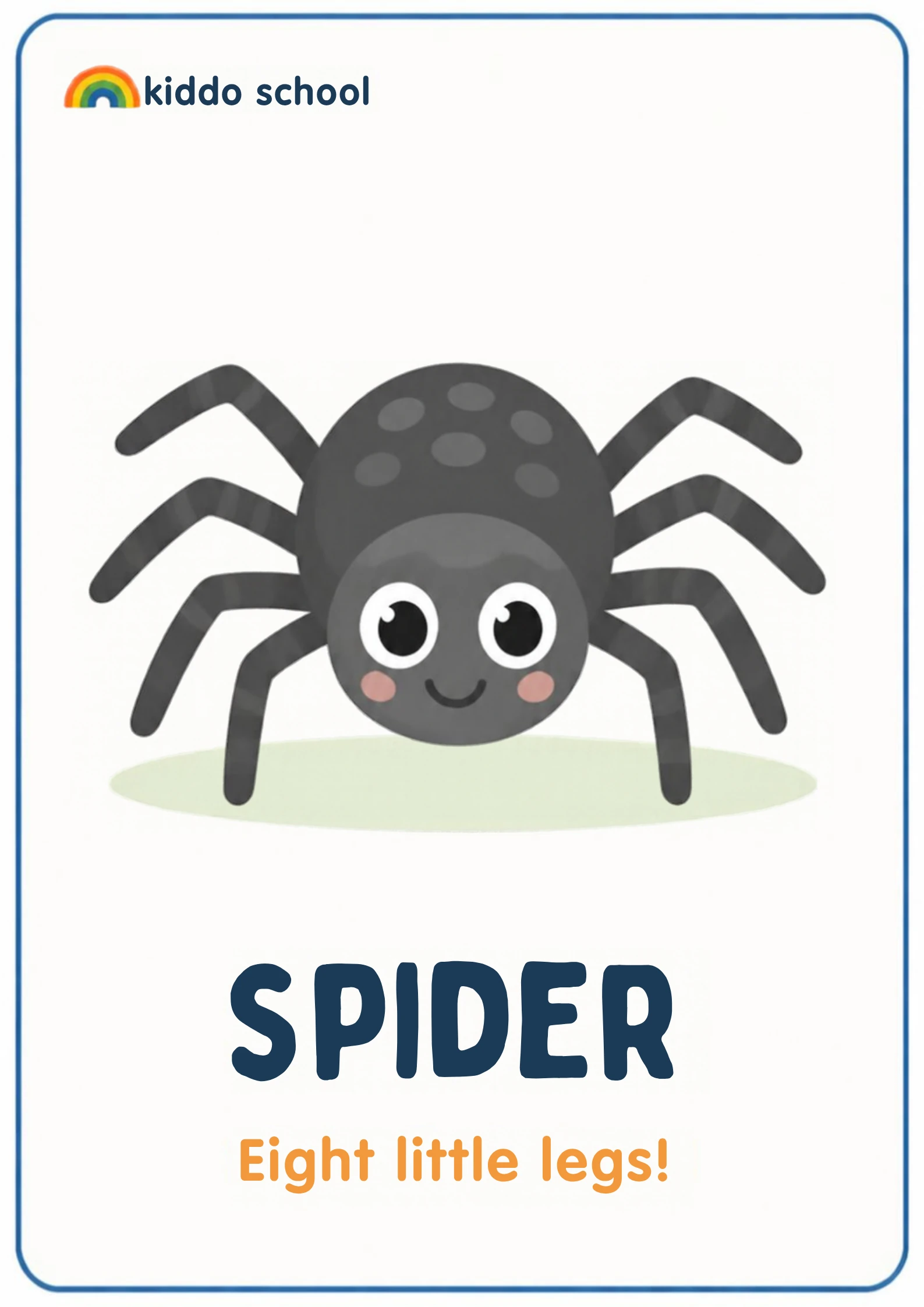
What is this?
A spider is a small creature with eight legs that spins a web from its own silky thread. The web catches breakfast, the spider sits and waits, and the whole contraption is rebuilt almost every day.
What does it mean?
A spider met on a card first is a spider met calmly: the picture does the introducing, the wool web does the explaining, and by the time a real one appears, watching is already the family habit.
What does the child need to know?
Spiders have eight legs and weave webs, and they are strictly look-at friends — the calmest rule in the set. Webs are admired, never poked, and real spiders stay wherever they built their homes.
Why this matters
Calm comes from knowing the job: a spider is not lurking, it is working — spinning, waiting, tidying up. A toddler who understands the web sees a worker, not a monster, and the eight-legged fright shrinks to eight-legged interest.
What it teaches
Counting to eight with real wiggles, weaving and threading as fine-motor work, fear met gently through play, and the habit of quiet observation around things that startle.
Words to learn
spiderweblegsspinsilkcalm
Say this to your child
“"A spider! Eight legs — count them with your fingers: wiggle, wiggle, all eight! Spiders spin webs to catch their dinner. When we see a real web, we look with our eyes and keep our hands down. The spider is busy; we are its quiet visitors."”
Step by step
- Show the card and say spider — then wiggle eight fingers at each other like eight busy legs: four each, all wiggling.
- Count the legs out loud together, one wiggle per leg — eight is a very satisfying number to reach with hands.
- Weave a web: loop wool or string across the backs of two chairs, in and over, while your toddler watches and helps hold — then flick pom-pom flies into it for the spider to catch.
- Explain the job simply: the spider spins its web, waits, and catches its own dinner — nobody brings it a plate.
- End with the rule, calm as anything: real spiders are look-at friends. Webs stay un-poked, spiders stay in their homes, and our hands stay in ours.
Look closer at the picture
Say spider together and wiggle eight finger-legs. Ask your toddler to find a leg on the card and wiggle just that one — then hold all ten toddler fingers still as a resting spider, which is harder and funnier than it sounds.
Ask your child
"How many legs does the spider have?" "What does it spin?" "Do our fingers touch the web, or do our eyes do the looking?" "Where does the spider live?" — answered with wiggles, a spinning motion and gentle pointing.
What your child can say or do
Eight wiggling fingers at the dinner table, wool webs requested daily, and spiders reported calmly from the garden: "spider working!" — the startle replaced by interest, which was the whole quiet plan.
Out in the real world
Webs appear on hedges, corners and railings, loveliest with morning dew strung across them. Each one is a rerun: crouch, admire the threads, look for the weaver, and walk on without touching a single strand.
Try it together
Web rescue: toss small pom-poms into your wool web, and your toddler plucks them free — careful fingers, one at a time, like a very kind spider tidying up. Unpicking is as absorbing as weaving.
Understanding check
Meet a real web tomorrow and watch the hands: still, or reaching? Still hands and a whispered spider mean the calm took — the card did its introducing exactly as planned.
Parent tips
If webs make you jumpy, borrow the calm anyway — your face is the lesson. Keep the wool web up for days; coming back to it daily is what turns a game into understanding.
Staying safe
Some spiders bite when squeezed, and webs stick to little fingers, so real webs and real spiders are admired from a small distance with hands down. The wool-and-chairs web hands your toddler the whole story with zero eight-legged surprises.
This lesson pairs with the Spider flashcard in the library — print it, show it, keep it on the fridge. Back to Garden Bugs & Friends (Toddler 8).