
Moth — a step-by-step lesson for grown-up and child
This lesson opens the garden’s night shift: your toddler learns that some friends wake up at bedtime, flutters around the room on soft brown wings, and watches a lit porch from inside — where the moths come to visit, and no hands go out.
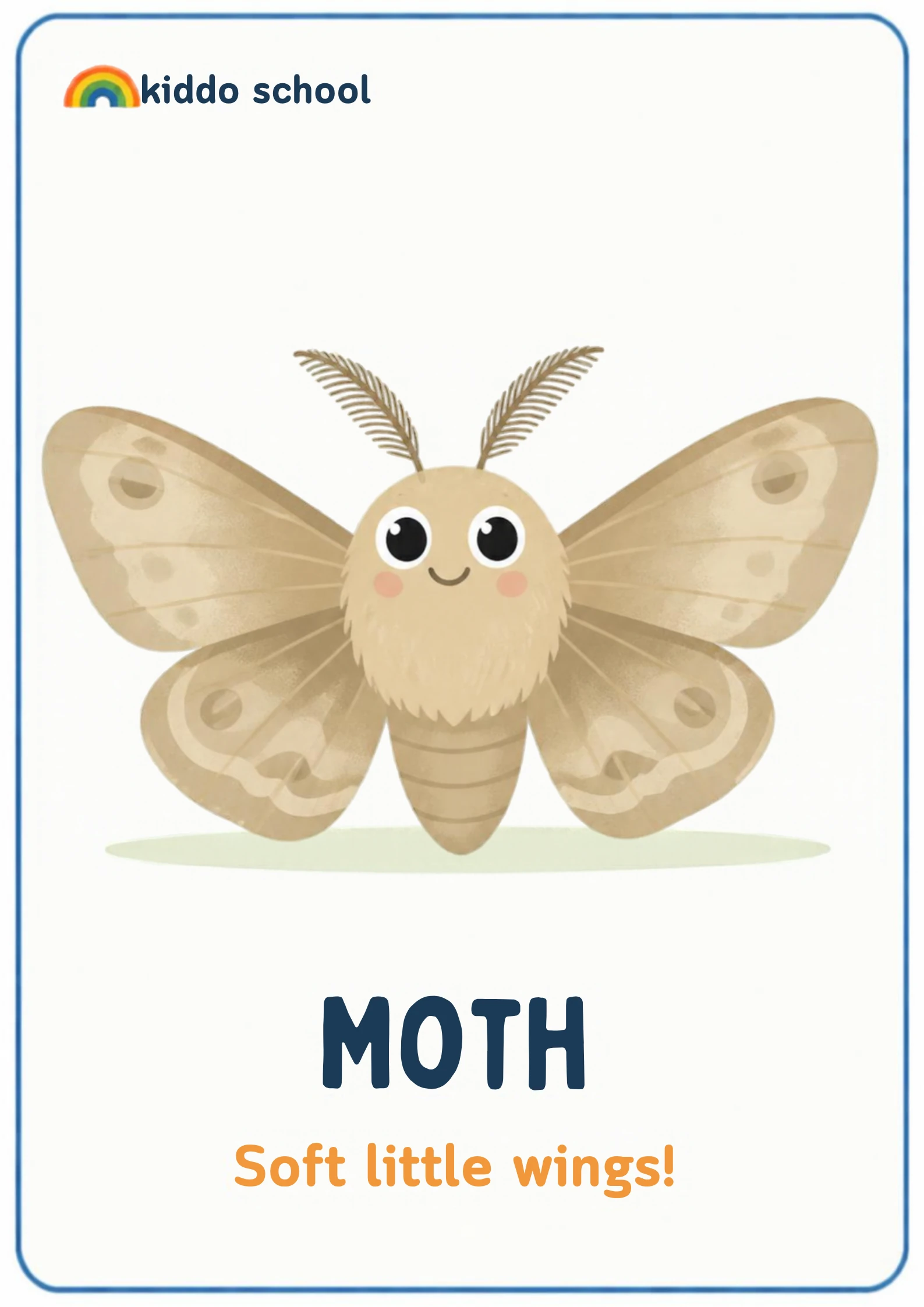
What is this?
A moth is a soft-winged cousin of the butterfly that flies at night. Moths flutter around lamps and porch lights after dark, bump gently along, and rest in the day with their wings spread wide.
What does it mean?
The moth introduces night as a working time — the garden has an evening crew. For a two-year-old at bedtime, that idea is delicious: somewhere out there, soft wings are just clocking in.
What does the child need to know?
Moths have soft wings and love lamps at night, and they are watch-from-inside friends: the light stays on, the window stays shut, and the fluttering happens with arms, never with hands.
Why this matters
Night-watching from a window gives toddlers a safe, thrilling view into the dark — and turns bedtime from an ending into a handover: we sleep, the moths work. The soft-wing flutter also calms a busy body beautifully.
What it teaches
Day-and-night as a first sorting idea, slow gentle movement (the softest flapping in the set), watching patience at a window, and cosy associations that help the light-out transition.
Words to learn
mothnightsoftwingslampflutter
Say this to your child
“"A moth! Soft little wings — this friend wakes up at night, when we are tucked up. See how it flutters round the lamp? We watch from our window — outside light on, window shut. Flutter, flutter, go the moth wings. Sleep well, little moth!"”
Step by step
- Show the card and say moth — then stroke your own arm gently: soft, soft, like the wings on the card.
- Flutter together: arms as soft wings, bumping gently around the room, landing on cushions — moths are the world’s clumsiest, loveliest flyers.
- Tell the night story: when toddlers go to bed, the moths wake up and visit the lamps — the garden has an evening crew.
- On a warm evening, stand together at the window with the outside light on and watch: is anyone fluttering out there? Maybe, maybe not — the waiting is the game.
- End with the rule, whispered for bedtime: moths are watch-from-inside friends. Wings stay soft, windows stay shut, and our eyes do the visiting.
Look closer at the picture
Say moth together and find the soft wings on the card — this one is brown and gentle-looking. Ask your toddler to flutter their arms once, then rest them wide like a moth having a daytime sleep.
Ask your child
"When does the moth wake up?" "What does it love — lamps, or soup?" "Can you flutter softly?" "Do we open the window to touch it, or watch from inside?" — answered with a flutter, a giggle and a firm little head-shake.
What your child can say or do
"Moth night-night!" reported from the cot, soft-arm flutters adopted as a wind-down move, and moths announced at every lamppost and lit window — the night crew now has a name and a fan club.
Out in the real world
Moths gather at porch lights, lit windows and lamp posts on warm evenings — visible from indoors better than anywhere. Each flutter is a rerun: lights on, window shut, watch, wave goodnight.
Try it together
Porch-light vigil: five minutes at the window with the outside light on, whisper-counting any flutter that appears. No moths tonight? The game still worked — five quiet minutes of watching is its own bedtime magic.
Understanding check
At bedtime, ask who wakes up when we sleep: a confident moth means the day-night idea landed — the garden kept working in your toddler’s imagination all night long.
Parent tips
Keep the window closed and the watching brief; five minutes is the whole show at two. If a moth gets indoors, a grown-up can cup it in a glass and release it outside — narrate the rescue; it is excellent material.
Staying safe
The vigil happens from inside with the window shut, and moths are never caught — fingers rub the dust-fine powder off their wings and squeeze far more than anyone means to. Warm-evening lamp-watching stays on the indoors side, with a grown-up alongside.
This lesson pairs with the Moth flashcard in the library — print it, show it, keep it on the fridge. Back to Garden Bugs & Friends (Toddler 8).