
Different Shapes — a step-by-step lesson for grown-up and child
This lesson finishes the different half of the deck with shapes: a smooth circle and a pointed triangle, and a difference small hands can feel as well as see.
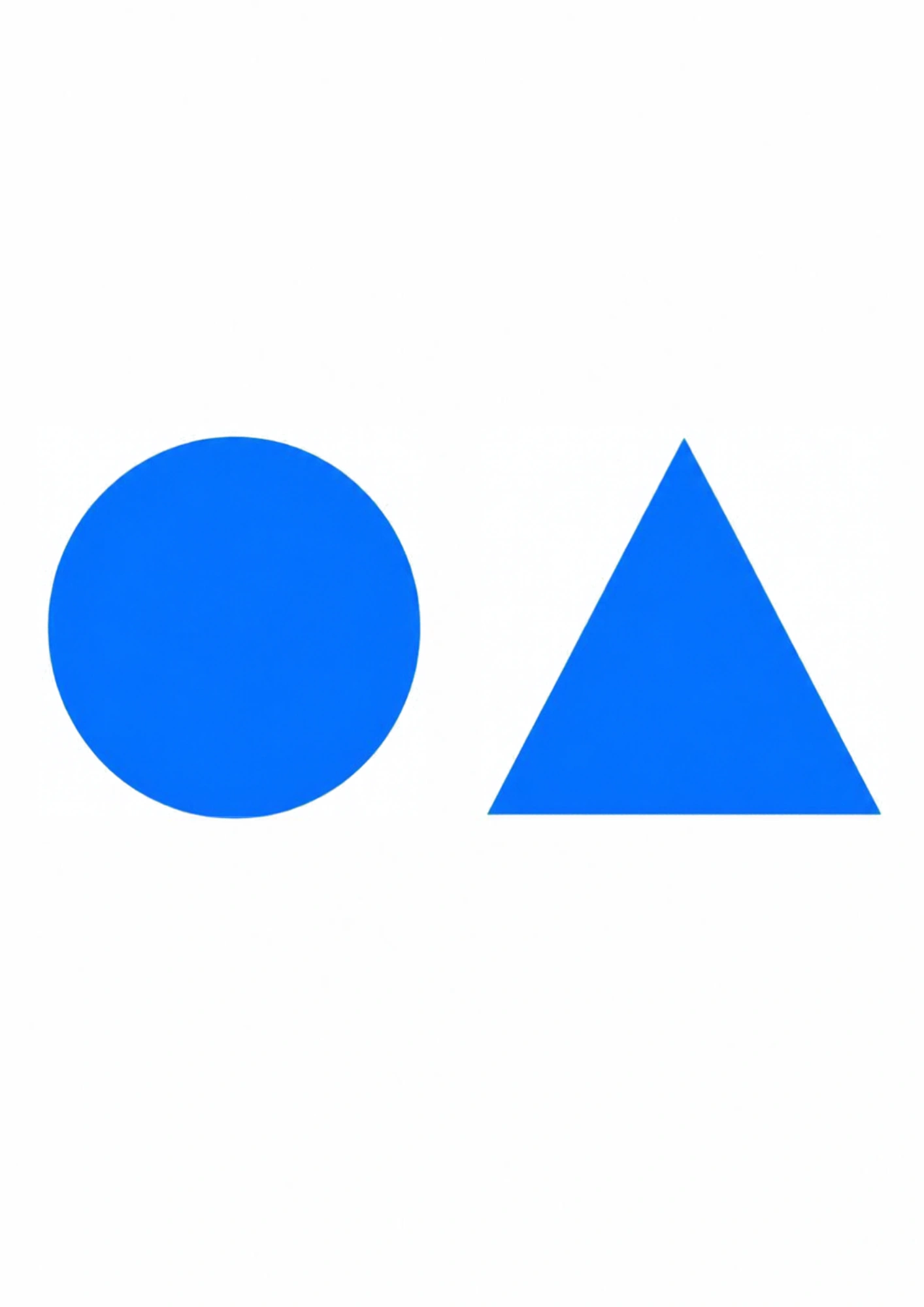
What is this?
A circle is round all the way around, with no corners; a triangle has three straight sides and three points. Drawn side by side, the pair makes different easy to trace.
What does it mean?
Shape differences are best learned by touch and motion: a finger travelling around a circle never stops, and a finger on a triangle turns three times. The hands file the difference where words will later live.
What does the child need to know?
The words matter less than the noticing: point, trace, and let your toddler travel the edges with one finger. Rolling is the circle’s party trick — let a ball prove it.
Why this matters
Round and pointy divide the whole toy basket, the kitchen and the street. A difference this findable reruns itself every playtime without a single card in view.
What it teaches
Shape discrimination by sight and touch, corner-and-curve vocabulary, and finger tracing — the pre-writing skill hiding inside a matching card.
Words to learn
circletriangleroundsidescornersdifferent
Say this to your child
“"A circle and a triangle — different! My finger goes round and round the circle… no corners! The triangle goes one, two, three — corners! Can you trace them? Round… and pointy."”
Step by step
- Show the card and travel it with your finger: all the way around the circle — round and round, no stops. Then walk the triangle’s three sides, stopping at each corner.
- Say the difference simply: the circle is round; the triangle has corners. Let one finger prove each claim.
- Hand your toddler the finger-trace turn and count the corners together out loud: one, two, three.
- Bring the rolling test: a ball rolls, a block refuses. The difference just became something your toddler pushed with their own hands.
- Hunt the pair through the room: round plates, round lids, pointy book corners, triangle roof ends. Round or corners — different, every find.
Look closer at the picture
The card shows a circle and a triangle for a different-shapes activity — one round shape, one pointed shape, side by side. Ask your toddler to trace the circle’s edge, then count the triangle’s corners with a fingertip.
Ask your child
"Which one is round?" "Where are the corners?" "Can you trace the circle?" "Does the triangle roll?"
What your child can say or do
A tracing finger is the answer at this age, especially one that slows down at the corners. Words that may arrive: round for sure, sometimes tri-gul for the triangle — every attempt gets an echo, not a correction.
Out in the real world
Round and pointy fill the day: wheels, plates, buttons against book corners, roof tips, sandwich halves. Name the shape of one real thing per outing and the card keeps teaching from the drawer.
Try it together
Sort the basket: one bowl for round things, one for pointy things, five mixed objects. Your toddler drops each find and announces — with hands if not words — which world it belongs to.
Understanding check
Hold the card up cold tomorrow and ask which one is round. A confident point, a rolling gesture, or a finger that starts travelling the edge all pass. Two named shapes is bonus territory at two.
Parent tips
Trace before you name: the finger teaches the shape, the word just files it. If your toddler calls every corner triangle, accept the enthusiasm and offer the right shape once — accuracy grows from interest, not pressure.
Staying safe
The rolling test stays on the floor: a ball released indoors travels faster than any two-year-old expects. Keep the shape hunt away from genuinely sharp corners — card corners, not table corners, are for pointing.
This lesson pairs with the Different Shapes flashcard in the library — print it, show it, keep it on the fridge. Back to Matching & Sorting (Toddler 4).