
Bluebell — a step-by-step lesson for grown-up and child
This lesson rings softly: your toddler dings pretend bluebells, walks through an imagined blue wood, and learns the gentlest conservation rule a two-year-old can carry.
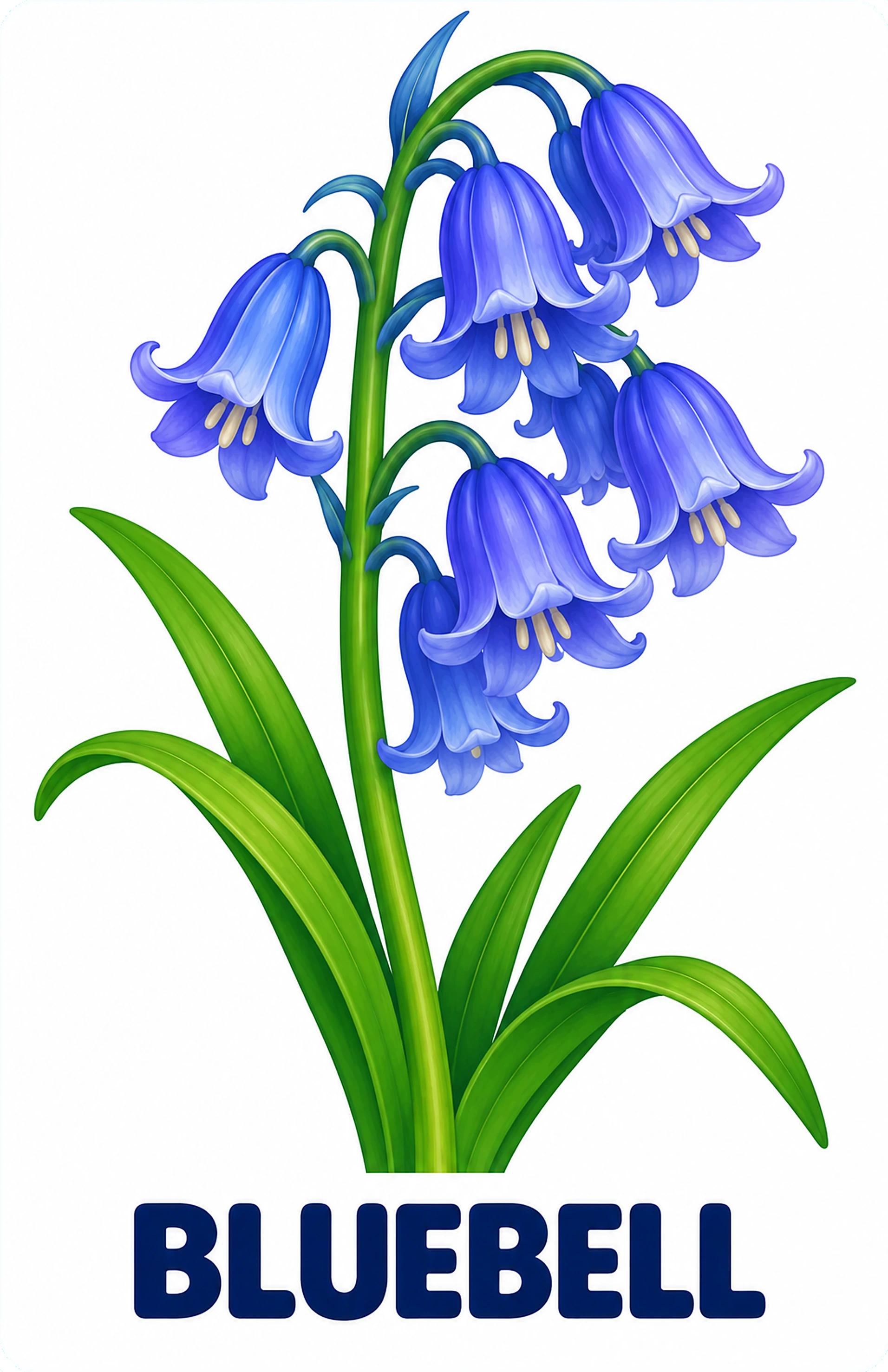
What is this?
Bluebells are small flowers shaped like little bells that grow in woods in spring — so many together that whole carpets of blue appear under the trees.
What does it mean?
The bluebell closes the flower set with a whole place: not one bloom but a blue wood. Ringing pretend bells gives the flower a sound, and the wood gives your toddler their first grown-up nature rule.
What does the child need to know?
Bluebells look like tiny bells and ring in spring under the trees. They are protected, which means they stay growing where they are — we keep to the path, we pick nothing, and the same blue carpet returns every spring.
Why this matters
A rule with a reason — the flowers are protected — is a two-year-old’s first conservation lesson, and it lands kindly: leaving flowers growing is how we make sure they come back. The bell-game makes the leaving feel magical, not missing out.
What it teaches
Quiet-to-loud sound play (ding-dong softly, louder only outdoors), make-believe place-building (the blue wood), path-and-boundary awareness, seasonal return thinking, and gentle feet in natural places.
Words to learn
bluebellbellsbluewoodsspringpath
Say this to your child
“"Bluebells! Little blue bells in the spring woods — ding, dong, so soft. So many of them, they turn the whole wood blue. Our feet keep to the path while every bell stays growing, because the bluebells are protected — and every spring, they all come back to ring for us again."”
Step by step
- Show the card, say bluebell, and flick an imaginary bell with one finger — ding! — soft as a tiny bell really rings.
- Ring together, quiet for small bells, a little louder for big ones — then hush and listen: did you hear it ring?
- Build the blue wood in the room: walk slowly between cushion trees while your fingers ring bells on every side — blue all around.
- Tell the rule with pride, not sternness: bluebells are protected, so they stay in the ground where they grow, and we walk the path like proper wood visitors.
- End with the promise: the bells bloom again every spring — same wood, same blue — and one day you will walk through the real carpet together.
Look closer at the picture
Flick your finger like ringing a tiny bell and say bluebell. Ask your toddler to find the little bell flowers on the card, then ring bells of your own in the air — quiet dings, close listening.
Ask your child
"What do bluebells look like — bells or cups?" "Where do they grow, in the woods or in the bath?" "Do we pick them, or leave them growing?" "What colour is the wood in spring?" — answered with a ding, a blue word and a firm little walk-on.
What your child can say or do
"Ding dong!" Expect bell-ringing at every flower, bluebells claimed under every tree, and the path rule recited with woodland gravity. The quiet ding may become your secret signal for soft voices.
Out in the real world
Bluebell woods bloom in spring in many places — whole floors of blue under the trees — and they are worth a special trip. Every picture, book or real carpet of blue is a rerun: ring softly, walk the path, wonder.
Try it together
Bluebell wood: dim the lights, scatter blue paper or cushions as flowers, and tiptoe the path between them, ringing finger-bells as you go. End with a rest on a log (a cushion) and one soft ding for home.
Understanding check
On the next walk through any woods or park, listen for the rule: "we walk on the path" arriving unprompted means the bluebell lesson bloomed. A soft finger-ding at flowers seals it.
Parent tips
If you can, visit a real bluebell wood in spring — the card was building to this. Keep the ding quiet indoors and free outdoors; the sound game doubles as a volume dial your toddler can actually find.
Staying safe
Bluebells are protected and are not for picking, digging or chewing — bulbs especially stay underground and away from hands. Woods hold stings, ticks and uneven ground: little legs on the path, grown-up eyes on the sky, and hands washed when you get home.
This lesson pairs with the Bluebell flashcard in the library — print it, show it, keep it on the fridge. Back to Garden Flowers (School Garden).